Osteogenesis Imperfecta
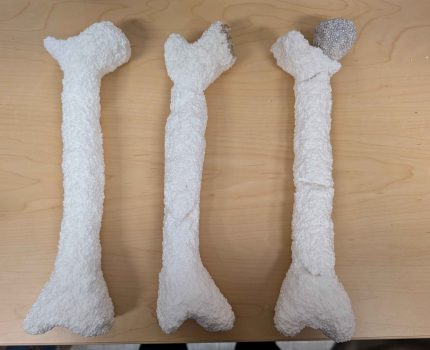
My project is on Osteogenesis Imperfecta. A disease that originated in utero. It affects collagen levels in the body resulting in fragile bones that break easily, form incorrectly, bones to grow bowed and result in a smaller bone matrix than healthy bones. OI is an inherited disease that has no …
My Objective is the 4 different types of bones.
By Lincoln Miller My project covers the Compare and contrast the 4 types of bone shapes. For the 4 different bone types we have Short, Long, Flat, and irregular. As well as the common type of fractures for specific bones. Long bones: Long bones is one that is cylindrical in …
The Structure of the Knee and Injuries to the Medial Collateral Ligament
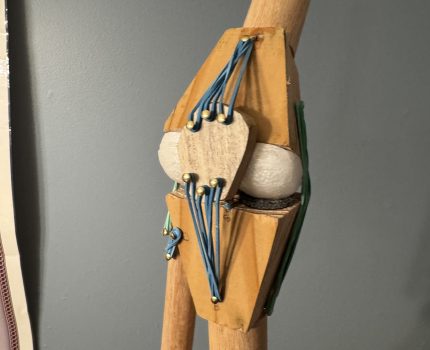
A mixed media model representing the knee joint was chosen for this project. The tibia, fibula, femur, and patella are made of wood, elastic bands represent the ligaments, hot glue covering styrofoam represent the articular cartilage covering the lateral and medial condyles of the femur, and dense foam pad rings …
Osteoporosis and Rural Alaska
My project covers the objective, “Explain how bone development is hormonally regulated.” I wanted to concentrate this project specifically on osteoporosis and in part how rural Alaska residents may be affected. The medium used was clay and the art made was of a healthy bone and a bone affected by …
Rickets Disease
Payton Moore Hormones in the body play an important role in bone growth and development. Many hormones play a role in this but a particularly important one is vitamin D. Vitamin D plays a role in skeletal health because it regulates normal blood levels of calcium and phosphorus (Chanchlani 2020). …
Ketamine and it’s effect on the Nervous System
https://humanap.community.uaf.edu/wp-content/uploads/sites/848/2024/11/image1-4-scaled.jpeg I chose Ketamine as the topic for my project because this particular drug has grown fairly prominent and notorious in the last decade and it’s a medication I can give patients at my job when it’s needed. Fortuitously, it coincided with our previous chapter as most of its effects …