
For my STEM project my objective is describe the various WBC and their functions.
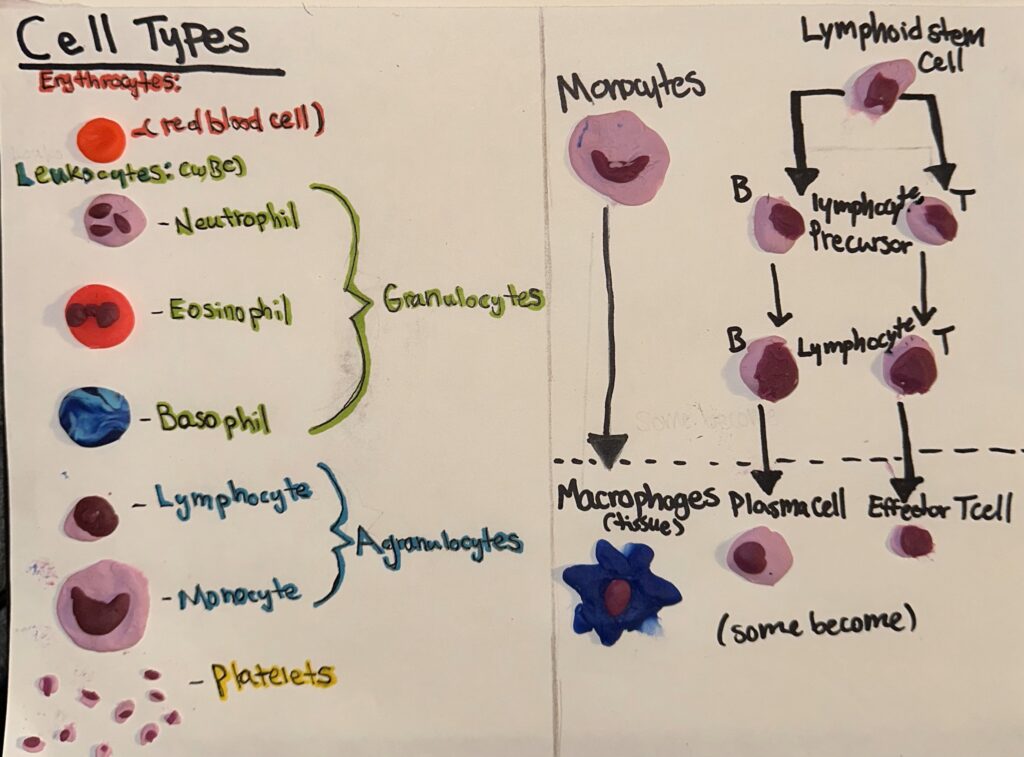
White blood cells (WBCs), also known as leukocytes, play essential roles in the immune system by defending the body against infections and promoting tissue repair. Among various types of WBCs such as basophils, neutrophils, monocytes, eosinophils, and lymphocytes—each serves unique functions in orchestrating the body’s response to inflammation and wound healing.
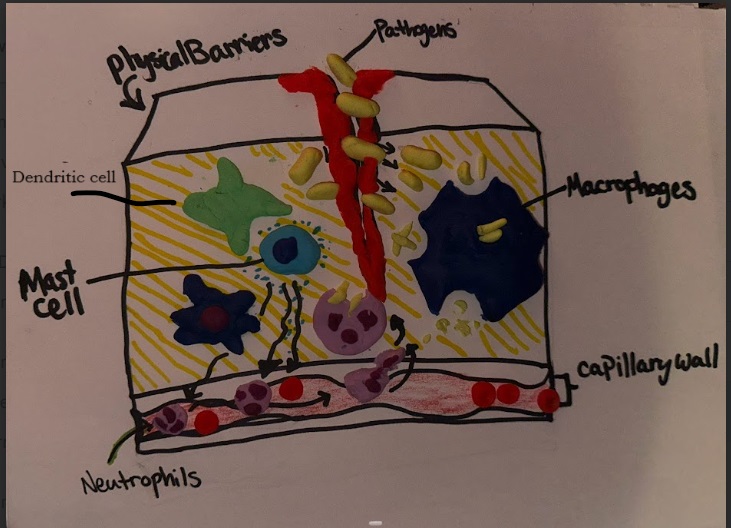
In response to injury, mast cells and basophils release histamine, triggering the release of pro-inflammatory cytokines and chemokines.
This amplifies the immune response, recruiting white blood cells to the injury site. Basophils further enhance blood flow to the area, aiding immune cell delivery for tissue repair. The process of vasodilation, characterized by the relaxation of smooth muscle cells in blood vessel walls, leads to an increase in the diameter of blood vessels. This widening allows for a greater influx of blood to the affected area, carrying with it a higher concentration of WBCs, oxygen, and nutrients crucial for tissue repair. Additionally, an increase in vascular permeability, achieved through the loosening of endothelial junctions lining blood vessels, facilitates the migration of WBCs from the bloodstream into the affected tissue, where they can actively participate in the inflammatory and healing processes.
Neutrophils, often referred to as the body’s “first responders,” are rapidly recruited to sites of injury or infection.
These cells are guided by chemotactic signals released by damaged tissues or invading pathogens. Upon arrival at the site of inflammation, neutrophils adhere to the top of the capillary walls and slip into tissues, where they engage in the phagocytosis process, engulfing and destroying pathogens and cellular debris. Additionally, neutrophils release antimicrobial peptides and proteolytic enzymes, aiming to neutralize pathogens and clear the affected area.
Monocytes, circulating in the bloodstream, are another type of WBC involved in inflammation and wound healing.
Upon reaching the site of injury, monocytes differentiate into macrophages, which are versatile immune cells capable of phagocytosis and antigen presentation. Macrophages play crucial roles in clearing cellular debris, apoptotic cells, and pathogens, thereby creating a conducive environment for tissue regeneration and repair. Macrophages secrete various growth factors, cytokines, and extracellular matrix components that promote angiogenesis, collagen deposition, and wound closure, facilitating the restoration of tissue integrity.
Lymphocytes, including T cells, B cells, and natural killer (NK) cells, are integral components of the adaptive immune response and contribute to inflammation and wound healing.
T cells, for instance, modulate the inflammatory response, promoting resolution and tissue remodeling, while B cells produce antibodies to neutralize pathogens. NK cells, on the other hand, play a role in enhancing the inflammatory response by inducing apoptosis in target cells.
Eosinophils and basophils, although less numerous, possess specialized functions in inflammation and tissue repair.
Eosinophils are particularly involved in combating parasitic infections and modulating allergic responses through the release of cytotoxic granules and inflammatory mediators. Basophils, meanwhile, contribute to the inflammatory response by releasing histamine and other pro-inflammatory molecules.
In conclusion, white blood cells play a pivotal role in the body’s immune response, acting as defenders against infections and facilitators of tissue repair. Inflammation serves as a vital mechanism, signaling the adaptive immune cells to coordinate actions such as cleaning, fighting pathogens, and restoring tissue integrity post-injury or infection. Understanding the diverse functions of white blood cell types is essential for promoting tissue repair and maintaining overall health, offering valuable insights into the intricate mechanisms of inflammation.
Sources Cited
“Tissue Inflammation.” Fingerprints, Bite Marks, Ear Prints: Human Signposts, Jan. 2005, p. 63. EBSCOhost, research.ebsco.com/linkprocessor/plink?id=6c3e545e-dfed-37c9-8187-9abdd6ae1bd1.
Rohland, L. (2022). White blood cell. Salem Press Encyclopedia of Health. White blood cell. – EBSCO (alaska.edu)
Gurtner, G. C., Werner, S., Barrandon, Y., & Longaker, M. T. (2008). Wound repair and regeneration. Nature, 453(7193), 314–321. https://doi-org.ezproxy.uas.alaska.edu/10.1038/nature07039
2 Comments