Chisato’s Steam project addresses the objective, “Know the structure and function of reproductive organs,” by researching the pathology of endometriosis. Chisato’s project explains how tissue that behaves like the uterine lining grows outside the uterus and remains hormonally responsive. This leads to chronic inflammation, the formation of ovarian cysts, often called chocolate cysts, and painful adhesions that can fuse pelvic organs together like glue. Chisato’s visual component strengthens this explanation of endometriosis by showing how the tissue can spread beyond the reproductive organs to areas such as the lungs, liver, and sometimes, the brain. This emphasizes the systemic reach of the condition.
Additionally, the painting is thorough and shows how endometriosis behaves in similar ways to cancer. The project demonstrates the ability of the tissue to form new blood vessels and avoid normal cell death, even though the condition is still classified as benign. In addition to structural changes, her project also identifies the broader impact on quality of life. It discusses what comes with endometriosis, this includes infertility, chronic pelvic pain, and neuropathic sensitization that can contribute to mental fatigue and cognitive strain over time. Management strategies are also well explained and include hormonal therapy, surgical removal of tissue, and supportive approaches such as pelvic physical therapy, and cognitive behavioral therapy.
By combining accurate biological detail with clear and effective visuals, Chisato’s project provides us a comprehensive and accessible explanation of how endometriosis affects both reproductive anatomy and overall health while staying focused on the reproductive learning objectives. Good job, Chisato.
 Posted by
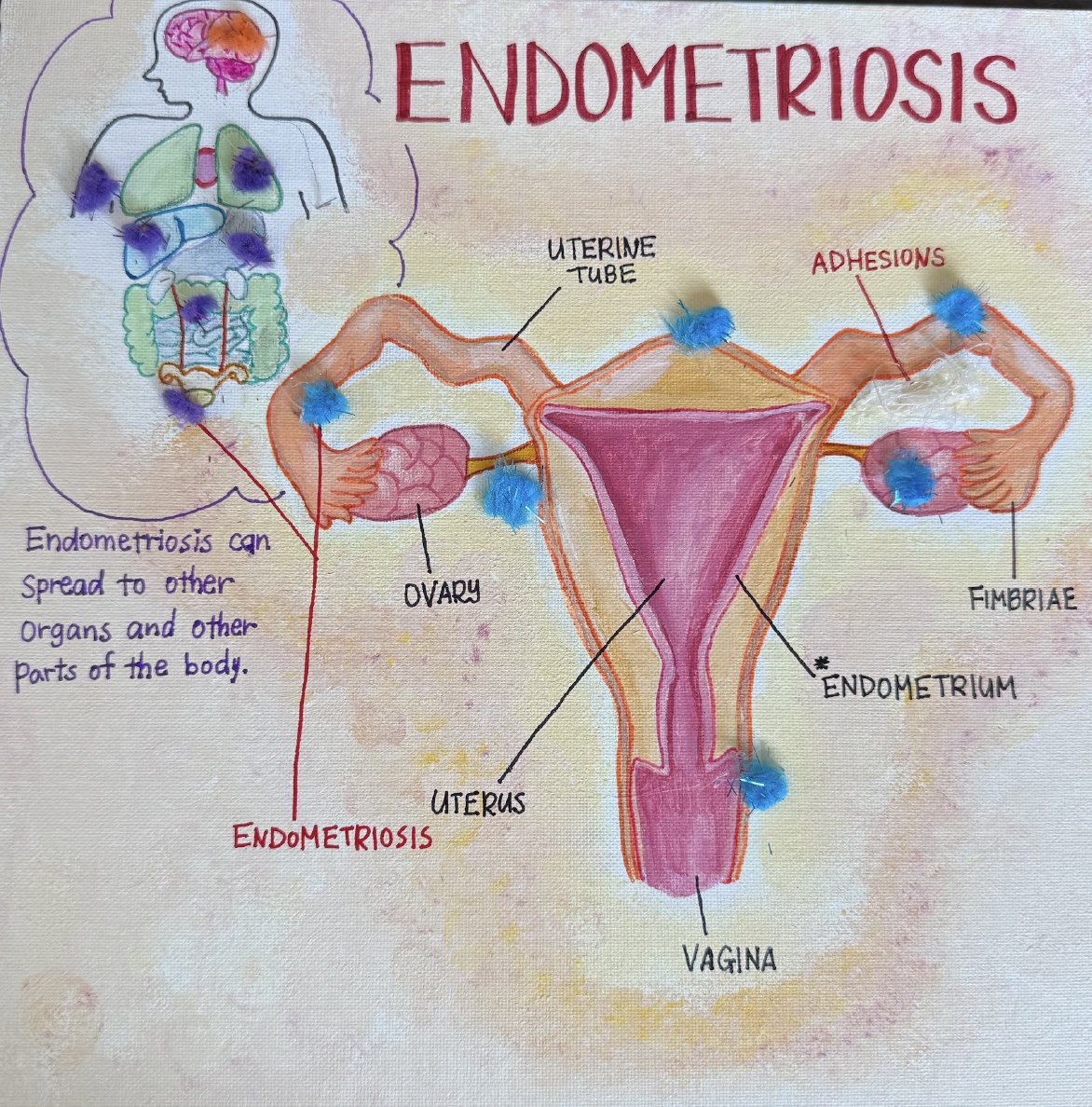
Chisato’s Steam project addresses the objective, “Know the structure and function of reproductive organs,” by researching the pathology of endometriosis. Chisato’s project explains how tissue that behaves like the uterine lining grows outside the uterus and remains hormonally responsive. This leads to chronic inflammation, the formation of ovarian cysts, often called chocolate cysts, and painful adhesions that can fuse pelvic organs together like glue. Chisato’s visual component strengthens this explanation of endometriosis by showing how the tissue can spread beyond the reproductive organs to areas such as the lungs, liver, and sometimes, the brain. This emphasizes the systemic reach of the condition.
Additionally, the painting is thorough and shows how endometriosis behaves in similar ways to cancer. The project demonstrates the ability of the tissue to form new blood vessels and avoid normal cell death, even though the condition is still classified as benign. In addition to structural changes, her project also identifies the broader impact on quality of life. It discusses what comes with endometriosis, this includes infertility, chronic pelvic pain, and neuropathic sensitization that can contribute to mental fatigue and cognitive strain over time. Management strategies are also well explained and include hormonal therapy, surgical removal of tissue, and supportive approaches such as pelvic physical therapy, and cognitive behavioral therapy.
By combining accurate biological detail with clear and effective visuals, Chisato’s project provides us a comprehensive and accessible explanation of how endometriosis affects both reproductive anatomy and overall health while staying focused on the reproductive learning objectives. Good job, Chisato.