 Posted by
Acne! What is it?
“Acne vulgaris is a common, chronic, inflammatory disorder of the pilosebaceous unit that affects most adolescents with inflammatory lesions on the face and trunk and may progress to scars.” (2021, Leung, Barankin, Lam, Leong, Hon.) WE all have had it, or know someone who has suffered from it. What is it? How does it form? How can we get rid of it? I will be answering these questions and more in my STEAM project; I hope you tag along.
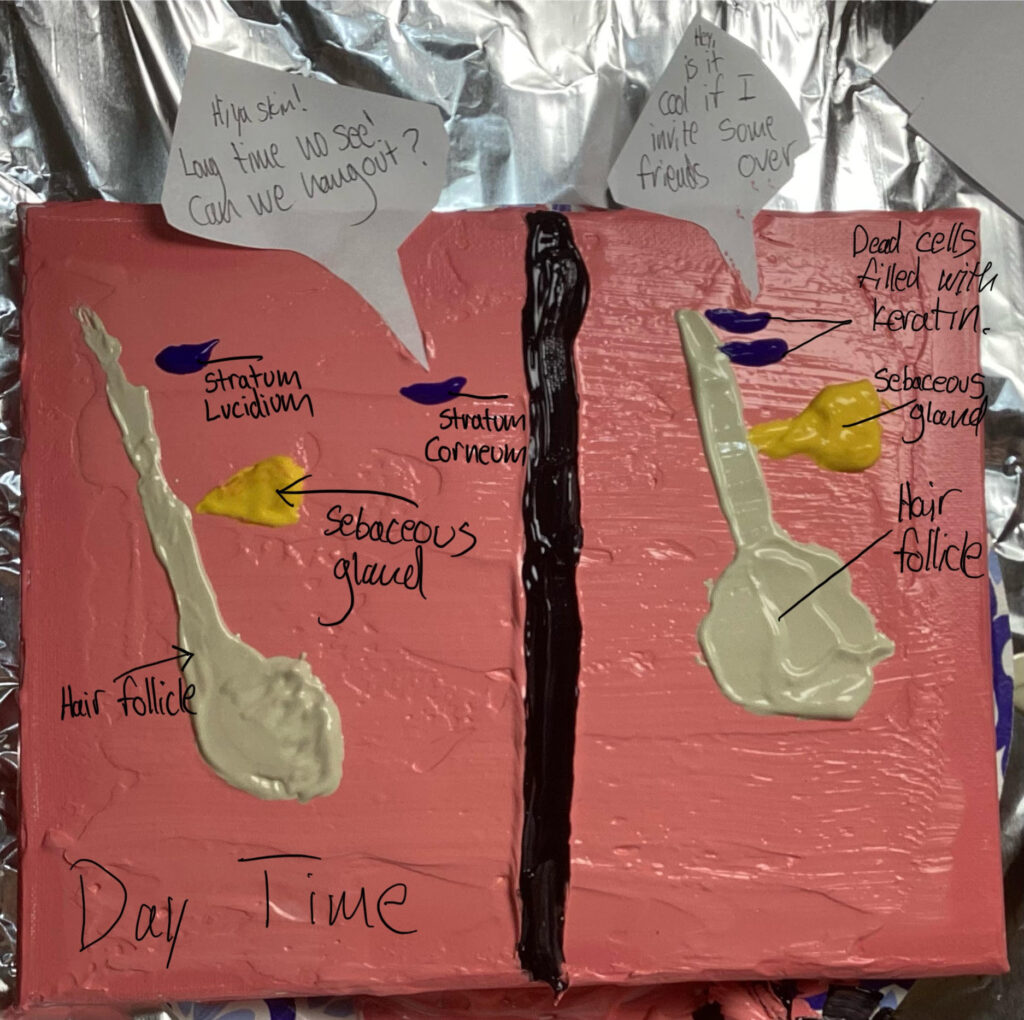
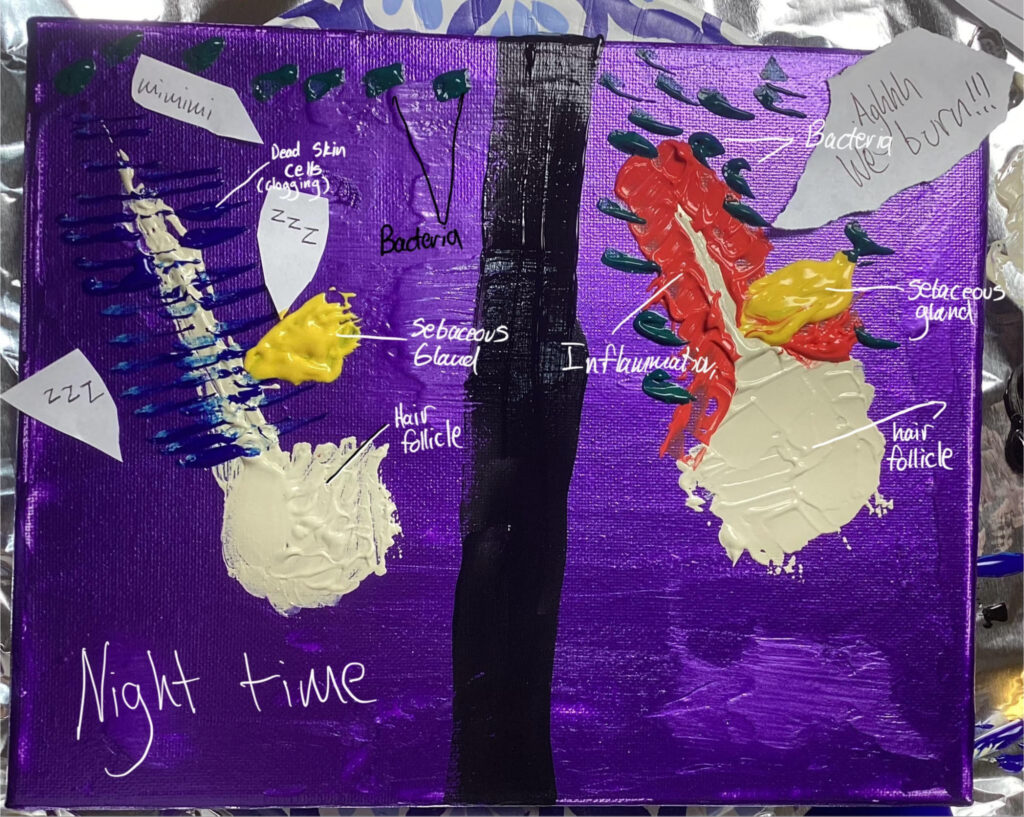
Acne is commonly thought of as a part of puberty, but why? When we think of acne we should think of hair follicles. These hair follicles contain sebaceous glands which disperse oil or “sebum”. Although, at times dead skin cells can block the hair follicles and result in the development of a clogged pore. After the clogged hair follicle is plugged, bacteria that lives on the surface of the skin begins to invade. Because there is a growth of bacteria, the body must fend it off. Thus the inflammation occurs and the pain as well as swelling shows its ugly head. “There are several factors that cause acne vulgaris such as excess oil production, hair follicles clogged by oil and dead skin cells, bacteria, and inflammation.” (2021, Oh)
There are multiple types of pimples: white heads, blackheads, pustules and cysts. The white heads are collections of clogged, closed and bulging skin. Blackheads are essentially white heads that have been oxidized leading to darkening of its surface. Pustules are just inflamed collections of clogged, closing and bulging hair follicles.
Layers of the skin; The integumentary system
- Epidermis Layer
- Stratum Corneum (layer 1)
- 15-30 layers of dead and dry skin. This helps keep microbes and such out.
- Stratum Lucidium (layer 2)
- Smooth transparent layer of cells packed with eleidin which is a clear protein.
- Stratum Granulosum (layer 3 )
- These cells are 3-5 layers thick, composed of keratinocytes as well as keratohyalin
- Startum Spinosum (layer 4)
- This spiny layer of skin is made of 8-10 layers of keratinocytes, these keratinocytes provide waterproofing. There are also langerhans cells which engulf bacteria, foreign matter and damaged cells.
- Stratum Basale (layer 5)
- deepest epidermal layer, cells in the stratum form the basement membrane which attaches the basal lamina to the dermis. This layer is made of basal cells, which are cuboidal-shaped stem cells. There are also merkel cells which stimulate nerves and melanocytes which help protect cells from UV damage.
- Stratum Corneum (layer 1)
- Dermis Layer
- Papillary Layer (layer 1)
- made of loose, areolar connective tissue where collagen and elastin fibers run amok freely, forming a weak mesh. There are also fibroblasts, adipocytes, small blood vessels as well as phagocytes. There are also lymphatic capillaries, nerves and Meissner corpuscles.
- Reticular Layer (layer 2)
- The reticular layer is much thicker than the papillary, it is composed of dense, irregular connective tissue. This layer has lots of blood vessels as well as nerves. The net-like layer holds everything together while the elastin allows for movement and flexibility.
- Papillary Layer (layer 1)
- Hypodermis Layer
- Hypodermis (layer 1)
- Directly below the dermis, connects the skin to muscles and bones. It consists of well-vascularized, loose, areolar connective tissue as well as adipose connective tissue. These two things allow for the transport of blood as well as cushioning for the body.
- Hypodermis (layer 1)
- Hair
- Primarily made of dead keratinized cells, originates from the hair follicle, hair root anchored in the follicle, which ends at the hair bulb. This hair bulb has a layer of basal cells called the hair matrix. This hair bulb surrounds the hair papillae which is made of connective tissue, blood vessels as well as nerves.
- Hair growth begins with keratinocytes which are at the basal surface of the bulb of the hair. This is how hair is grown, through the process of pushing keratinized dead skin cells upwards.
- Sebaceous Glands
- Type of oil gland that lubricates and waterproofs skin and hair. They create and release sebum which is a mixture of oils that keeps the surface of the skin water-resistant as well as regulating body temperature.
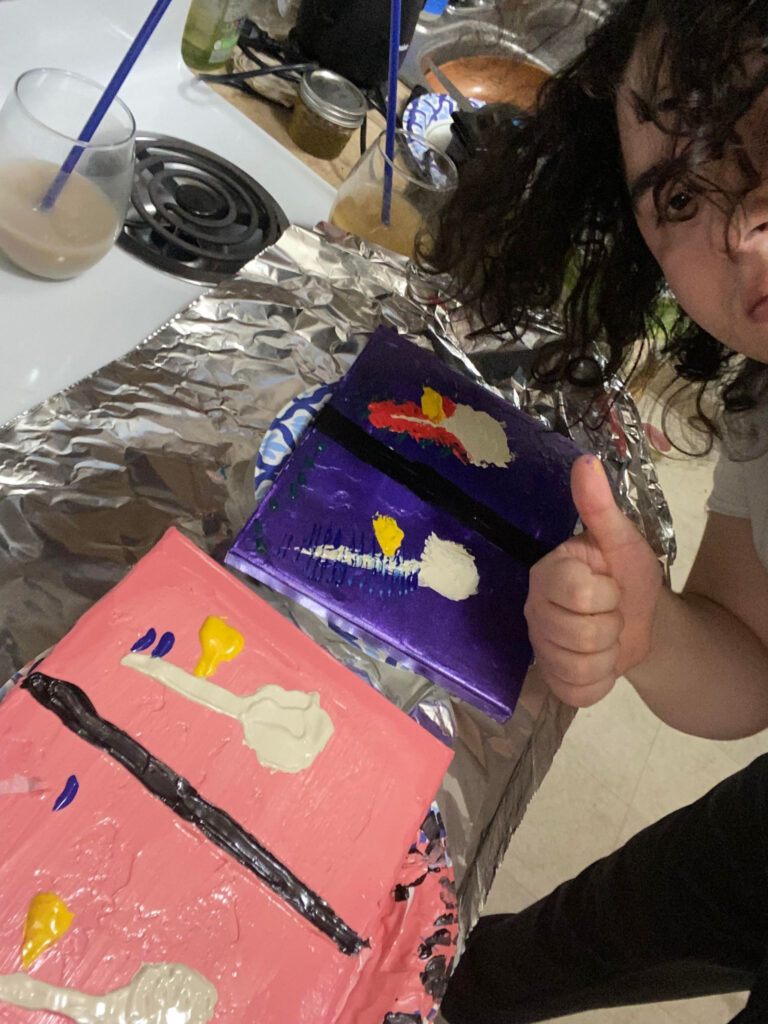
Progress Photo:
Day time:
Night Time:
Resources:
- Leung, Alexander Kc, et al. “Dermatology: How to Manage Acne Vulgaris.” Drugs in Context, U.S. National Library of Medicine, 11 Oct. 2021, pmc.ncbi.nlm.nih.gov/articles/PMC8510514/.
- Oh, Yejun. “Acne Vulgaris.” Knowledge Exchange, knowledge.e.southern.edu/crd/2021/postersession/15/. Accessed 22 Nov. 2025
- Moyaert, Paulien. YouTube, YouTube, www.youtube.com/watch?v=xbEqpYTkuXg. Accessed 22 Nov. 2025
- Open Stax: Anatomy and Physiology 2e: 165, 166, 167, 168, 173 and 176
STEAM Project Abstract
Acne
By Will Tolliver
I reviewed Will Tolliver’s project on acne, a common skin condition that develops when hair follicles get clogged and inflamed. His project explains what acne is, why it happens so often during puberty, and how the different parts of the skin play a role in creating breakouts.
Will starts by going over how acne forms. Sebaceous glands release oil to protect the skin, but when too much oil mixes with dead skin cells, the pore can get blocked. Bacteria that normally live on the skin start growing inside the clogged follicle, and the immune system reacts to that, which causes redness, swelling, and pain. He also explains the main causes of acne: excess oil, clogged pores, bacteria, and inflammation.
A big part of his project focuses on the layers of the skin. Will describes the epidermis, dermis, and hypodermis, and points out the specific cells and tissues in each layer. He also explains how hair follicles and sebaceous glands work, and how they connect directly to the development of pimples.
He also talks about the different types of acne, like whiteheads, blackheads, pustules, and cysts, and what makes each one different. Overall, Will’s project gives a clear explanation of how acne forms and shows how the structure of the skin and the immune system both contribute to a condition almost everyone deals with at some point.