There are four types of glial cells in the Central Nervous System and two types in the Peripheral Nervous System. CNS: astrocytes, oligodendrocytes, microglia, and ependymal cells. PNS: satellite cells and Schwann cells. Glial cells make up about half of the cells in the CNS and carry out all essential functions. These cells allow tissues in the brain to communicate with the rest of the body. Astrocytes support neurons, while oligodendrocytes make up the insulation in axons and serve to myelinate. Ependymal cells filter the blood and create cerebrospinal fluid – this fluid is essential to the blood-brain barrier. In the PNS, Schwann cells serve as the insulation for axons. These cells differ from oligodendrocytes in that they only reach one axon segment, while oligodendrocytes can reach multiple. Satellite cells are used in sensory and autonomic functions and surround the bodies of neurons.
Microglia are smaller, as their name suggests, and these cells are like the immune system for the brain. Microglia ingest pathogens and cells that may cause disease and are the first glial cells to migrate during prenatal development. This is important because they can be found near vital neuron routes, essentially guiding neurons and axons to the proper prenatal circuits. However, microglia can also be associated with neurodegenerative diseases like MS and Alzheimer’s.
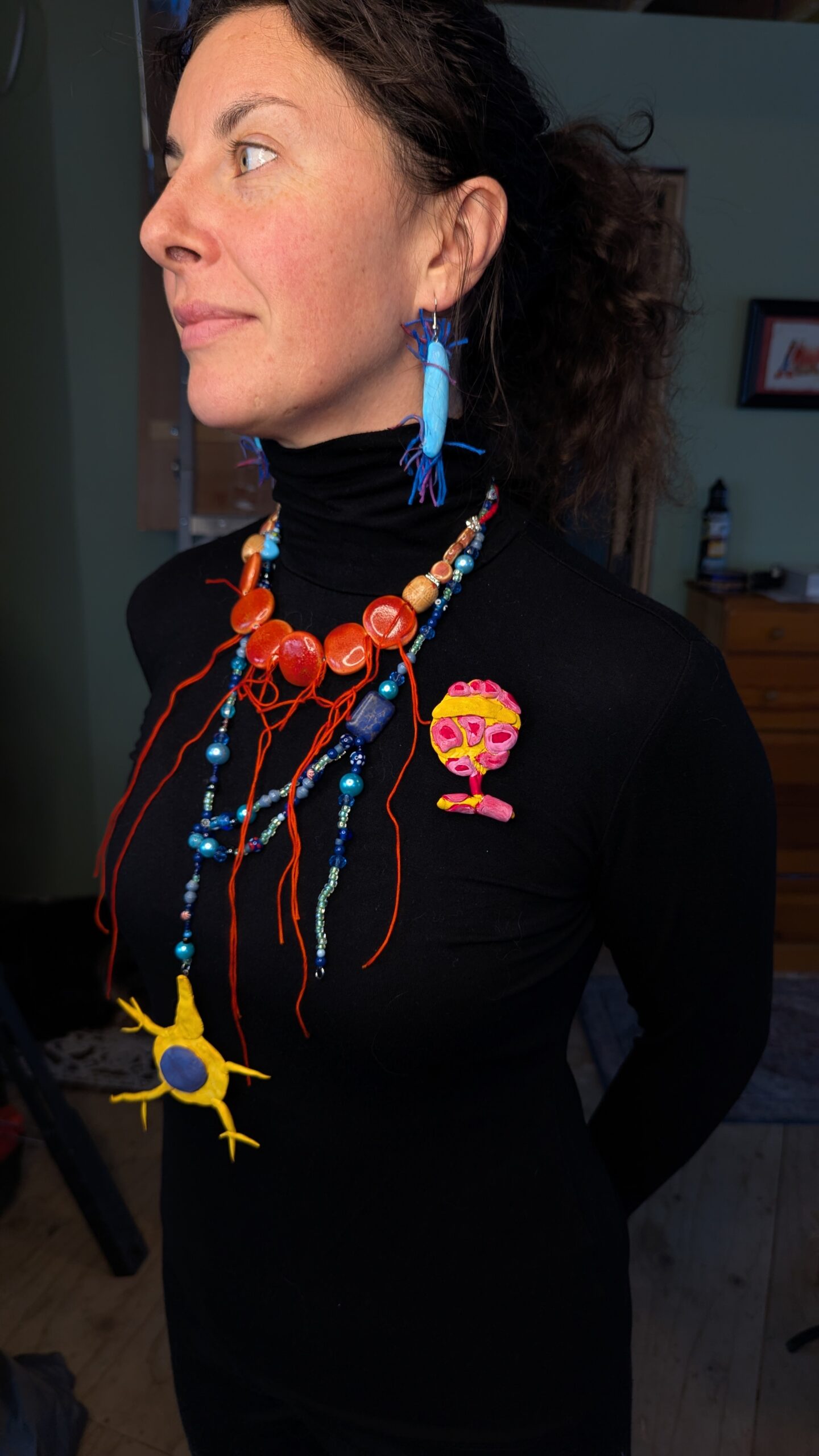
This person created a jewelry set of linked glial cells for both systems. Neurons, oligodendrocytes, and astrocyte beads make up a chain that work alongside an ependymal cell necklace. The glial cells of the PNS are seen as a broach, with a set of microglia earrings.
 Posted by
There are four types of glial cells in the Central Nervous System and two types in the Peripheral Nervous System. CNS: astrocytes, oligodendrocytes, microglia, and ependymal cells. PNS: satellite cells and Schwann cells. Glial cells make up about half of the cells in the CNS and carry out all essential functions. These cells allow tissues in the brain to communicate with the rest of the body. Astrocytes support neurons, while oligodendrocytes make up the insulation in axons and serve to myelinate. Ependymal cells filter the blood and create cerebrospinal fluid – this fluid is essential to the blood-brain barrier. In the PNS, Schwann cells serve as the insulation for axons. These cells differ from oligodendrocytes in that they only reach one axon segment, while oligodendrocytes can reach multiple. Satellite cells are used in sensory and autonomic functions and surround the bodies of neurons.
Microglia are smaller, as their name suggests, and these cells are like the immune system for the brain. Microglia ingest pathogens and cells that may cause disease and are the first glial cells to migrate during prenatal development. This is important because they can be found near vital neuron routes, essentially guiding neurons and axons to the proper prenatal circuits. However, microglia can also be associated with neurodegenerative diseases like MS and Alzheimer’s.
This person created a jewelry set of linked glial cells for both systems. Neurons, oligodendrocytes, and astrocyte beads make up a chain that work alongside an ependymal cell necklace. The glial cells of the PNS are seen as a broach, with a set of microglia earrings.