 Posted by
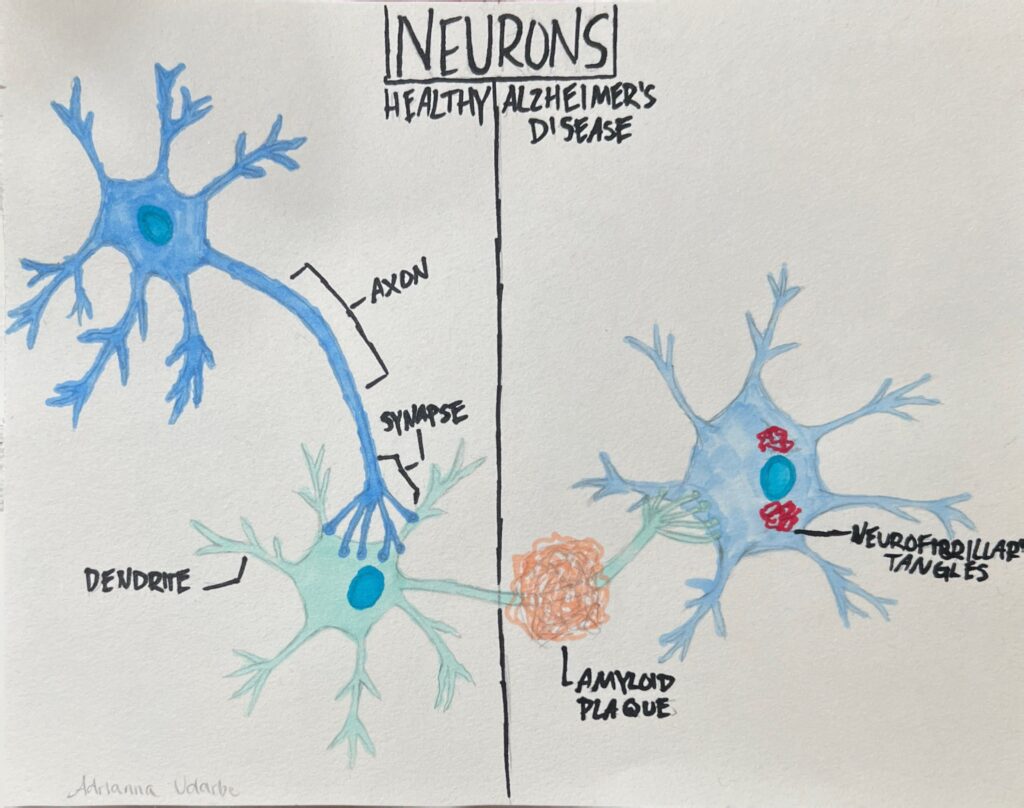
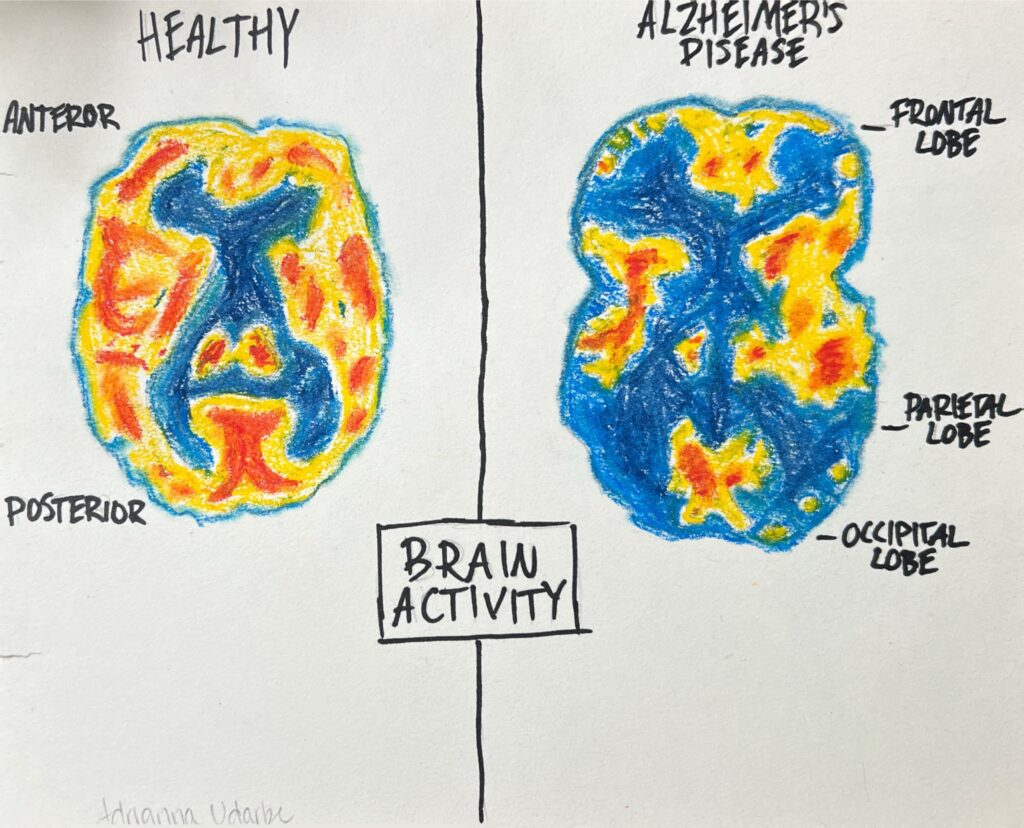
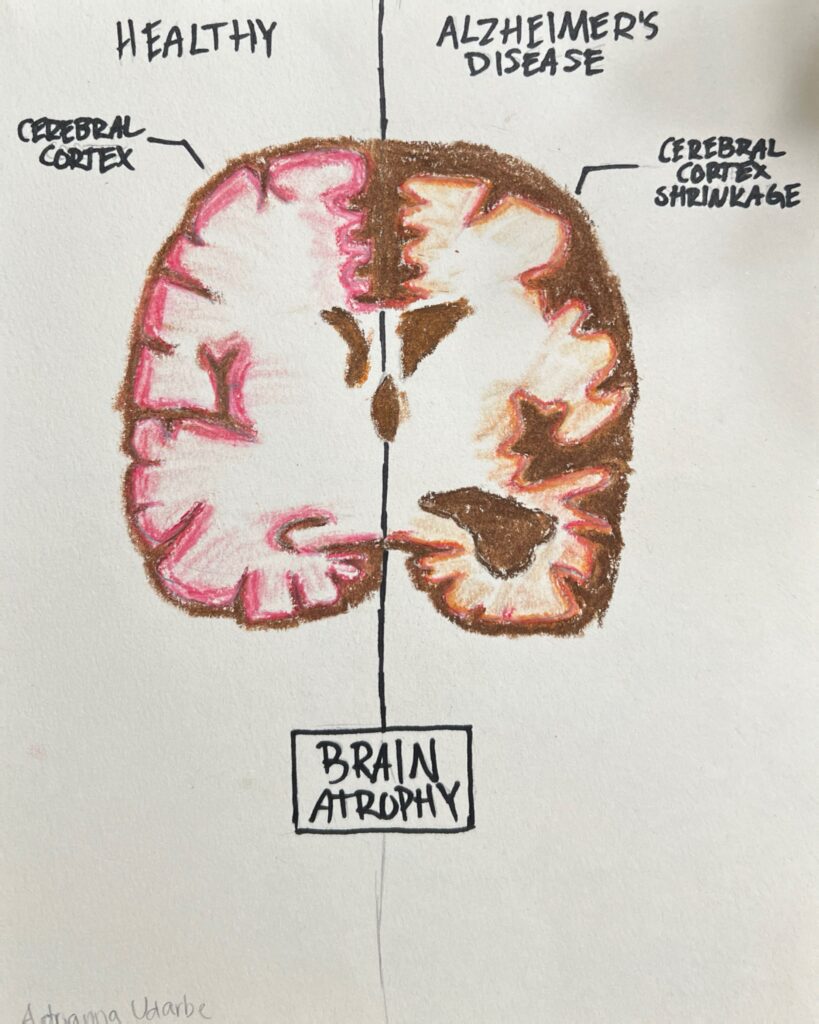
For my STEAM project, I researched Alzheimer’s disease and its effects on the nervous system, specifically the brain and neurons. With three separate images, I’ve drawn comparisons between a healthy brain and a brain with Alzheimer’s disease using markers and oil pastels. In the first image, I’ve shown how the buildup of beta-amyloid plaques and neurofibrillary tangles, the suspected cause of AD, cuts off neurotransmission between nerve cells, ultimately resulting in cell death. The second image is of two brain scans, one side being a healthy, fully-functioning brain, and the other one is a less active brain with AD, as cells have died. The third image is the interior of the cerebral cortex, one side being in good condition and the other having gone through shrinkage from AD. Having gone through such a drastic decline in health, the brain cannot perform its typical functions, especially in areas where AD accumulates the most. This would be regions such as the hippocampus, which is mainly responsible for the consolidation of memories.
Adrianna’s STEAM project covers Alzheimer’s disease and its effects on the nervous system, more specifically on the brain and the neurons.
Adrianna’s project highlights the various components and key structures of the nervous system and brain. She explains that Alzheimer’s is a neurological disease that is caused by the build up of beta-amyloid plaque in the brain. While everyone is born with beta-amyloid proteins, it is not clear as to what their actual function is, the theory is that they help fight infections and encourage injury recovery. She then explains how when more than one beta-amyloid they form oligomers and this forms the insoluble plaque which is the leading cause of Alzheimer’s. She then explains how the neurofibrillary tangles involve a protein called tau and that if they do not bind to microtubules they will stick to themselves and become tangles.
For Adrianna’s artistic portion of the project she split it into three portions, she drew three different examples of brains/structures of the brain. The first brain she drew showed the inside of the cerebral cortex, one half is fully functioning and the other shows what Alzheimer’s looks like. The second part is the brain at the superior view that shows different levels of brain activity, and she made sure to include one fully functional half and one with Alzheimer’s. The third part has to do with neurons and she shows a normal functioning neuron and compares it to another neuron how the beta-amyloid plaque and the neurofibrillary tangles form and presents as Alzheimer’s.
Adrianna gave an amazing presentation of how Alzheimer’s is presented and how it occurs, I think her drawings using oil pastels and markers are very colorful and she did a great job overall.