
 Posted by
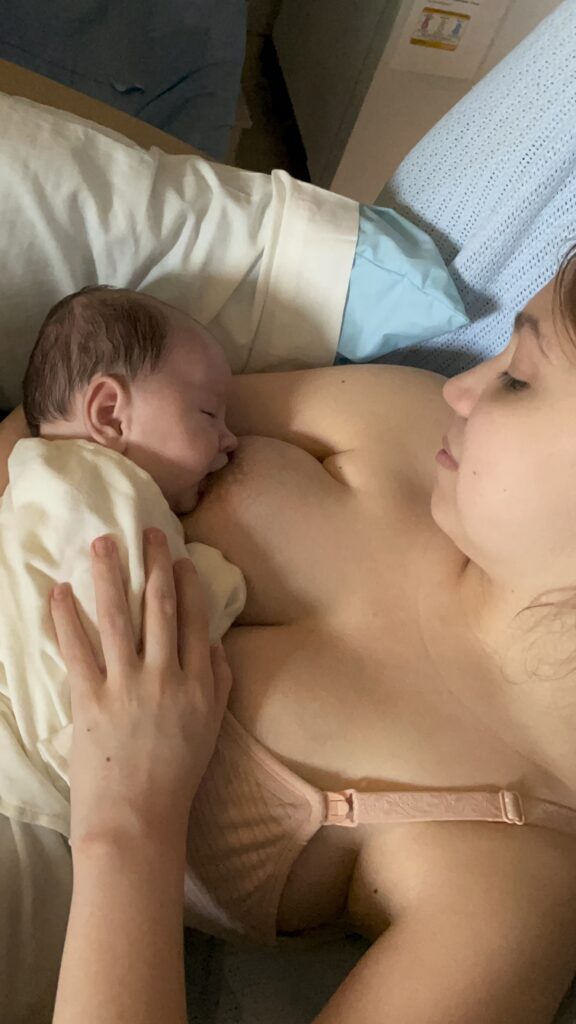
Breastfeeding is more than just feeding your baby, it’s a bonding process physiologically by hormones. OpenStax. (2023). Anatomy and physiology 2e (2nd ed., Chapter 28). OpenStax, Rice University. shares how towards the end of pregnancy when rising levels of placental estrogens, progesterone, and human placental lactogen (hPl) stimulate the hypothalamus to release Prolactin releasing factors (PRFs) these hormones signal to the anterior pituitary to secrete Prolactin. Prolactin is the hormone that is responsible for milk production in the mammary glands. After delivery the stimulus for milk production shifts to the mechanical act of infant suckling, which continues to prompt prolactin release and maintain a steady milk production. Oxytocin, released from the posterior pituitary stimulates Myoepithelial cells in the breast tissues to contract, pushing milk through the ducts and out of the nipple which is a process called the “let down reflex” and this reflex is an example of positive feedback. As long as the suckling continues the hormones continue to flow. Oxytocin is known as a “love hormone,” during nursing/breastfeeding oxytocin reduces maternal stress, and promotes calmness knowing the baby is getting fed and is safe in your arms. A mothers brain is rewired during nursing/breastfeeding to become more responsive to her babies signals Elevated Oxytocin levels have been linked to lower cortisol (a stress hormone) level and promotes psychological stability during the often emotionally intense postpartum period for both baby who went from the womb to the outside world, and the mom who wants to make sure her baby is always safe and well cared for. This neurochemical balance helps mothers feel more connected, feel less anxious and more capable of handling the demands of newborn care. Krol, K. M., & Grossmann, T. (2018). Psychological effects of breastfeeding on children and mothers. Psychologische Effekte des Stillens auf Kinder und Mütter. Bundesgesundheitsblatt, Gesundheitsforschung, Gesundheitsschutz, 61(8), 977–985.
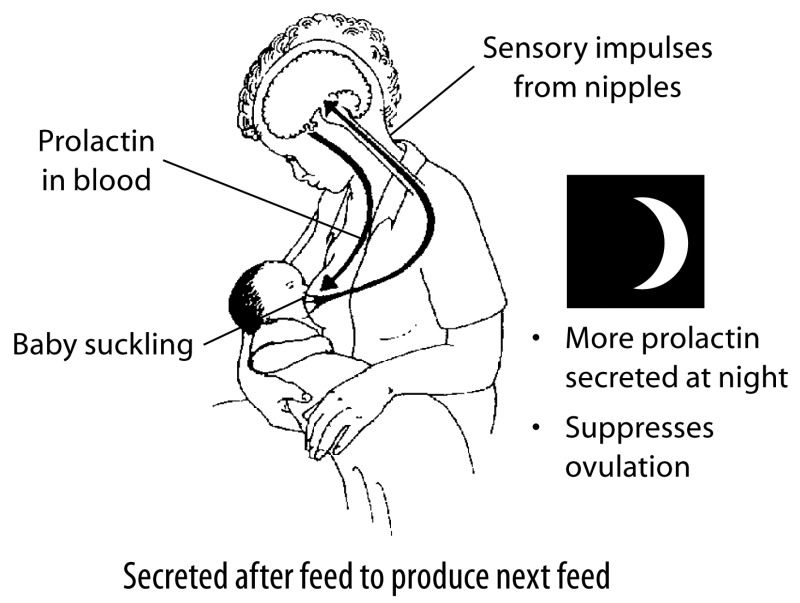
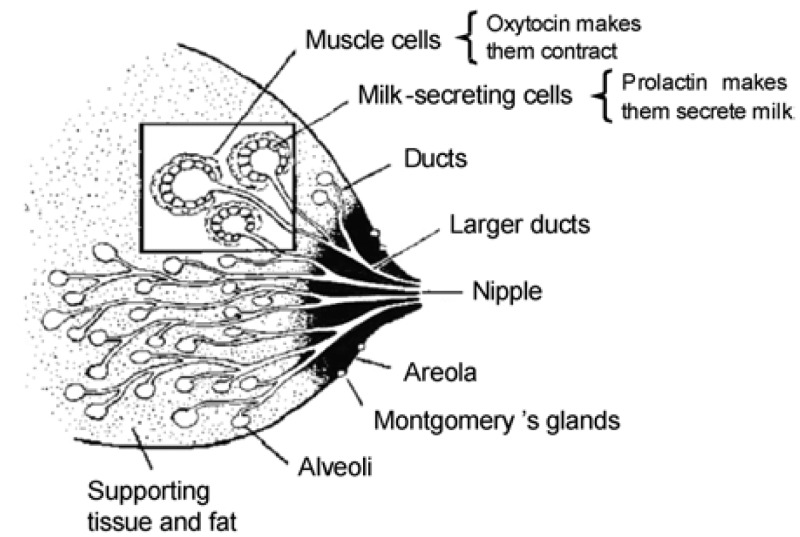
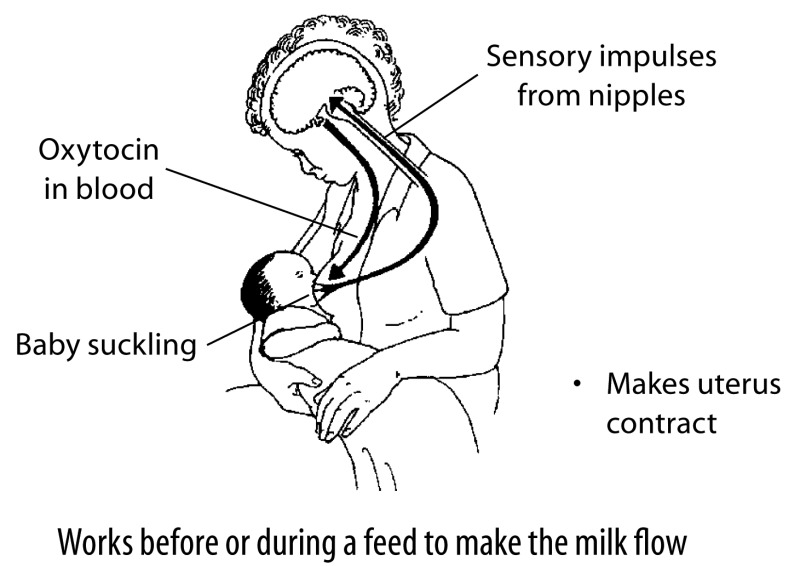
^Photo from : https://www.breastfeeding.asn.au/resources/let-down-reflex-and-your-milk-flow ^ Photo From: https://www.ncbi.nlm.nih.gov/books/NBK148970/?log$=activity
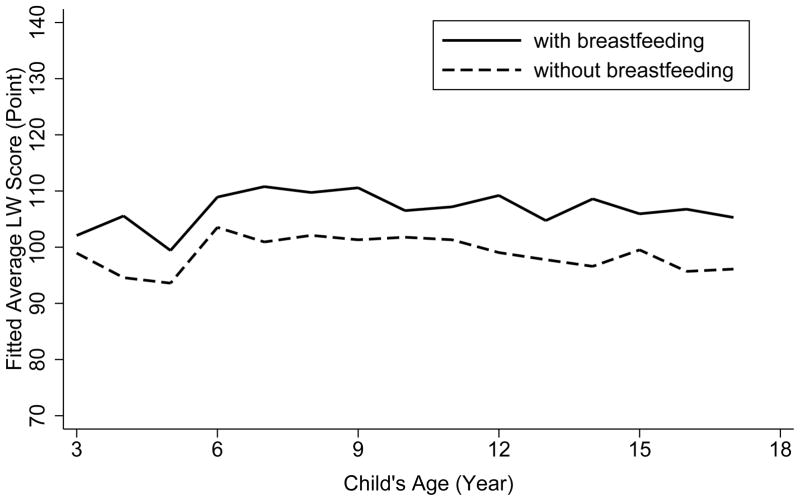
Breastmilk contains special antibodies and nutrients that help the body fight infections and support brain growth, a study Kim, K.M., Choi, JW. Associations between breastfeeding and cognitive function in children from early childhood to school age: a prospective birth cohort study. Int Breastfeed J 15, 83 (2020). mentions is children who were breastfed had a better cognitive function and higher test scores in early childhood and school age compared to formula fed babies, along with emotional and stress responses due to closeness and hormone exposure during nursing/breastfeeding. Breastfeeding helps build a healthy brain and strong immune system, moms and babies bodies respond to breastfeeding in a deeply connected physiological way that supports their health along after nursing ends which is always a goal for us parents.
References:
- -Unit 9, Reproductive system lecture notes covering “Explain how milk production is induced and maintained” “Explain the benefits of breastfeeding to both infant and mother” “Describe and relate to each other the physiological, hormonal changes in pregnancy”
- -OpenStax. (2023). Anatomy and physiology 2e (2nd ed., Chapter 28). OpenStax, Rice University https://openstax.org/books/anatomy-and-physiology-2e/pages/28-6-lactation?query=breast&target=%7B%22index%22%3A0%2C%22type%22%3A%22search%22%7D#fs-id2797558
- -Infant and Young Child Feeding: Model Chapter for Textbooks for Medical Students and Allied Health Professionals. Geneva: World Health Organization; 2009. SESSION 2, The physiological basis of breastfeeding. Available from: https://www.ncbi.nlm.nih.gov/books/NBK148970/?log$=activity
- -Kim, K.M., Choi, JW. Associations between breastfeeding and cognitive function in children from early childhood to school age: a prospective birth cohort study. Int Breastfeed J 15, 83 (2020). Available from: https://internationalbreastfeedingjournal.biomedcentral.com/articles/10.1186/s13006-020-00326-4?
- -Krol, K. M., & Grossmann, T. (2018). Psychological effects of breastfeeding on children and mothers. Psychologische Effekte des Stillens auf Kinder und Mütter. Bundesgesundheitsblatt, Gesundheitsforschung, Gesundheitsschutz, 61(8), 977–985. Available from: https://pmc.ncbi.nlm.nih.gov/articles/PMC6096620/
Abstract of Sabrina Heaven
Sepsis happens when the immune system overreacts to an infection, causing widespread tissue damage. This project uses a narrative medium of a wrestling match, “The Bacteria Beatdown,” pitting Staph Slam ‘Em Ococcus against the Incredible Immune System.