 Posted by

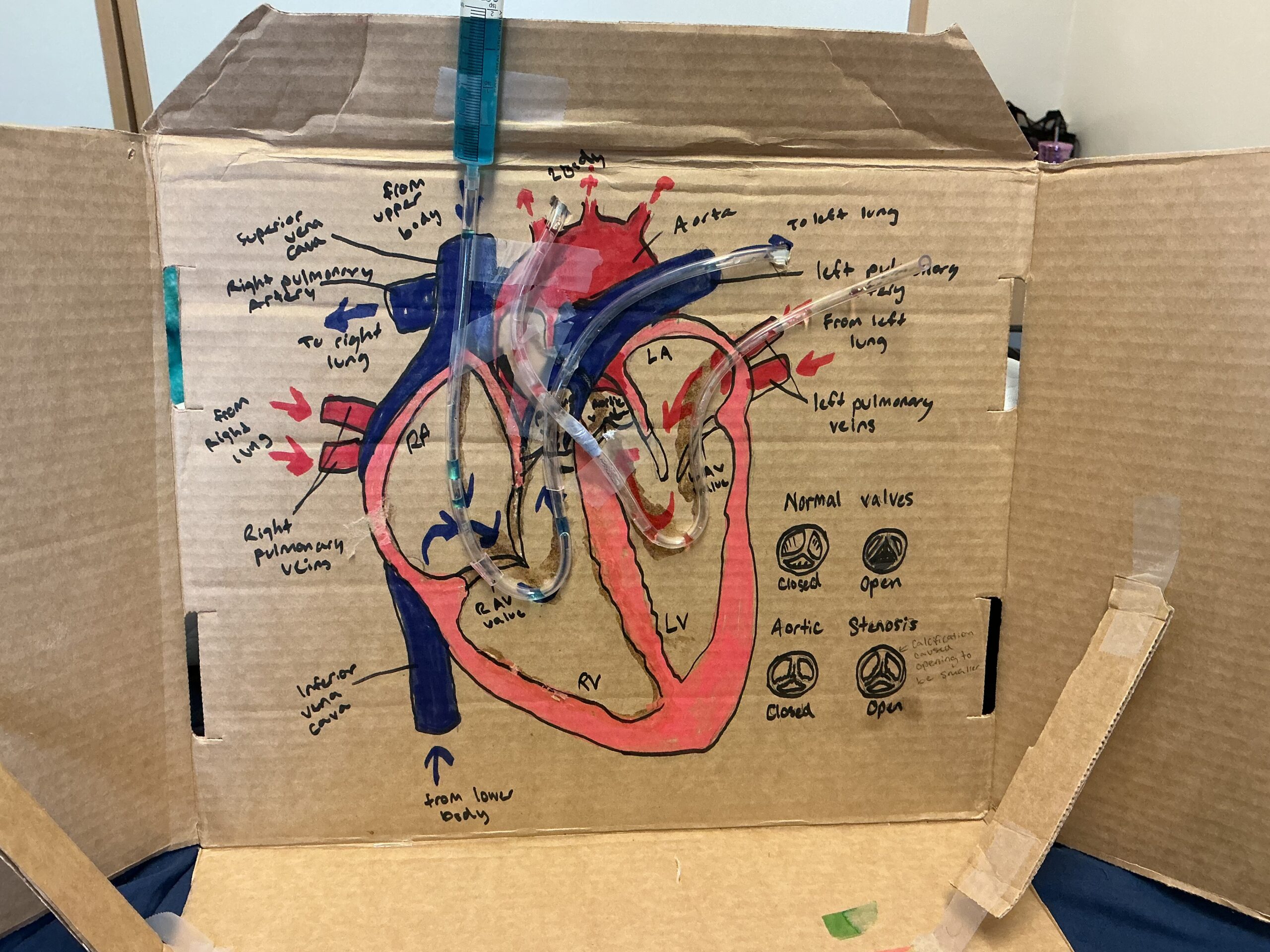
Steam Project; Aortic Stenosis
“Aortic stenosis is perhaps the most common of all valvular heart diseases in the developed nations of the world” (Carabello, 2013). So what exactly is it?
Aortic stenosis is a valvular heart disease caused by the calcification of the aortic valve. This connects the left ventricle to the aorta. Aortic stenosis has 3 major forms: degenerative stenosis of the 3-leaflet valve, bicuspid aortic valve stenosis, and rheumatic aortic stenosis (Alizadeh, L., et al. 2024). The most common of these forms is degenerative stenosis of the 3-leaflet valve, which is the focus of this project. The calcification of the aortic valve likely occurs via inflammation due to an endothelial injury. Endothelial injury allows the infiltration of oxidized lipids and inflammatory cells such as macrophages, T-lymphocytes, and mast cells while also releasing proinflammatory mediators. These inflammatory cells contribute to oxidative stress and microcalcification of the valve leaflets. During the propagation phase the proinflammatory processes induce valve interstitial cells to undergo osteogenic differentiation. This is through several different mechanisms including the binding of kappa B ligand to activator kappa B. This pathway involves NF-kb transcription factor signaling, which may further promote calcification (Zhao, G., et al. 2012). These cells lay a collagen matrix and other proteins that cause the valves to thicken and stiffen before calcium production. Once calcification begins, it creates a compliance mismatch that increases mechanical stress to the valves, leading to further calcification (Ito, S. & Oh, K. J. 2022). The calcification within the valves creates a positive feedback loop of further calcification. What does this calcification cause?
Aortic stenosis can cause many symptoms such as dyspnea, heart failure, angina, syncope, left ventricle muscle enlargement, and more. Some of these symptoms may be related to the way the blood flows through the aortic valve and the rest of the heart. To understand how these effects may occur, it’s important to understand the normal path of blood flow throughout the heart. Deoxygenated blood flows from the body tissues to the vena cava into the right atrium, passing through the tricuspid valve into the right ventricle, then through the pulmonary valve into the pulmonary arteries into the lungs, where it is reoxygenated. The reoxygenated blood flows from the lungs to the pulmonary veins, then through the left atrium, through the bicuspid valve into the left ventricle, and finally through the aortic valve into the aorta. From the aorta the oxygenated blood is delivered throughout the body through arteries, arterioles, capillaries, venules, and veins. Considering that the flow of oxygenated blood from the heart to the rest of the body is being affected, we can relate some of the symptoms to that.
Angina is a presenting symptom in approximately 35% of AS. (Carabello, A. B. 2013). The definitive cause of angina is uncertain, but is likely a blend of multiple anatomical and pathophysiologic variables. Syncope is the brief loss of consciousness, often due to an interruption of blood flow, but in the case of AS it is caused by hypotension. Syncope associated with AS often occurs during exercise, this is likely due to an abnormality in cardiac output leading to hypotension. According to Introduction to Aortic Stenosis one theory for exercise-induced syncope in AS is that exercise leads to peripheral vasodilation. So in AS due to the high resistance at the aortic valve this can prevent cardiac output from increasing, but there is still vasodilation which leads to a blood pressure decline. (Carabello, A. B. 2013).
What are treatments for aortic stenosis? For severe aortic stenosis the main treatment would be transcatheter aortic valve replacement or surgical aortic valve replacement. Transcatheter aortic valve replacement (or TAVR) is a minimally invasive approach, usually from the femoral artery that uses self expandable or balloon expandable valves to open and replace the aortic valve. Meanwhile, surgical aortic valve replacement (SAVR) is more invasive with direct surgery to replace the calcified valve. The recommended guideline for choosing between these two is age, younger patients who are suitable for surgery are recommended SAVR, meanwhile older patients are recommended TAVR. (Srinivasan, A. et al. 2024). There have been other attempts at therapeutic treatments for aortic stenosis, but many of them have failed to show significant benefits. (Gravel, M. G. et al. 2016)
The best way to try and prevent aortic stenosis is to decrease the risk factors associated with it. These include eating a healthy diet that is low in fatty foods, avoiding smoking, regularly exercising, maintaining your blood pressure, and maintaining your cholesterol levels. Because aortic stenosis is a common and potentially life-threatening valvular disease it is important for early recognition, monitoring, and appropriate treatment to improve patient outcomes.
Citations
Badiani, S., Bhattacharyya, S., Aziminia, N., Treibel, A. T., & Lloyd, G. (2021) Moderate Aortic Stenosis: What is it and When Should We Intervene? https://pmc.ncbi.nlm.nih.gov/articles/PMC8201468/
Saki, I. & Oh, K. J. (2022) Aortic Stenosis: New Insights in Diagnosis, Treatment, and Prevention. https://pmc.ncbi.nlm.nih.gov/articles/PMC9551229/
Cinezan, C., Rus, B. C., & Ilias, T. L. (2025) Unraveling the Link Between Aortic Stenosis and Atherosclerosis: What Have We Learned? https://www.mdpi.com/1648-9144/61/8/1375
Zhao, G., Xu, J. M., Zhao, M, M., Dai, Y. X., Kong, W., Wilson, M. G., Guan, Y., Wang, Y, C., & Wang, X. (2013) Activation of Nuclear Factor – Kappa B Accelerates Vascular Calcification by Inhibiting Progressive Ankylosis Protein Homolog Expression. https://pmc.ncbi.nlm.nih.gov/articles/PMC3376207/
Alizadeh, L., Peters, F., Vainrib, F., A., Freedberg, S., R., & Saric, M. (2024) Rheumatic Heart Disease: A Rare Cause of Very Severe Valvular Aortic Stenosis https://www.sciencedirect.com/science/article/pii/S2468644124000707
Srinivasan, A., Wong, F., & Wang. B. (2024) Transcatheter Aortic Valve Replacement: Past, Present, and Future. https://pmc.ncbi.nlm.nih.gov/articles/PMC10788655/
Video of my steam project:
https://drive.google.com/drive/folders/1k9z2UQFYWAzQgaMNULKI39CRg9jZyqS5