
 Posted by
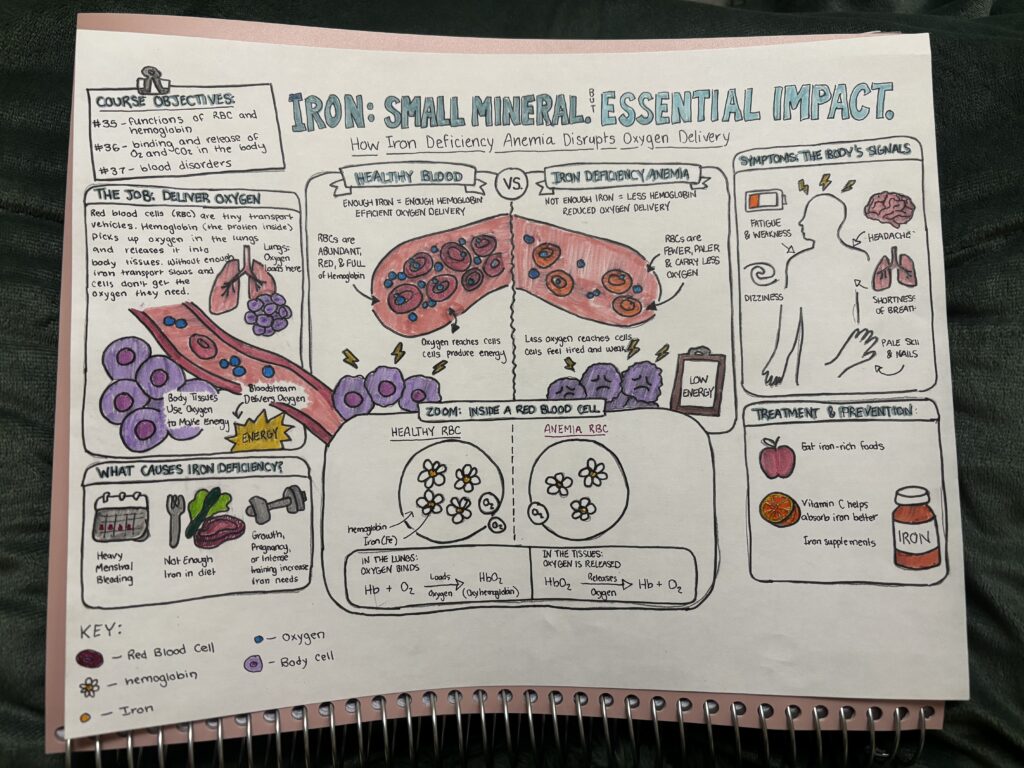
This project focuses on iron deficiency anemia and how it affects the body’s ability to transport oxygen. It connects to the course objectives of describing the function of red blood cells and hemoglobin, explaining how oxygen is carried and released in the body, and understanding disorders of the blood . The purpose of this piece is to show how a change in one component of the circulatory system, specifically iron availability, can affect oxygen delivery and overall cellular function throughout the entire body.
Red blood cells are specialized cells that play a major role in transporting oxygen from the lungs to body tissues and carrying carbon dioxide back to the lungs for removal. Inside each red blood cell is hemoglobin, a protein made up of four subunits, each containing an iron atom within a heme group. These iron atoms are what allow hemoglobin to bind oxygen molecules. In the lungs, where oxygen concentration is high, oxygen binds to hemoglobin to form oxyhemoglobin. As blood travels to tissues with lower oxygen concentrations, hemoglobin releases oxygen so it can be used by cells. This process is influenced by factors such as partial pressure gradients, pH, and temperature, which all affect how easily hemoglobin binds and releases oxygen (Camaschella, 2015). This balance ensures that oxygen is delivered efficiently to areas of the body that need it most.
Iron deficiency anemia occurs when there is not enough iron available to produce adequate hemoglobin. Iron is an essential component of the heme group, so without it, hemoglobin production decreases. This leads to a reduction in both the number and quality of red blood cells. In many cases, red blood cells become smaller (microcytic) and contain less hemoglobin (hypochromic), making them less effective at carrying oxygen. Because of this, the total oxygen-carrying capacity of the blood decreases significantly. This condition is one of the most common nutritional deficiencies worldwide and is especially important because it directly affects oxygen delivery at the cellular level (Killip et al., 2007). When oxygen delivery is reduced, cells are forced to adapt. Normally, cells rely on oxygen to produce ATP through aerobic respiration. However, when oxygen levels are low, cells may shift toward less efficient anaerobic pathways, resulting in decreased energy production. This contributes to the common symptoms of iron deficiency anemia, such as fatigue, weakness, and reduced endurance. Additionally, tissues that have high energy demands, such as muscles and the brain, are particularly affected. This explains symptoms like dizziness, headaches, and difficulty concentrating. The heart may also compensate by increasing heart rate in an attempt to circulate oxygen more quickly, which can lead to additional strain on the cardiovascular system.Iron also plays a role beyond oxygen transport. It is involved in enzymes and metabolic pathways that are essential for energy production and cellular function. When iron levels are low, these processes are disrupted, further contributing to the overall effects of anemia (Ganz & Nemeth, 2012). This shows that iron deficiency is not just a problem of oxygen transport, but a broader issue that impacts multiple systems in the body.
The drawing represents these concepts using a side-by-side comparison between normal oxygen transport and iron deficiency anemia. On one side, red blood cells are shown as abundant and filled with hemoglobin, efficiently carrying oxygen to body tissues. Oxygen is represented as moving easily from the lungs to the cells, and the cells appear energized and functioning normally. On the other side, the red blood cells are fewer, smaller, and contain less hemoglobin, resulting in reduced oxygen delivery. The body’s cells are depicted as fatigued and weakened, visually demonstrating how decreased oxygen availability affects overall function.A in depth section of the artwork in the bottom middle focuses on the structure of hemoglobin within a red blood cell. This section illustrates how oxygen binds to the iron within the heme groups, providing a deeper look at the molecular basis of oxygen transport. Including this level of detail goes beyond basic course material by connecting microscopic structure to large-scale physiological effects. It emphasizes how changes at the molecular level can lead to significant changes in how the body functions as a whole.
Overall, this project demonstrates how iron deficiency anemia disrupts the body’s ability to transport oxygen and maintain normal energy production. By combining scientific detail with a creative and visual representation, the project helps explain a complex physiological process in a more understandable way. It highlights the importance of iron, hemoglobin, and red blood cells in maintaining homeostasis and shows how a deficiency in one component can impact multiple systems throughout the body.