 Posted by

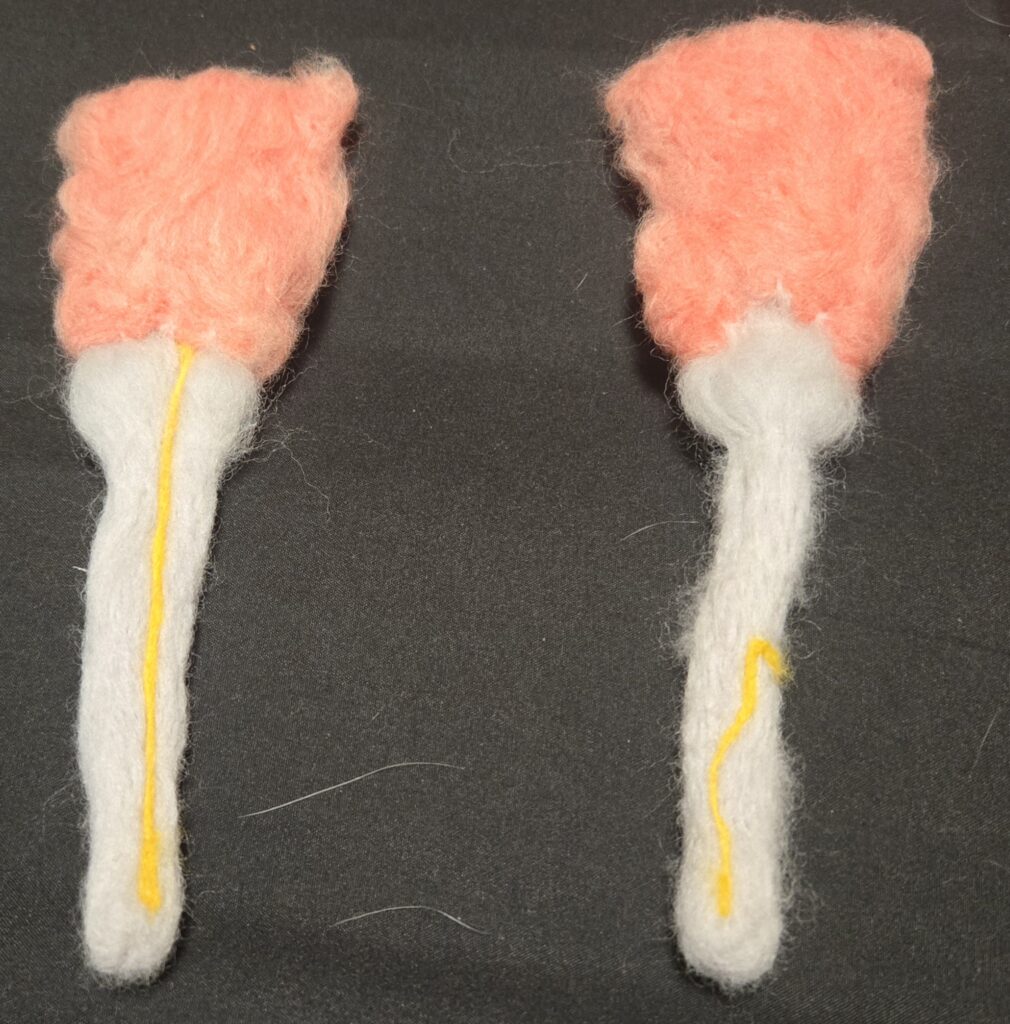
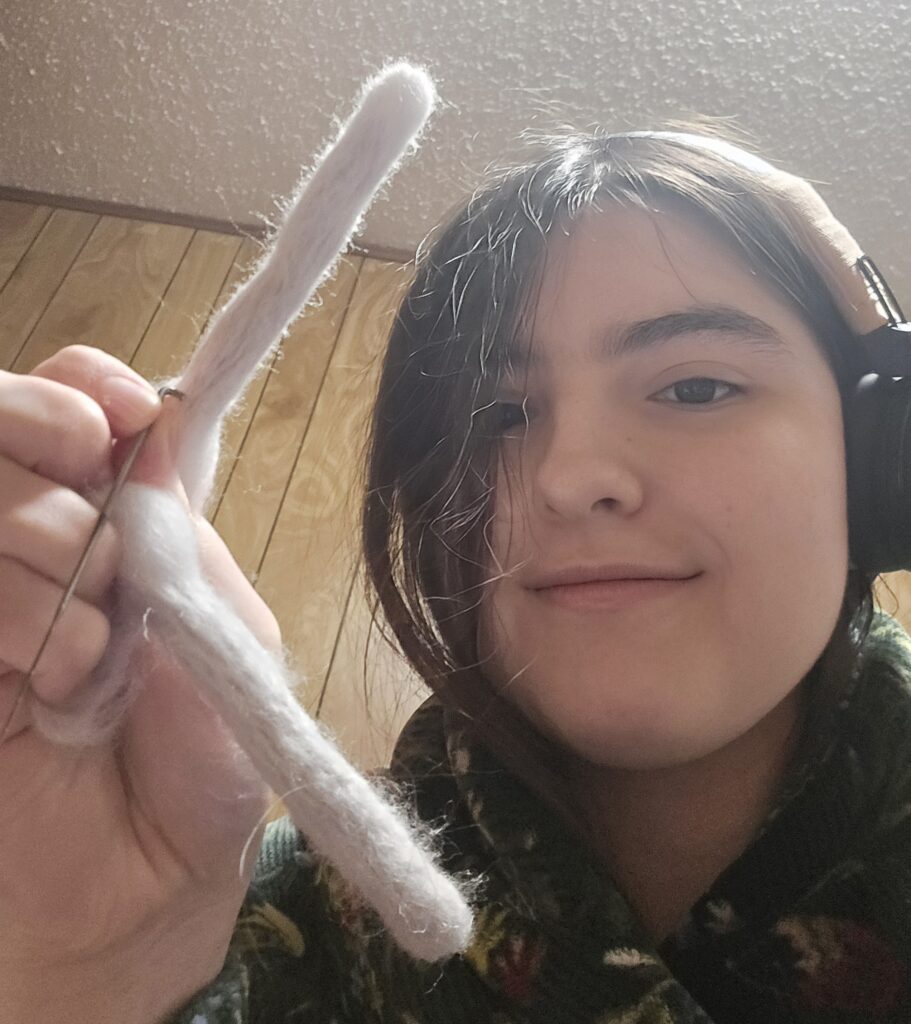
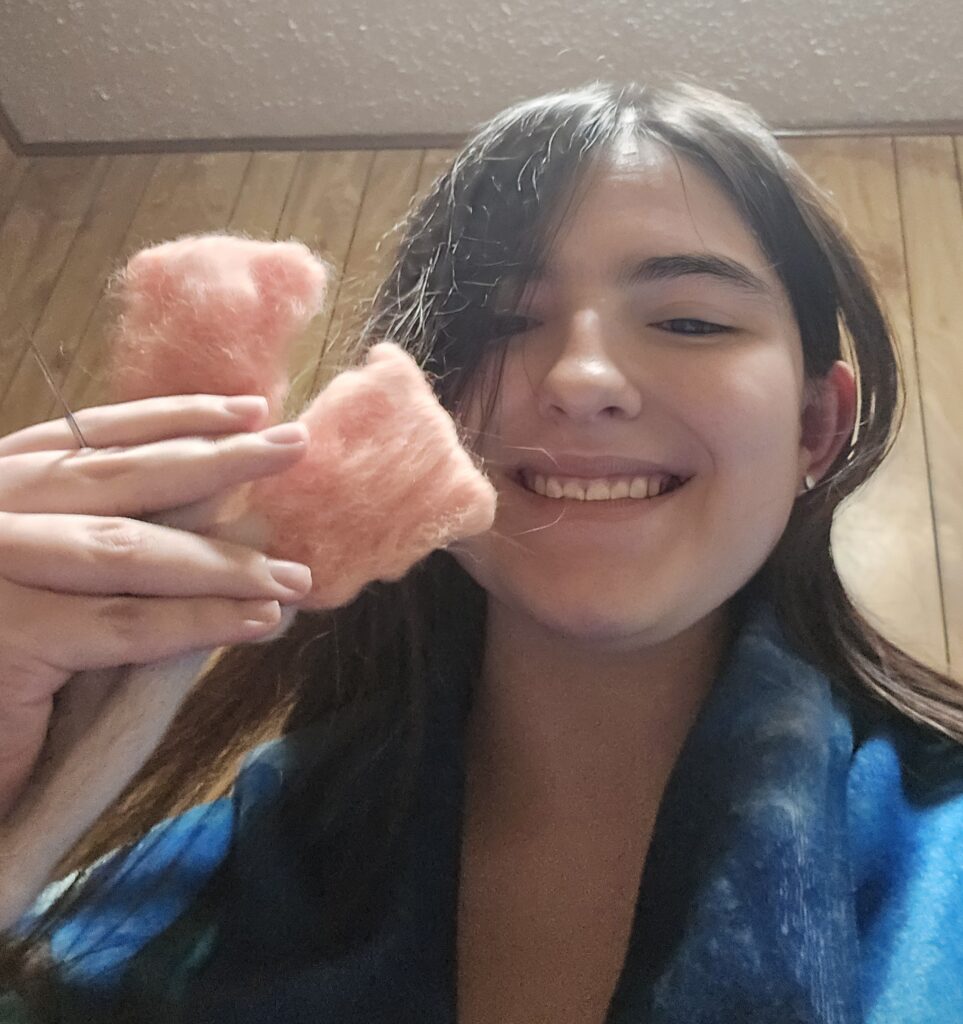
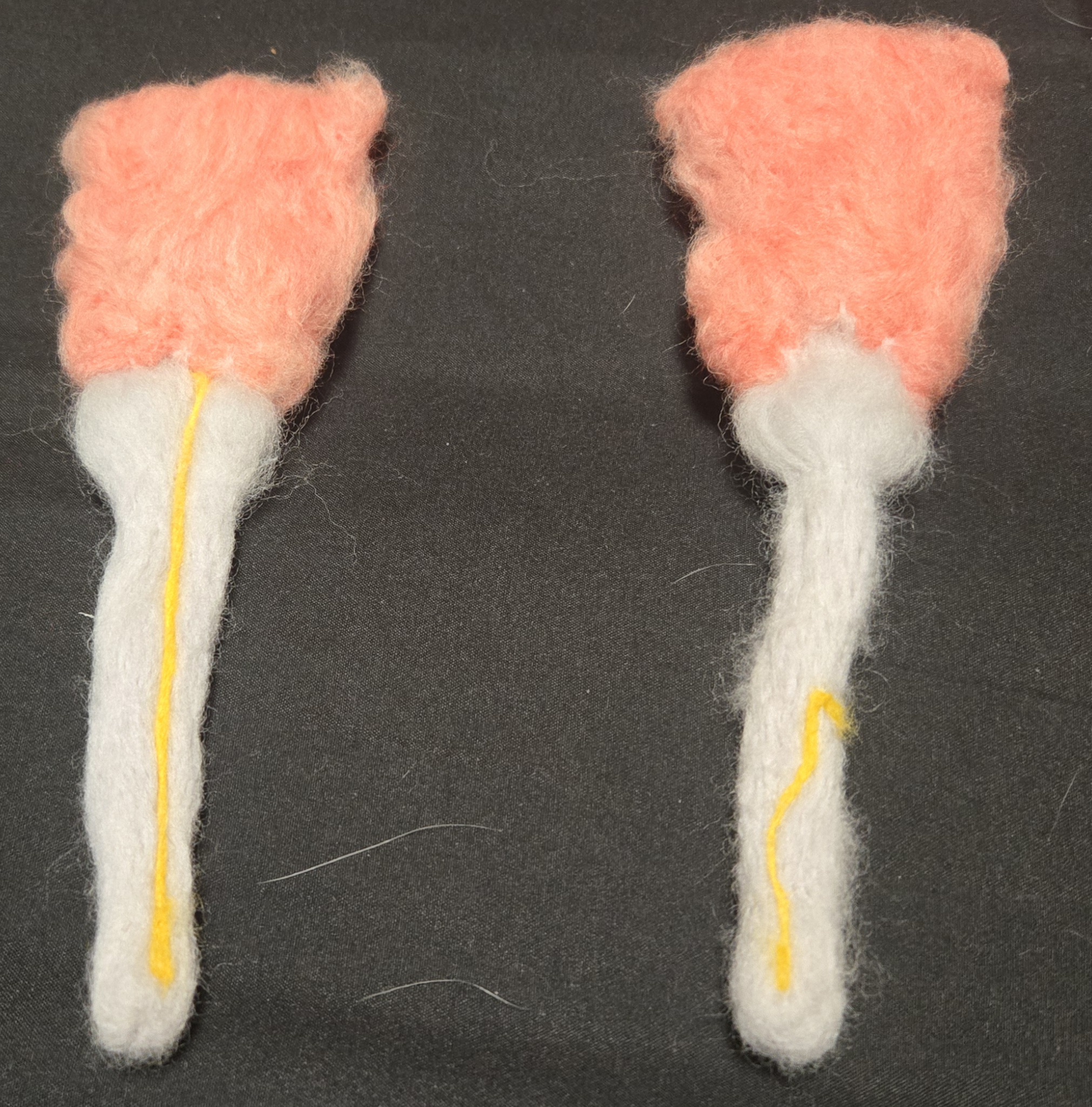
My STEAM project will cover the Unit 3 objective; compare and contrast the function and structural characteristics of tissues. I will do this by comparing normal tissue in tendons to those in people with hypermobile Ehlers-Danlos Syndrome. I used loose wool and a felting needle to felt two three-dimensional models of a tendon attached to muscle.
Hypermobile Ehlers-Danlos Syndrome (hEDS) is a genetic tissue disorder that is part of the larger group of conditions known as Ehlers-Danlos Syndrome (EDS). It is the most common type of EDS, but does not yet have an identified gene. This is a condition that affects the body’s ability to process collagen, an integral protein to the maintenance of many parts in the body. In the case of hEDS, it mainly affects the collagen in tendons and ligaments, causing issues with balance and frequent dislocations.
The gray wool is the collection of collagen fibers that make up the tendon. In the left model, these fibers are uniformly organized as the collagen is processed properly as it would be in the average person. In the right model, these fibers are frayed and more disorganized as collagen struggles to be processed as it should be in those with hypermobile Ehlers-Danlos Syndrome.
The pink wool is the representation of muscle where the tendon connects to. This connection allows muscles to help with movement of the skeletal system. The looser, misshapen tendon in the right model will struggle more in being able to adequately connect the muscle to bone than the left model.
The yellow wool is a clearer representation of an individual collagen fiber in the tendon. In the left model, this fiber is straight and complete, meaning it has no tears. In the right model, this fiber is wavy and torn, making it incomplete. This helps to highlight how the shape of individual fibers can significantly affect the shape of the whole tendon, as well as its ability to properly function. Misshapen collagen fibers lead to the tendon being structurally unstable, ultimately causing the extreme issues with maintaining balance often seen in those with hEDS.
Evelyn’s STEAM project examines Hypermobile Ehlers-Danlos syndrome (hEDS) by comparing the structural differences in collagen fibers in tendons between those without hEDS and those with the condition. hEDS is one of the many Ehlers-Danlos syndrome (EDS) connective tissue disorders. hEDS is the most common of all these disorders, and remains without an identifiable gene. This disorder changes the way the body metabolizes collagen. The condition primarily affects the collagen of ligaments and tendons. This leads to frequent dislocations, injuries, poor coordination, and imbalance. In other variations of EDS, different types of collagen are affected. This can lead to severe issues with multiple organs, such as the skin and eyes. This condition can also cause spinal deformities. Collagen is the most abundant protein in the body, so when someone has this condition, it causes issues all over the body. Evelyn used wool threading to create tendons for both a person without the condition and a person with the condition. In a person without the disorder, the collagen fibers of their tendons are uniformly organized and appropriately metabolized. In a person with hEDS, collagen fibers are frayed and disorganized since the collagen is metabolized incorrectly. The cause of hEDS remains unknown, whereas there is well-documented research and evidence for all other types of EDS. hEDS is a lifelong, life-altering condition that demands further research and better treatment options.