 Posted by
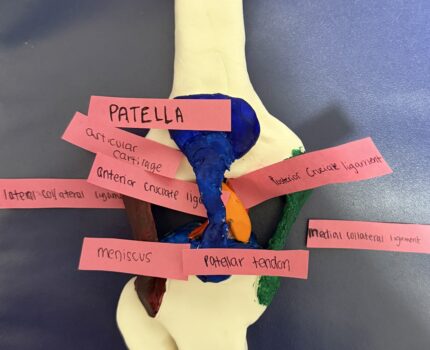
The knee joint has several ligaments and tendons that it uses for every day movements like jumping, running, walking, flexion, and extension of the leg. The most commonly known ligaments being the anterior cruciate ligament (ACL) and the medial cruciate ligament (MCL). However, the posterior cruciate ligament (PCL), lateral cruciate ligament (LCL) and the medial patellofemoral ligament are all just as important. All the ligaments in the knee work together to keep the knee stabilized and prevent things like overextension or dislocation (Tendon vs. Ligament: Understanding the Difference, 2025). They also work hand in hand with the tendons of the knee as they are very similar. Both are made of dense connective tissue, tendons are just more fibrous (Tendon vs. Ligament: Understanding the Difference, 2025). The most commonly known tendon in the knee is the patellar tendon. Tendons are supposed to help with movement when they’re fully healthy. That’s what the other tendons of the knee like the quadriceps tendon, hamstring tendons, popliteus tendon, and the pes anserinus tendons do as well (Cluett, 2009). Commonly, people will hear about injuries to the ACL, MCL or the patellar tendon. Just as much as any other part of the body, when something gets injured, it makes life hard. The knee joint also happens to be one of the most vulnerable and easily injured joints because of the vital role it plays (Zhang et al., 2020). The knee joint as a whole is also so complex that it has influence on other parts of the body. The integrity of the knee joint can affect the mobility of the ankle joint (Shao et al., 2022). Ligaments are extremely important in the knee joint so they usually end up taking most of the stress from movements, especially in athletes. This is why a good bit of knee injuries seen are a ligament injury. As much as 23.6% of knee injuries are a sprain or tear of a ligament (Li et al., 2024). It’s also made evident that the PCL and ACL take on most of the stress from lower movements. The PCL, a ligament that people usually don’t hear about getting damaged, takes on the brunt of the force for the forward and backwards motions (Li et al., 2024). While the ACL, a ligament that people often hear about getting damaged, absorbs the majority of the workload for side to side movements (Li et al., 2024). While the knee joint may be one of the most complex and important joints in the body, they all each have their own uses. The elbow joint and the knee joint are actually surprisingly similar as they are also both hinge point joints, the knee is just a modified hinge point (Cleveland Clinic, 2024). The elbow joint, knee joint, shoulder joint, ankle joint, and hip joint are similar because they are all synovial joints (Biga et al., 2025). The hip joint has relatively more muscles than the knee joint and is also a ball and socket joint unlike the knee which is a hinge point joint (Differences and similarities between knee and hip replacement surgeries 2024). The knee joint and the ankle joint are also different but their differences are what allow the walking process to work so well because of the ankle joints flexibility, something the knee joint doesn’t have as much of. The shoulder joint is also different from the knee joint in its largely wider range of motion, as well as not using muscles for support and not just ligaments (Wilson, 2024).
References
Wilson, C. (2024, November 5). Shoulder ligaments: Anatomy, function & injuries. Shoulder. https://www.shoulder-pain-explained.com/shoulder-ligaments.html
Cleveland Clinic. (2024, February 7). Which Type of Joint Is the Elbow? Cleveland Clinic. https://my.clevelandclinic.org/health/body/elbow-joint
Differences and similarities between knee and hip replacement surgeries. University of Utah Health | University of Utah Health. (2024, October 8). https://healthcare.utah.edu/the-scope/all/2015/03/differences-and-similarities-between-knee-and-hip-replacement-surgeries
Shao, B., Xing, J., Zhao, B., Wang, T., & Mu, W. (2022). Role of the proximal tibiofibular joint on the biomechanics of the knee joint: A three-dimensional finite element analysis. Injury, 53(7), 2446–2453. https://doi.org/10.1016/j.injury.2022.05.027
Li, J., Liu, H., Song, M., Lin, F., Zhao, Z., Wang, Z., Hou, L., Zhao, G., & Ren, W. (2024). Biomechanical characteristics of ligament injuries in the knee joint during impact in the upright position: a finite element analysis. Journal of Orthopaedic Surgery and Research, 19(1). https://doi.org/10.1186/s13018-024-05064-5
Tendon vs. Ligament: Understanding the Difference. (2025). Floridaboneandjoint.com. https://www.floridaboneandjoint.com/blog/2025/tendon-vs-ligament-understanding-the-difference.html
Zhang, L., Liu, G., Han, B., Wang, Z., Yan, Y., Ma, J., & Wei, P. (2020). Knee Joint Biomechanics in Physiological Conditions and How Pathologies Can Affect It: A Systematic Review. Applied Bionics and Biomechanics, 2020, 1–22. https://doi.org/10.1155/2020/7451683
Cluett, J. (2009, May 17). Anatomy of the Knee. Verywell Health; Verywellhealth. https://www.verywellhealth.com/knee-anatomy-2549239
Biga, L. M., Bronson, S., Dawson, S., Harwell, A., Hopkins, R., Kaufmann, J., LeMaster, M., Matern, P., Morrison-Graham, K., Oja, K., Quick, D., Runyeon, J., & OpenStax. (2025, September). 9.4 Synovial Joints. Anatomy & Physiology 2e; Oregon State University. https://open.oregonstate.education/anatomy2e/chapter/synovial-joints/
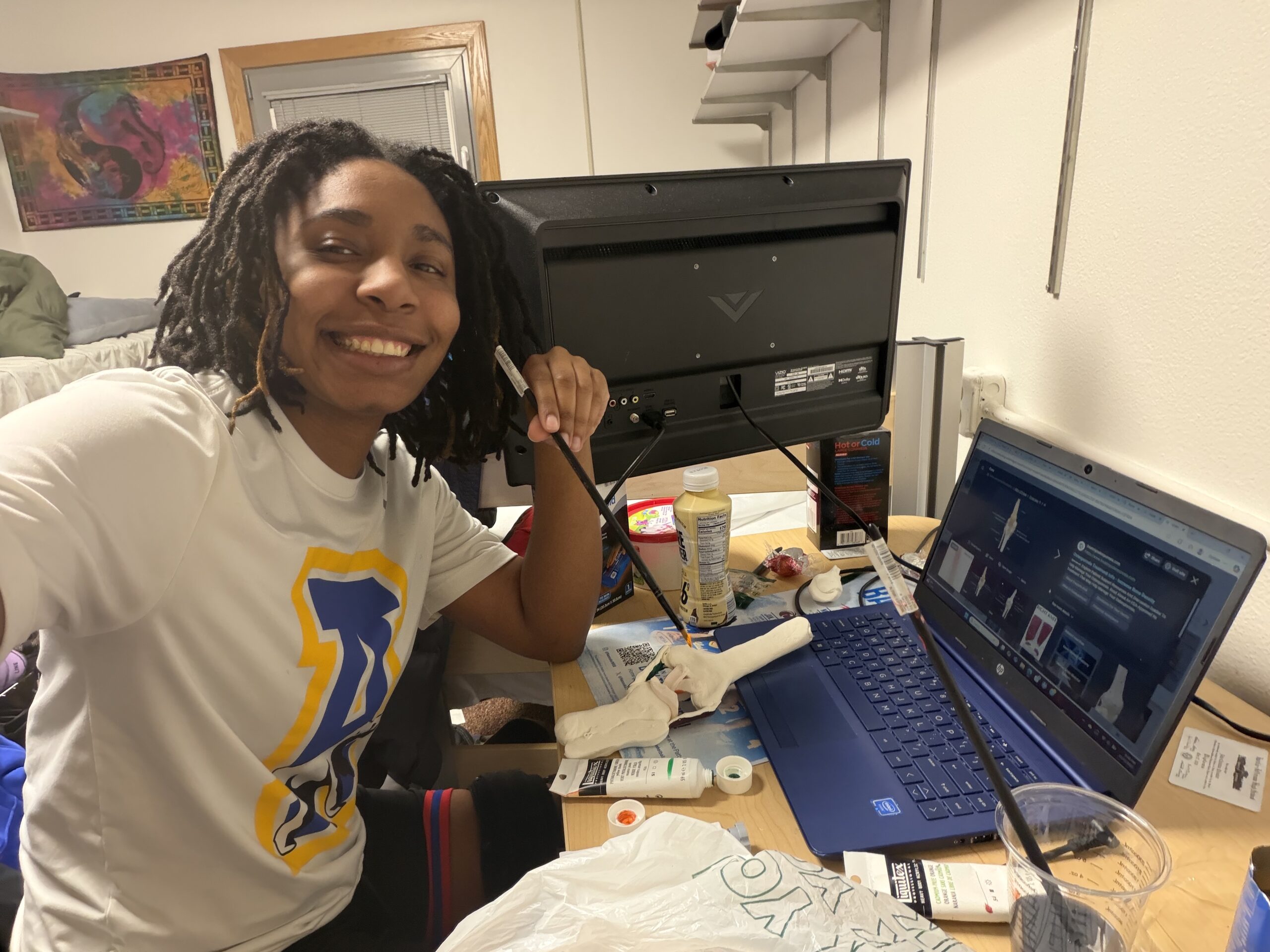
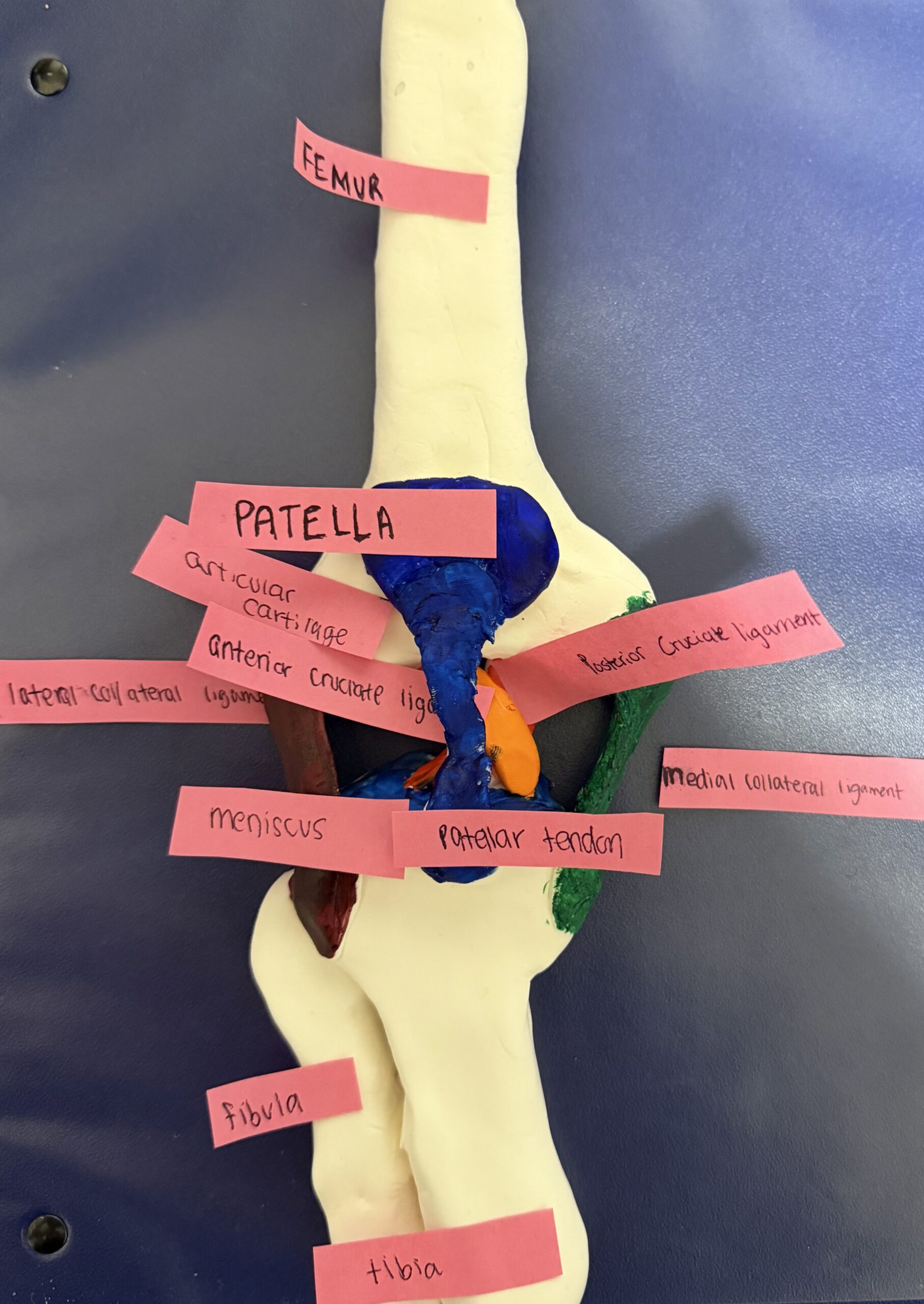
I really like your project. It’s cool how it’s made and shows what everything is. I think the ACL is really known for athletes and see that injury a lot more. You mentioned all the tendons of the knee and yes, it’s important because you were explaining how the tendons are very big with stabilizing movement. I didn’t realize that the PCL isn’t talked about and just how much they are just as important. I didn’t know the PCL takes most of the stress during forward and backward movement motion and ACL is more of side-to-side movement. That makes a lot more sense and how these injuries are and in athletes who do the type of repetitive motion with the injury. I liked how you talked about the difference in ligaments and tendons because I can see how they can get mixed up. You made it clear that ligaments stabilize the joint and tendons allow it to move. Even if only one of them gets hurt, your knee overall gets affected. No wonder those injuries can stop someone from playing sports. The part about the knee being very vulnerable joints stood out to me. It takes on so much weight and a lot of constant force everyday especially doing any physical activity or sports. It makes more sense why ligament sprains and tears are known injuries. I thought your comparison with the other joints like the elbow was also interesting. I didn’t really think about how the elbow is like a hinge joint like the knee but not as complex as the knee.