 Posted by
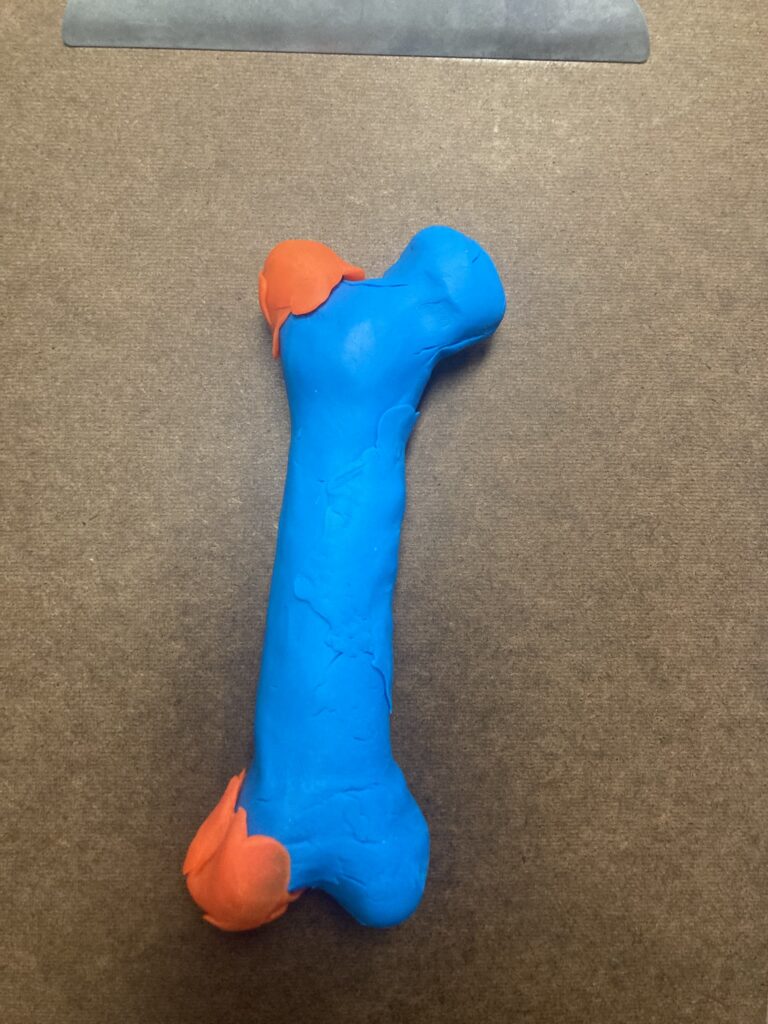
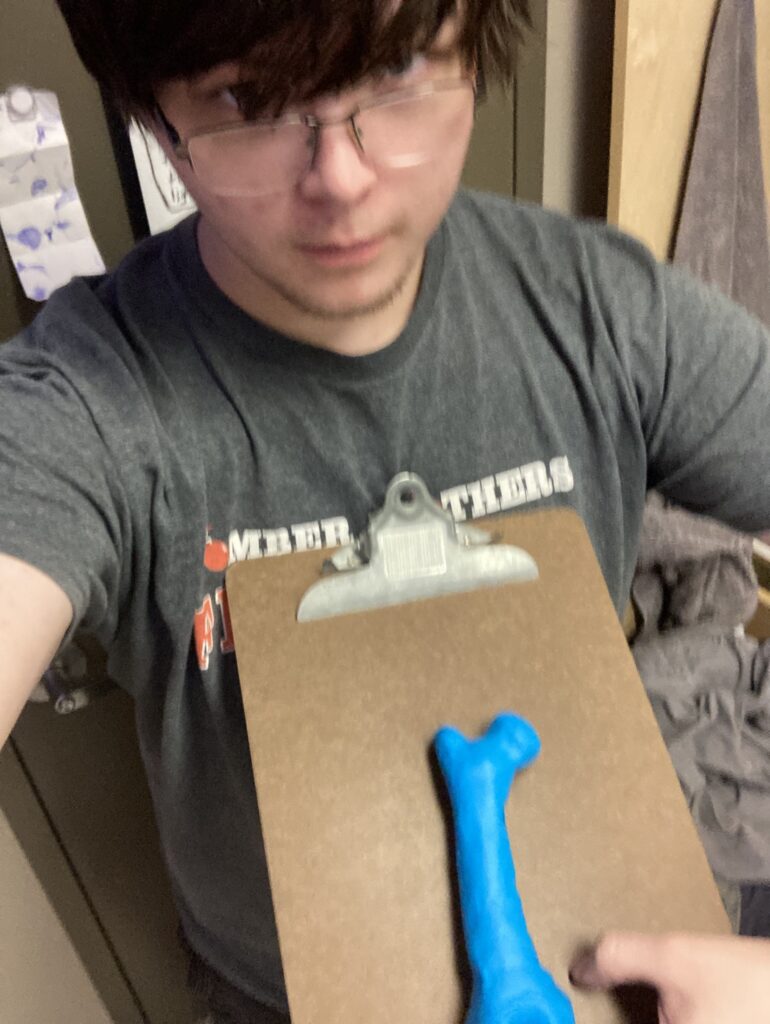
the orange play-doh is representative of places which heterotopic ossification occurs being the femur’s greater trochanter and he lateral epichondial
the orange play-doh is representative of places which heterotopic ossification occurs being the femur’s greater trochanter and he lateral epichondial
Aiden’s project is about heterotopic ossification, in which new bones are formed in places where it is not supposed to after inflammation at the damaged area. Bone formation can occur as close as skin surface to deeper in the skin around the joints. Its cause is stem cells called mesenchymal cells becoming osteoblasts and chondroblasts to repair the damaged area, but they continue to form bone in unusual locations. Heterotopic ossification often occurs after hip replacement surgery. The osteoblasts tend to create bones on the greater trochanter of the femur towards iliac spine, and Aiden’s art reflects the femur bone that has heterotopic ossification. It gives joints less mobility. The treatment is to remove the damaged tissue, called debriding.
Heterotopic ossification can be genetic. Those genetic ones are called fibrodysplasia ossificans progressiva (FOP) and progressive osseous heteroplasia (POH). In the condition of FOP, ossification occurs in any part of the body. Removing the damaged tissue promotes more ossification, so there is no effective treatment at the moment. The other condition, POH forms bone only near the skin surface. There is also a condition called neurogenic heterotopic ossification. It occurs when bone formation happens near the central nervous system after an injury, and ossification takes place with a neurological response. This condition is observed especially in spinal cord injuries. Ossification between vertebrae impedes movement.
There is no definitive treatment for heterotopic ossification due to the diversity in bone formation. Anti inflammatory drugs have helped in certain cases, but the treatment tends to focus on injury and prevention of future injury. Minor heterotopic ossification would remain in the body if it stopped growing, and patients have had no major issues.