STEAM Abstract: Anatomy of the Knee and the Factors Contributing to ACL Injuries by Emma Foster
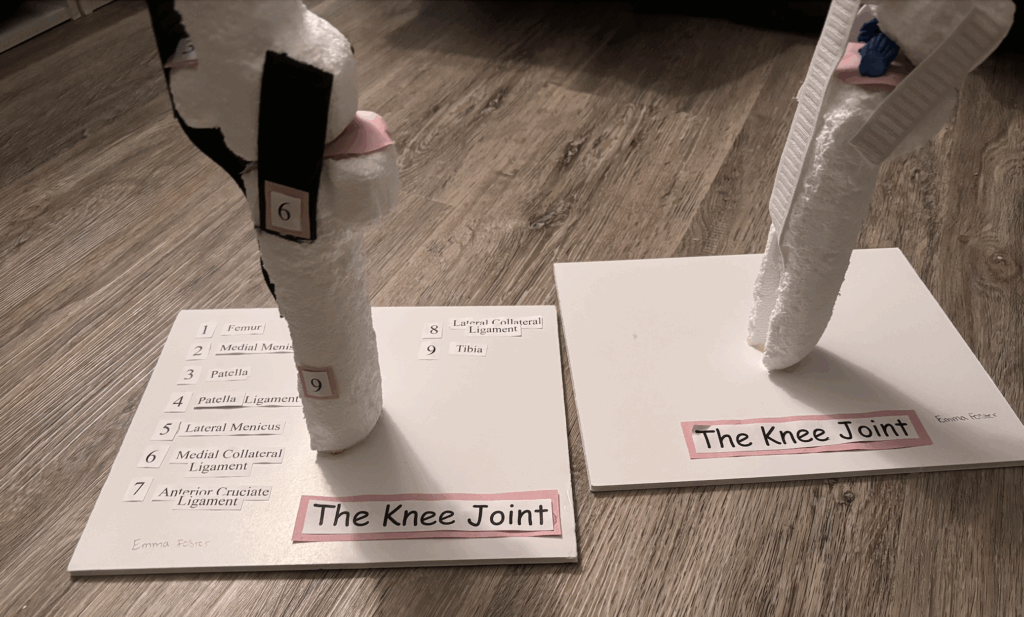
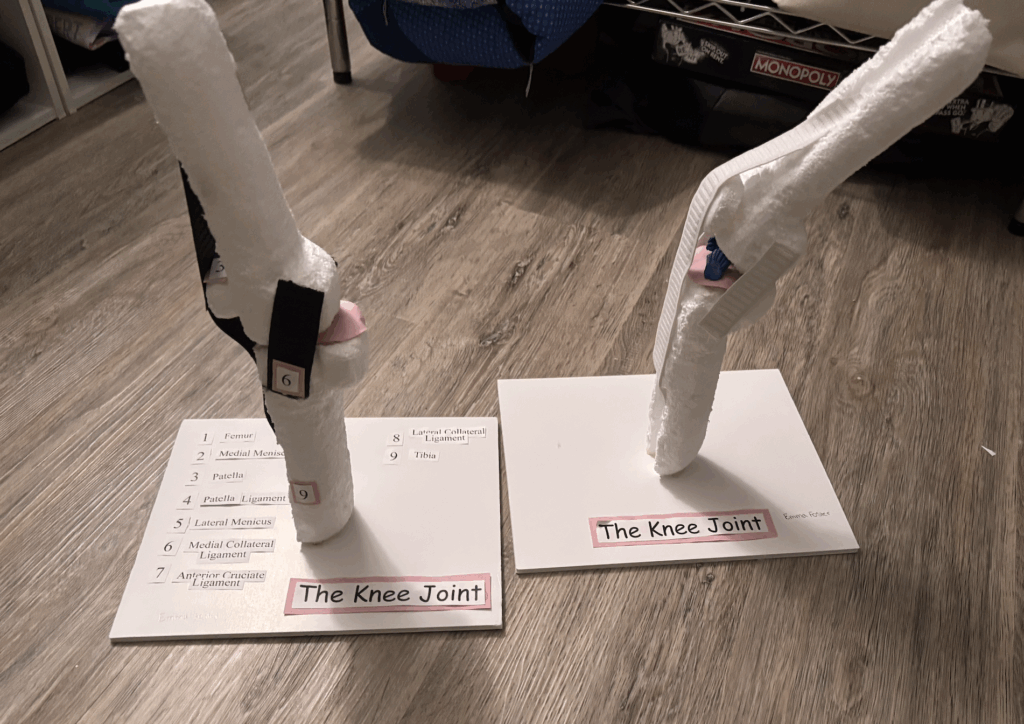
This STEAM project thoroughly explains the anatomy of the knee joint, the largest joint in the body. It also explains how the anatomy of the knee joint contributes to anterior cruciate ligament (ACL) injuries, and details exactly what occurs in the knee in an ACL tear. It explains the functioning of hinge joints, such as the knee, and how they are capable of both flexion and extension but limited in other movement. Comparisons and differences are drawn between hinge joints and the other joint types in the body – ball-and-socket, planar, pivot, and saddle joints. The central relevant differences are in capacity for movement. Ball-and-socket, planar, saddle and pivot joints are all capable of wider ranges of movement than hinge joints. In particular, pivot and ball-and-socket have large circular ranges of motion. Hinge joints, however, primarily only move in one direction. The project explains that knees have very weak lateral strength, due to their hinge-joint nature. The ACL is a ligament found inside the joint capsule of the knee. ACL injuries are commonly caused by lateral strain. This can be direct contact, or simply as a consequence of slowing or stopping abruptly. Lastly, this project goes on to explain how women and girls are far more likely to experience this type of injury. This difference can be attributed to several factors, such as hormonal or movement-related differences between the sexes. However, research on this subject is still ongoing and there is no official claim of the direct cause of the sex differences in ACL injuries.
 Posted by

STEAM Abstract: Anatomy of the Knee and the Factors Contributing to ACL Injuries by Emma Foster
This STEAM project thoroughly explains the anatomy of the knee joint, the largest joint in the body. It also explains how the anatomy of the knee joint contributes to anterior cruciate ligament (ACL) injuries, and details exactly what occurs in the knee in an ACL tear. It explains the functioning of hinge joints, such as the knee, and how they are capable of both flexion and extension but limited in other movement. Comparisons and differences are drawn between hinge joints and the other joint types in the body – ball-and-socket, planar, pivot, and saddle joints. The central relevant differences are in capacity for movement. Ball-and-socket, planar, saddle and pivot joints are all capable of wider ranges of movement than hinge joints. In particular, pivot and ball-and-socket have large circular ranges of motion. Hinge joints, however, primarily only move in one direction. The project explains that knees have very weak lateral strength, due to their hinge-joint nature. The ACL is a ligament found inside the joint capsule of the knee. ACL injuries are commonly caused by lateral strain. This can be direct contact, or simply as a consequence of slowing or stopping abruptly. Lastly, this project goes on to explain how women and girls are far more likely to experience this type of injury. This difference can be attributed to several factors, such as hormonal or movement-related differences between the sexes. However, research on this subject is still ongoing and there is no official claim of the direct cause of the sex differences in ACL injuries.