Lyme disease occurs when an individual experiences a bacterial infection from a tick bite. Symptoms of lyme disease can begin anytime between 3-30 days after infection. Symptoms can include fever, headache, fatigue, and a rash called erythema migrans. In the case of not being treated quickly, this disease can impact joints, the heart, and the nervous system. Most often, the noticeable symptoms include pain in the tendons and bones. Lab tests (antibody detection) in addition to a PCR test (borrelia burgdorfei DNA detection), can accurately diagnose whether lyme disease is present.
Lyme disease can be treated with antibiotics. Treatment is beneficial if taken sooner rather than later. In the past, 60% of people without treatment for lyme disease developed lyme arthritis. Even for individuals with treatment, a small percentage experienced ongoing antibiotic refractory arthritis; synovial inflammation continuing for months or even years after treatment.
Doxycycline, amoxicillin, and cefuroxime axetil are common forms of lyme disease treatments that are most beneficial if taken within the first 30 days. Repeat antibiotics, as needed. If repeat antibiotics are not significant, continue with IV ceftriaxone for 4 weeks.
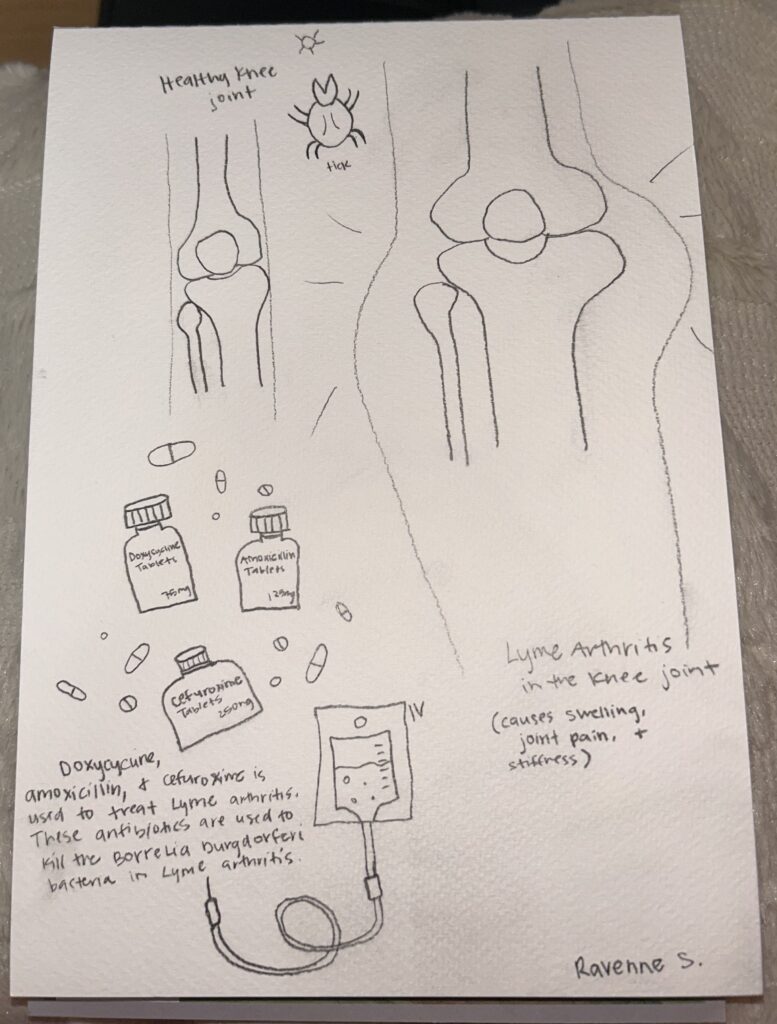
Ravenne made a great drawing, depicting how a single tick bite can result in osteoarthritic pain. You can see how drastically the knee is impacted, specifically experiencing symptoms such as swelling, joint pain, and stiffness. Three treatment types were illustrated; doxycycline, amoxicillin, and cefuroxime axetil. These treatments are commonly used to treat the bacterial infection, borrelia burgdorfei, which is the culprit of lyme disease.
 Posted by
Lyme disease occurs when an individual experiences a bacterial infection from a tick bite. Symptoms of lyme disease can begin anytime between 3-30 days after infection. Symptoms can include fever, headache, fatigue, and a rash called erythema migrans. In the case of not being treated quickly, this disease can impact joints, the heart, and the nervous system. Most often, the noticeable symptoms include pain in the tendons and bones. Lab tests (antibody detection) in addition to a PCR test (borrelia burgdorfei DNA detection), can accurately diagnose whether lyme disease is present.
Lyme disease can be treated with antibiotics. Treatment is beneficial if taken sooner rather than later. In the past, 60% of people without treatment for lyme disease developed lyme arthritis. Even for individuals with treatment, a small percentage experienced ongoing antibiotic refractory arthritis; synovial inflammation continuing for months or even years after treatment.
Doxycycline, amoxicillin, and cefuroxime axetil are common forms of lyme disease treatments that are most beneficial if taken within the first 30 days. Repeat antibiotics, as needed. If repeat antibiotics are not significant, continue with IV ceftriaxone for 4 weeks.
Ravenne made a great drawing, depicting how a single tick bite can result in osteoarthritic pain. You can see how drastically the knee is impacted, specifically experiencing symptoms such as swelling, joint pain, and stiffness. Three treatment types were illustrated; doxycycline, amoxicillin, and cefuroxime axetil. These treatments are commonly used to treat the bacterial infection, borrelia burgdorfei, which is the culprit of lyme disease.