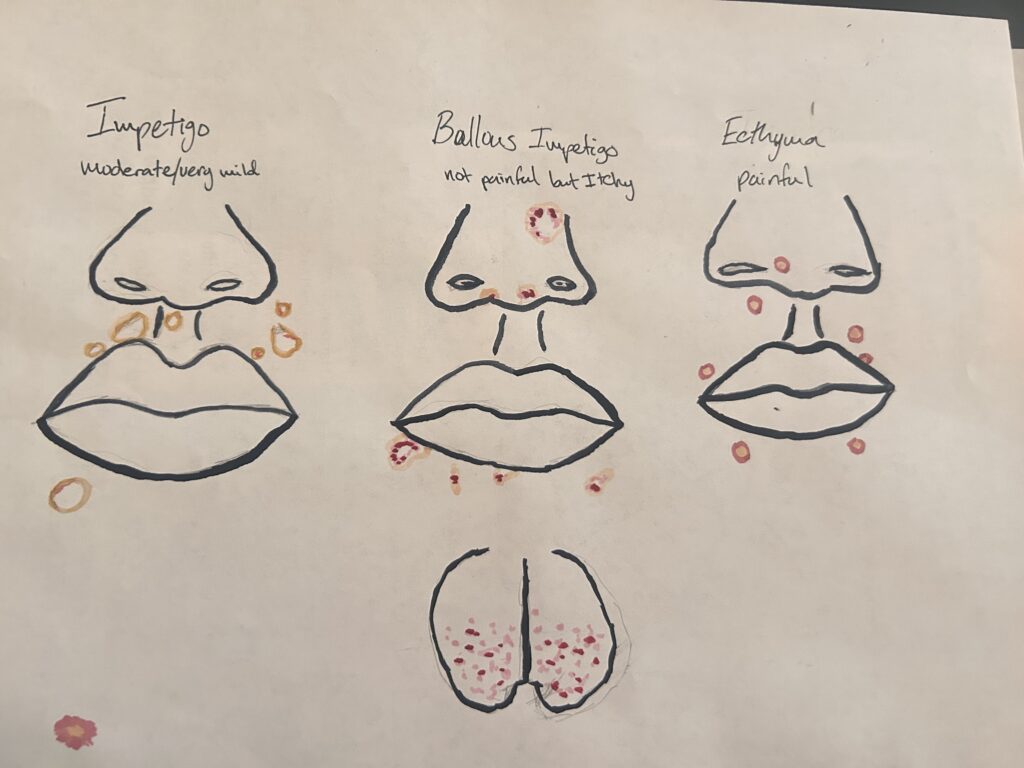
This illustration shows examples of the main types of Impetigo. On the left is very mild/moderate Impetigo. The middle shows Bullous Impetigo that is itchy, yet not painful. On the right is an example of Ecthyma, a painful and the most severe type.
Aimee Henderson
The project report focuses on the integumentary system, listing its functions (protection, regulation, sensation, storage, absorption, and communication), and how it relates to impetigo. Impetigo is said to be a bacterial infection of the skin with multiple types (bullous and ecthyma). The report describes the symptoms, causes, diagnosis, and treatment. The text also touches on the psychological and social impact of impetigo, and the involvement of the lymphatic system.
 Posted by

This illustration shows examples of the main types of Impetigo. On the left is very mild/moderate Impetigo. The middle shows Bullous Impetigo that is itchy, yet not painful. On the right is an example of Ecthyma, a painful and the most severe type.
The project report focuses on the integumentary system, listing its functions (protection, regulation, sensation, storage, absorption, and communication), and how it relates to impetigo. Impetigo is said to be a bacterial infection of the skin with multiple types (bullous and ecthyma). The report describes the symptoms, causes, diagnosis, and treatment. The text also touches on the psychological and social impact of impetigo, and the involvement of the lymphatic system.