
 Posted by
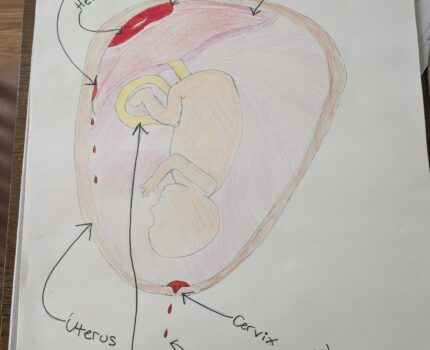
Placental abruption is an incidence during pregnancy where the placenta partially or completely separates from the uterine lining. Placental abruption is the leading cause to intrauterine fetal demise, or maternal demise. The survival of the mother and baby greatly depends on the severity of the detachment. The cause of placental abruption si not completely known, but it typically occurs more among smokers, in hypertensive pregnancies, in pregnancies with intra uterine growth restriction (IUGR), in cases of trauma, women with advancing maternal age, in male fetuses, and in women with a previous placental abruption.
The pathophysiology of placental abruption is not the same in every case. The two different times of abruption are acute and chronic. “The acute pathway is driven by mechanical and shearing forces applied to the abdomen, causing premature placental separation.” (Brandt & Ananth, 2023). To simplify this and make it make sense for non-medical personnel, here is my explanation. For acute abruptions, an accident is typically the cause of this. A car accident or a blow to the belly would be an acute abruption. The force from this accident will cause the placenta to tear away from the uterine lining. When it tears away, this usually causes the mother to bleed. After a big accident or fall, a mother should be monitored to make sure that the placenta is still appropriately attached to the uterus. “American College of Obstetricians and Gynecologists recommends a minimum of 4 hours post-trauma monitoring.” (Tikkanen, 2010). Chronic abruptions are harder to locate and diagnose. They have a slow build up, and the symptoms are not always obvious. Blood clotting disorders, infections, and poor blood vessel development are part of the chronic causes. Over weeks and months these issues will cause the placentas to slowly detach. This may cause mild or no bleeding, so it is hard to find these detachments unless the mother has been monitored via ultrasound. This is important to note because acute abruption is sudden and potentially dangerous, it can cause pain, bleeding, and even urgent delivery. A chronic abruption may go unnoticed for some time but can still harm the baby and increase chances of early delivery.
Placental abruption is a very serious disorder. It occurs in 0.4-1 percent of pregnancies overall. “Placental abruption is one of the most common causes of bleeding during the pregnancy and one of the major obstetrical emergency.” (Ghaheh, et al., 2018). This disorder is the leading cause of stillbirth. “The perinatal mortality rate varies between 20 and 67%, depending on gestational age, fetal weight, and the degree of abruption.” (Ghaheh, et al., 2018). Placental abruption is hard to diagnose, because the symptoms are abdominal pain, back pain, and light to heavy vaginal bleeding. For a diagnosis, an ultrasound is often used. The ultrasound method makes it hard to detect because of the presence of blood around the placenta. “Sonography is not sensitive for detection of placental abruption, but a positive finding is associated with more aggressive management and worse neonatal outcome.” (Glantz & Purnell, 2002). Placental abruption is typically diagnosed after birth due to it being difficult to find and diagnose during pregnancy.
Placental abruption is the leading cause to intrauterine fetal demise, or maternal demise, so it must be taken seriously by providers. For most women with increased risk factors to anything, they are monitored more than mothers with low risk factors. While placental abruption is still very misunderstood, it should be considered when a mother comes to the hospital with placental abruption symptoms.
Citations
Brandt, J. S., & Ananth, C. V. (2023, March 23). Placental abruption at near-term and term gestations: Pathophysiology, epidemiology, diagnosis, and Management. American Journal of Obstetrics and Gynecology. https://www.sciencedirect.com/science/article/pii/S000293782200535X
Ghaheh, H. S., Feizi, A., Mousavi, M., Sohrabi, D., Mesghari, L., & Hosseini, Z. (2013, May). Risk factors of placental abruption. Journal of research in medical sciences : the official journal of Isfahan University of Medical Sciences. https://pmc.ncbi.nlm.nih.gov/articles/PMC3810579/
Glantz, C., & Purnell, L. (2002, August 1). Clinical Utility of Sonography in the Diagnosis and Treatment of Placental Abruption. Wiley Online Library. https://onlinelibrary.wiley.com/doi/abs/10.7863/jum.2002.21.8.837
Tikkanen, M. (2010, October 29). Placental abruption: Epidemiology, risk factors and Consequences – Tikkanen – 2011 – acta obstetricia et Gynecologica Scandinavica – Wiley Online Library. Placental abruption: epidemiology, risk factors and consequences. https://obgyn.onlinelibrary.wiley.com/doi/full/10.1111/j.1600-0412.2010.01030.x
Placental abruption is a pregnancy complication in which the placenta detaches partially or entirely from the uterine wall. This condition poses a significant risk to both maternal and fetal survival and is a leading cause of intrauterine fetal demise. While its exact cause remains unclear, placental abruption is more frequently associated with risk factors such as maternal hypertension, smoking, intrauterine growth restriction (IUGR), trauma, advanced maternal age, male fetuses, and a history of previous abruption. The condition can manifest in two forms: acute and chronic. Acute abruptions often result from sudden trauma, such as a car accident, causing a rapid and painful detachment with visible bleeding. Chronic abruptions develop gradually, often due to underlying medical issues such as clotting disorders or poor placental blood vessel formation, and are more difficult to detect because of subtle or absent symptoms.
Diagnosis of placental abruption is challenging because ultrasound imaging is not always reliable since the presence of blood can obscure findings. Consequently, many cases get confirmed after delivery. The incidence of placental abruption ranges from 0.4% to 1% of pregnancies and contributes significantly to perinatal mortality, with rates as high as 67% depending on gestational age and severity. Due to its potential severity, placental abruption demands careful monitoring and consideration, especially in high-risk pregnancies. Early recognition and intervention are essential to improving outcomes for both mother and baby.