This paper talks about how the nervous system and endocrine system interact. The nervous system uses signaling methods in the brain while the endocrine system uses hormones and glands to transmit signals that are slower with a longer duration than the nervous system. The main topic is premenstrual dysphoric disorder (PMDD) that causes the two systems to disharmony that can lead to physical and emotional symptoms. PMDD is a neuroendocrine disorder that is characterized by more sever premenstrual syndrome symptoms more commonly characterized by PMS, that occurs before ethe menstrual cycle during the luteal phase. Symptoms such as mood swings, anxiety, and depression can be triggered by PMDD. PMDD causes differences to parts of the nervous system. The structural differences lead to change in two major brain hubs that cause symptoms that are aligned with PMDD. Brain alterations associated with PMDD may be relatively stable across the menstrual cycle, which would then point to the hormonal drop during the luteal phase which would would show the direct relationship between the endocrine and nervous system. Another affect is the function of the autonomic nervous system. The ANS can be measured by the level of heart rate variability while laying face up and resting measured during the luteal phase. With the most severe levels of PMDD, the amount of heart rate variability decreased, which showed the altered function of the ANS. The ANS contributes to the stability of the human’s internal environment, and is associated with symptoms appearing premenstrually. PMDD can lead to periods of difficulty for people who are affected.
Brady Moore
The objective of this paper is to inform the reader of how the endocrine and nervous systems interact with each other. The endocrine system regulates hormone function and works slower, but has longer lasting effects on the body compared to the fast-acting nervous system. Premenstrual dysphoric disorder is a neuroendocrine mood disorder that is characterized by emotional, cognitive, and somatic issues. The body experiences heightened sensitivity to hormone fluctuations causing more severe premenstrual symptoms compared to a normal menstrual cycle. Premenstrual symptoms occur during the luteal phase and end during the menstrual period.
PMDD causes physical changes in the brain, specifically the left inferior frontal gyrus, occipital gyrus, and the left inferior occipital sulcus. The physical changes can alter the posterior processing pathways, leading to symptoms of PMDD. Dysregulation of the autonomic nervous system can cause mood swings, anxiety, and depression as a result of sensitivity to hormone level fluctuations. The autonomic nervous system’s function can be measured by the resting heart rate variability. Research has shown that the severity of premenstrual symptoms increases, heart rate variability has been found to decrease. The decrease in heart rate variability is linked to the symptoms of PMDD in relation to altered function of the nervous system.
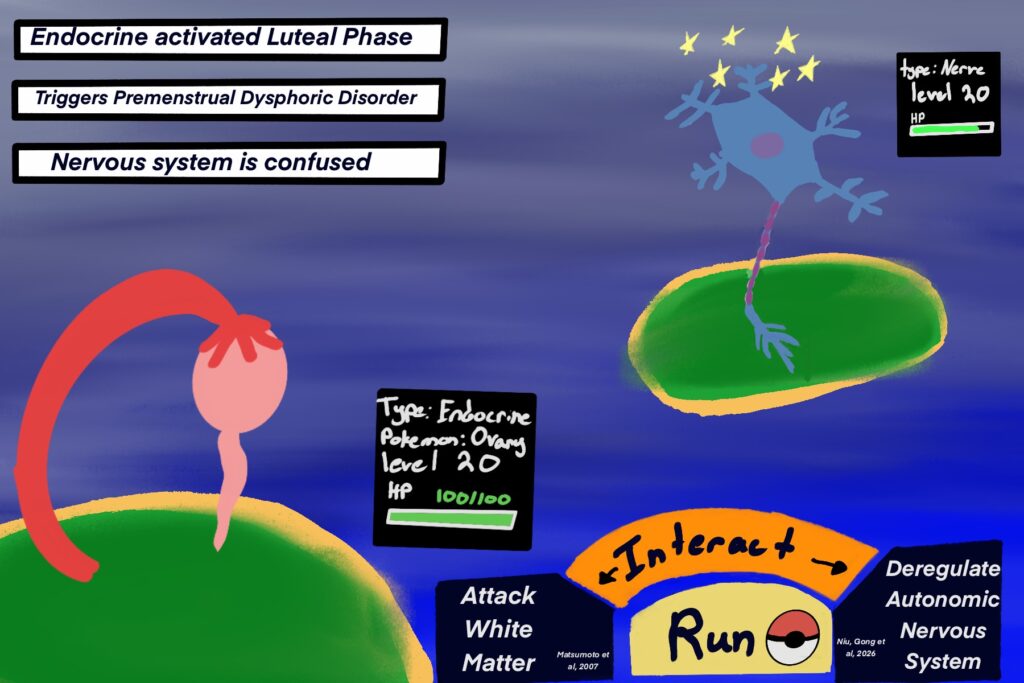
The author’s project represents the relationship between the endocrine and nervous systems in a comic. The comic displays the endocrine system activating the luteal phase of the menstrual cycle, which in PMDD causes a heightened response to sensory input. In response to premenstrual dysphoric disorder, the nervous system is dysregulated and white matter in the brain is attacked.
 Posted by

This paper talks about how the nervous system and endocrine system interact. The nervous system uses signaling methods in the brain while the endocrine system uses hormones and glands to transmit signals that are slower with a longer duration than the nervous system. The main topic is premenstrual dysphoric disorder (PMDD) that causes the two systems to disharmony that can lead to physical and emotional symptoms. PMDD is a neuroendocrine disorder that is characterized by more sever premenstrual syndrome symptoms more commonly characterized by PMS, that occurs before ethe menstrual cycle during the luteal phase. Symptoms such as mood swings, anxiety, and depression can be triggered by PMDD. PMDD causes differences to parts of the nervous system. The structural differences lead to change in two major brain hubs that cause symptoms that are aligned with PMDD. Brain alterations associated with PMDD may be relatively stable across the menstrual cycle, which would then point to the hormonal drop during the luteal phase which would would show the direct relationship between the endocrine and nervous system. Another affect is the function of the autonomic nervous system. The ANS can be measured by the level of heart rate variability while laying face up and resting measured during the luteal phase. With the most severe levels of PMDD, the amount of heart rate variability decreased, which showed the altered function of the ANS. The ANS contributes to the stability of the human’s internal environment, and is associated with symptoms appearing premenstrually. PMDD can lead to periods of difficulty for people who are affected.
The objective of this paper is to inform the reader of how the endocrine and nervous systems interact with each other. The endocrine system regulates hormone function and works slower, but has longer lasting effects on the body compared to the fast-acting nervous system. Premenstrual dysphoric disorder is a neuroendocrine mood disorder that is characterized by emotional, cognitive, and somatic issues. The body experiences heightened sensitivity to hormone fluctuations causing more severe premenstrual symptoms compared to a normal menstrual cycle. Premenstrual symptoms occur during the luteal phase and end during the menstrual period.
PMDD causes physical changes in the brain, specifically the left inferior frontal gyrus, occipital gyrus, and the left inferior occipital sulcus. The physical changes can alter the posterior processing pathways, leading to symptoms of PMDD. Dysregulation of the autonomic nervous system can cause mood swings, anxiety, and depression as a result of sensitivity to hormone level fluctuations. The autonomic nervous system’s function can be measured by the resting heart rate variability. Research has shown that the severity of premenstrual symptoms increases, heart rate variability has been found to decrease. The decrease in heart rate variability is linked to the symptoms of PMDD in relation to altered function of the nervous system.
The author’s project represents the relationship between the endocrine and nervous systems in a comic. The comic displays the endocrine system activating the luteal phase of the menstrual cycle, which in PMDD causes a heightened response to sensory input. In response to premenstrual dysphoric disorder, the nervous system is dysregulated and white matter in the brain is attacked.