
 Posted by
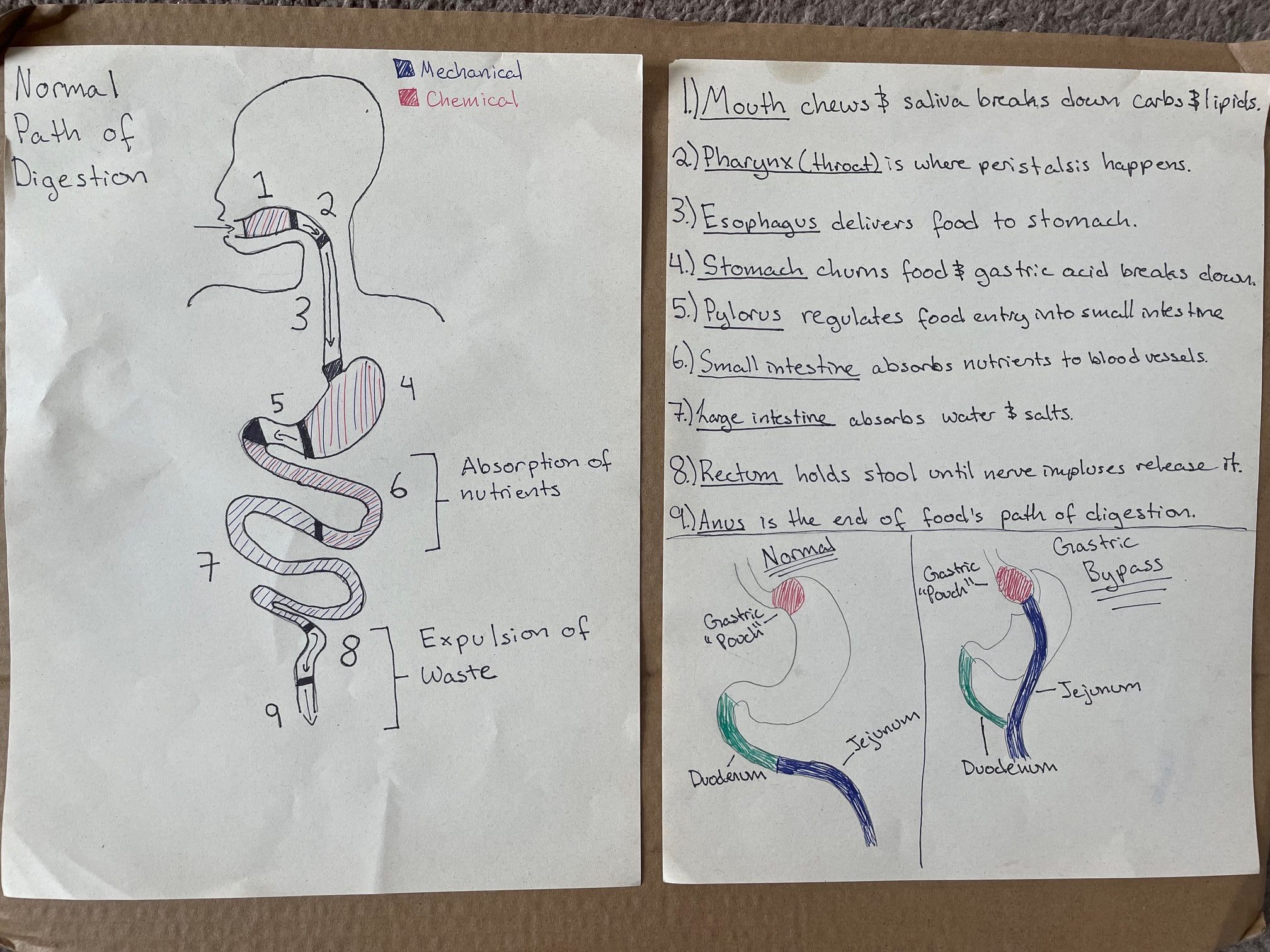
This is my STEAM project. On the left is a diagram of the normal path of food with numbered steps of digestion. There are color-coded lines in certain areas of the digestive tract where either mechanical (blue) or chemical (red) digestion happen. On the right are each of those numbered steps described in brief detail and their basic functions. At the bottom of the right page are two stomachs: the one on the left is a normal stomach and the one on the right is a stomach after undergoing gastric bypass surgery.
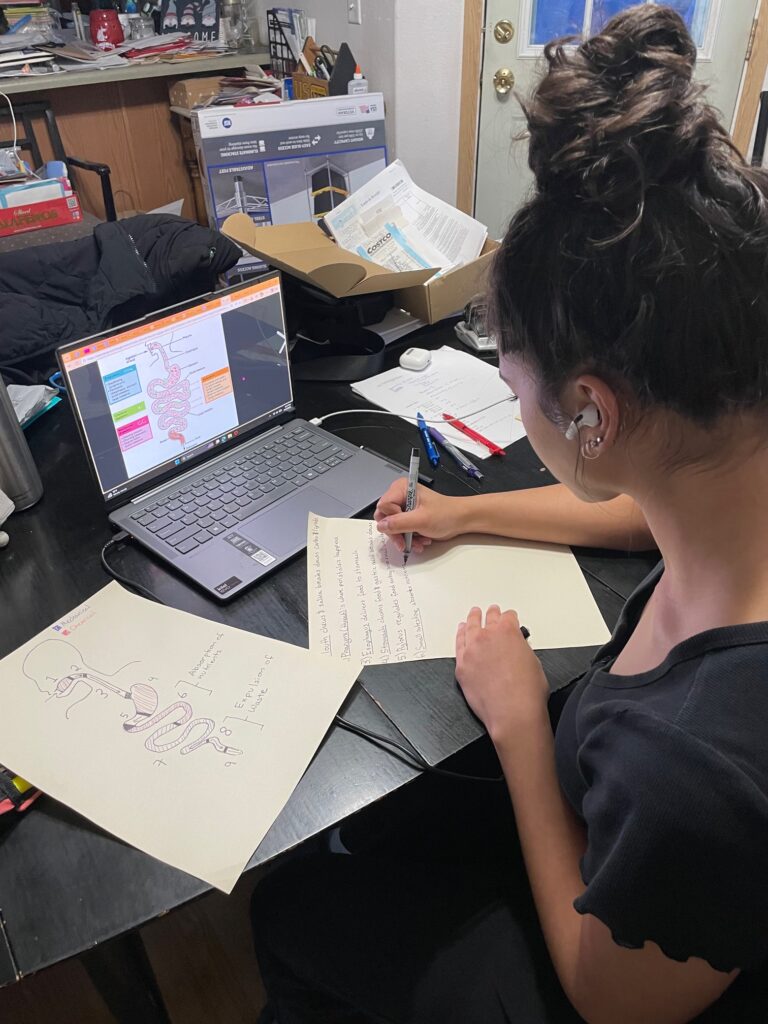
Here is a photo of me writing the right sheet.
In this STEAM project, Sandine compares the functions of a naturally functional and surgically bypassed stomach. Using a visual diagram, Sandine explains the steps of digestion, covering the objective, “know the order of organ function and path of food during digestion.” In a system with a naturally functional stomach, food will pass through the esophagus to the stomach. The stomach then churns food while gastric juice breaks it down. Food from the stomach must pass through the pylorus into the small intestine. In a digestive system where the stomach is bypassed, food passes through the gastric pouch straight to the jejunum of the small intestine. This surgical procedure bypasses both the stomach and the duodenum. In doing such a procedure, the overall capacity of the digestive system is limited, so there is a change in diet that must occur post-operation.