
 Posted by
Sophia Lachenmayer
STEAM Project- Gastroparesis
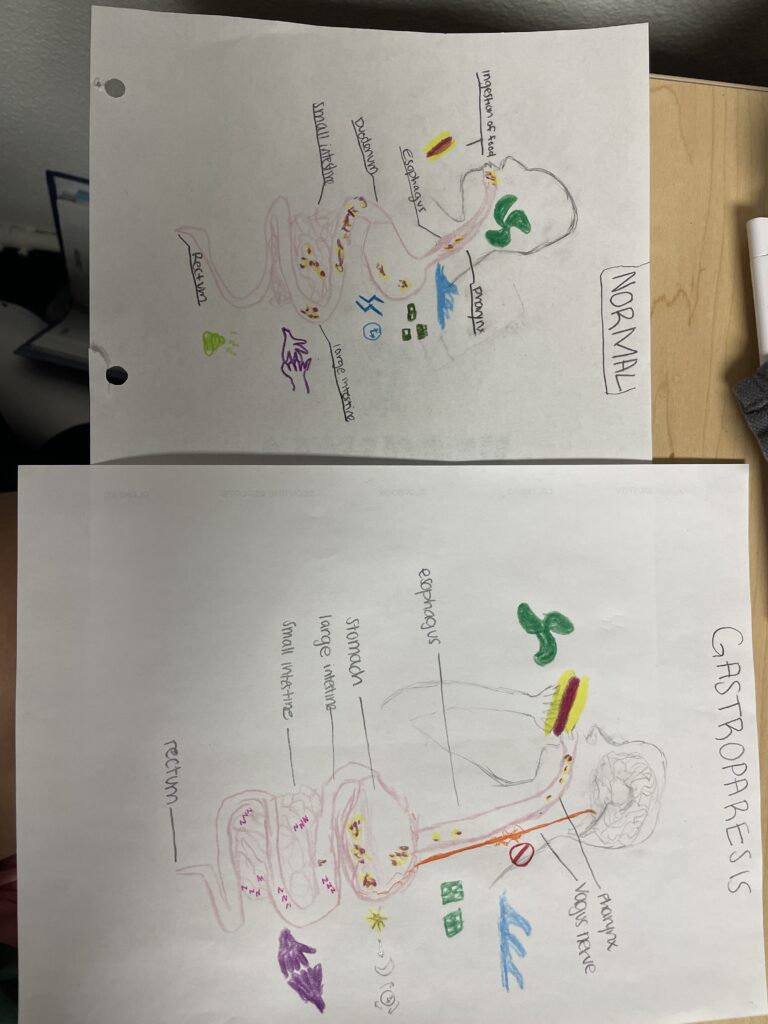
Our digestive system is a key aspect to homeostasis in our body. There are multiple different organs in it that all work together. When we eat food, we have both chemical and mechanical processes to facilitate digestion. When we chew our food, it breaks it into smaller pieces and our saliva begins breaking down the carbohydrates. When we swallow our food, the esophagus moves it down like a wave, this is called peristalsis. The majority of digestion occurs once the food enters the stomach. This is the aspect of digestion that is impacted the most in those who have Gastroparesis. In the stomach of someone with a normal functioning stomach, food gets moved and around and acid and enzymes break down proteins. Using the muscles of the stomach food gets broken down into digestible nutrients, this process is activated by the Vagus Nerve. While the true cause for Gastroparesis is unknown, it can occur from things like diabetes, viral infections like EBV, and can be triggered by surgery. The common knowledge is that there is likely some sort of damage to the Vagus Nerve in the patients who have Gastroparesis. There are 2 different types of this condition, Idiopathic Gastroparesis (IG) and Diabetes Mellitus (DG). According to the Mayo Clinic, “But with gastroparesis, the stomach’s movement, called motility, slows or doesn’t work at all. This keeps the stomach from emptying well.” This doesn’t allow any of the specific functions of the stomach to properly occur. It affects the ability for segmentation to be carried out as well as the absorption of nutrients into the blood and lymph. When these can’t be carried out, food just sits for very long periods of time. It causes a wide range of symptoms and severity varies from person to person. Classical clinical symptoms that include nausea, vomiting, early satiety, postprandial fullness, bloating, upper abdominal pain (Gastroparesis – gastroenterology 2022). Once the food is done in the stomach, it goes into the small intestine where the most absorption of nutrients occurs. Other organs help aid in complete digestion, for example, the pancreas secretes enzymes that help the digestion of chyme, the gallbladder stores bile, the liver produces the bile that emulsifies fat. Then what remains passes into the large intestine, this is when the water is reabsorbed from what is left and turns it into stool. This is why many times this also impacts the last action of digestion in patients with gastroparesis, this step is defecation. This is because absorption of nutrients in the stomach is so delayed and in patients that experience nausea and vomiting it won’t necessarily even get that far. It is crucial to identify each aspect of digestion and understand how each organ and supporting organ plays a part within the digestive system. It helps to show how disruptive a condition like Gastroparesis is and how it affects each step in digestion. It is a newer condition so research is still being done to figure out best solutions and treatments to help create more success and prevention.
References:
Mayo Foundation for Medical Education and Research. (2024, September 6). Gastroparesis. Mayo Clinic. https://www.mayoclinic.org/diseases-conditions/gastroparesis/symptoms-causes/syc-20355787
Pasricha, P. J., Grover, M., Yates, K. P., Abell, T. L., Koch, K. L., McCallum, R. W., Sarosiek, I., Bernard, C. E., Kuo, B., Bulat, R., Shulman, R. J., Chumpitazi, B. P., Tonascia, J., Miriel, L. A., Wilson, L. A., Van Natta, M. L., Mitchell, E., Hamilton, F., Farrugia, G., … NIDDK/NIH GpCRC consortium. (2022, December). Progress in gastroparesis – A narrative review of the work of the gastroparesis clinical research consortium. Clinical gastroenterology and hepatology : the official clinical practice journal of the American Gastroenterological Association. https://pmc.ncbi.nlm.nih.gov/articles/PMC9691520 Gastroparesis – gastroenterology. (n.d.-b). https://www.gastrojournal.org/article/S0016-5085(21)03700-8/fulltext
Abstract: Sophia’s STEAM project explores how the human body responds to stress, especially through the connection between the heart and the brain. At first, I didn’t realize how much stress could physically affect things like heart rate and overall health, but this project shows how real those effects are. It focuses on how the nervous system controls these responses, including how the body can either calm itself down or stay in a heightened state of alert. One of the main ideas is that long-term stress can lead to negative impacts on the heart, while healthy habits like good sleep, exercise, and relaxation techniques can help regulate these responses. What makes this project interesting is how it combines science with real-life situations, making it easier to understand how everyday stress can build up over time. Overall, it highlights why managing stress is important, not just mentally, but physically as well, especially when it comes to keeping the heart and body functioning properly.