Erin’s project describes exercise induced asthma. This is a respiratory condition that can cause symptoms like coughing, wheezing, dyspnea, and chest tightness. This happens in periods of flare-ups. Exercise induced asthma can be triggered when irritations cause bronchospasms and the muscles surrounding the airways tighten. The airway then becomes filled with mucus which results in the narrowing of the airway. The main trigger for exercise induced asthma is physical activity. Living in Alaska especially can be a trigger for this because cold and dry air act as an irritant when breathing rate increases. These temporary symptoms can make sports more difficult and can affect performance. Everyday tasks, such as walking up stairs, can cause breathlessness. The inflammation is a response to the release to interleukins and the recruitment of inflammatory cells, and the production of IgE.
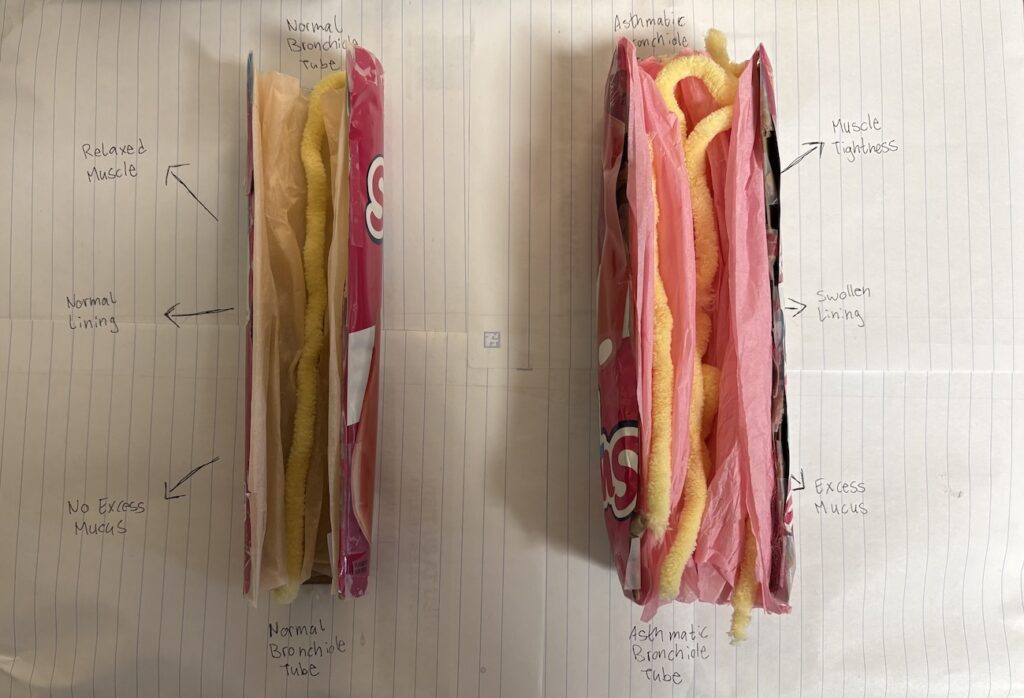
This is demonstrated in Erin’s project by the contrast of excess mucus, swollen lining, and muscle tightness in the asthmatic bronchiole tube vs the normal bronchial tube. The use of tissue shows how the airway can become inflamed with asthma and change the structure of the airways. The asthmatic lung’s restricted airflow impacts its overall functions. Understanding this condition can help individuals with asthma effectively manage their condition. With proper management, people with asthma can still remain active and continue to participate in physical activities. It can be diagnosed through lung function tests. Inhalers are a common solution. These can be used before and during exercise to open up their airways. Exercise induced asthma can also be managed with strategies such as warming up properly and avoiding common triggers, like cold air or dry air.
 Posted by

Erin’s project describes exercise induced asthma. This is a respiratory condition that can cause symptoms like coughing, wheezing, dyspnea, and chest tightness. This happens in periods of flare-ups. Exercise induced asthma can be triggered when irritations cause bronchospasms and the muscles surrounding the airways tighten. The airway then becomes filled with mucus which results in the narrowing of the airway. The main trigger for exercise induced asthma is physical activity. Living in Alaska especially can be a trigger for this because cold and dry air act as an irritant when breathing rate increases. These temporary symptoms can make sports more difficult and can affect performance. Everyday tasks, such as walking up stairs, can cause breathlessness. The inflammation is a response to the release to interleukins and the recruitment of inflammatory cells, and the production of IgE.
This is demonstrated in Erin’s project by the contrast of excess mucus, swollen lining, and muscle tightness in the asthmatic bronchiole tube vs the normal bronchial tube. The use of tissue shows how the airway can become inflamed with asthma and change the structure of the airways. The asthmatic lung’s restricted airflow impacts its overall functions. Understanding this condition can help individuals with asthma effectively manage their condition. With proper management, people with asthma can still remain active and continue to participate in physical activities. It can be diagnosed through lung function tests. Inhalers are a common solution. These can be used before and during exercise to open up their airways. Exercise induced asthma can also be managed with strategies such as warming up properly and avoiding common triggers, like cold air or dry air.