Endometriosis is a chronic reproductive disorder. The disorder is characterized by the presence of tissue similar to the endometrium outside the uterus, most commonly affecting the ovaries, fallopian tubes, and pelvic lining. This tissue is hormonally responsive, however it is unable to exit the body via menstruation. This leads to painful inflammation, adhesions and lesions. Because of these effects, normal reproductive functions can be disrupted and cause pelvic pain or issues with fertility. This paper looks at endometriosis by explaining how it relates to normal reproductive anatomy and how hormones control the menstrual cycle. The paper also discusses the relationship between endometriosis and pregnancy, and the effects pregnancy has on symptoms of the condition. This paper highlights how endometriosis can impact women’s reproductive and overall health. The essay explains the relationship between the hypothalamus, pituitary gland and ovaries. The menstrual cycle is controlled by hormones which operate via a feedback system that involves the hypothalamus, pituitary gland, and ovaries. The piece of art that compliments this paper demonstrates the pain caused by endometriosis. It highlights reliance on medication, the pain caused by this disorder and the lesions and tissue outside of the endometrium. Through the use of color, imagery and symbolism represents the internal suffering that often goes recognized by others. Sharp contrasts highlight the inflammation and chronic pain. Layered elements and visual metaphors ultimately showcase that despite the struggle of this disorder, the female body is incredibly strong and resilient. By combining academic research and writing with creative and artistic expression, this project promotes awareness and education on endometriosis, while simultaneously emphasizing the importance of empathy and recognition of chronic reproductive disorders in social and medical contexts.
 Posted by
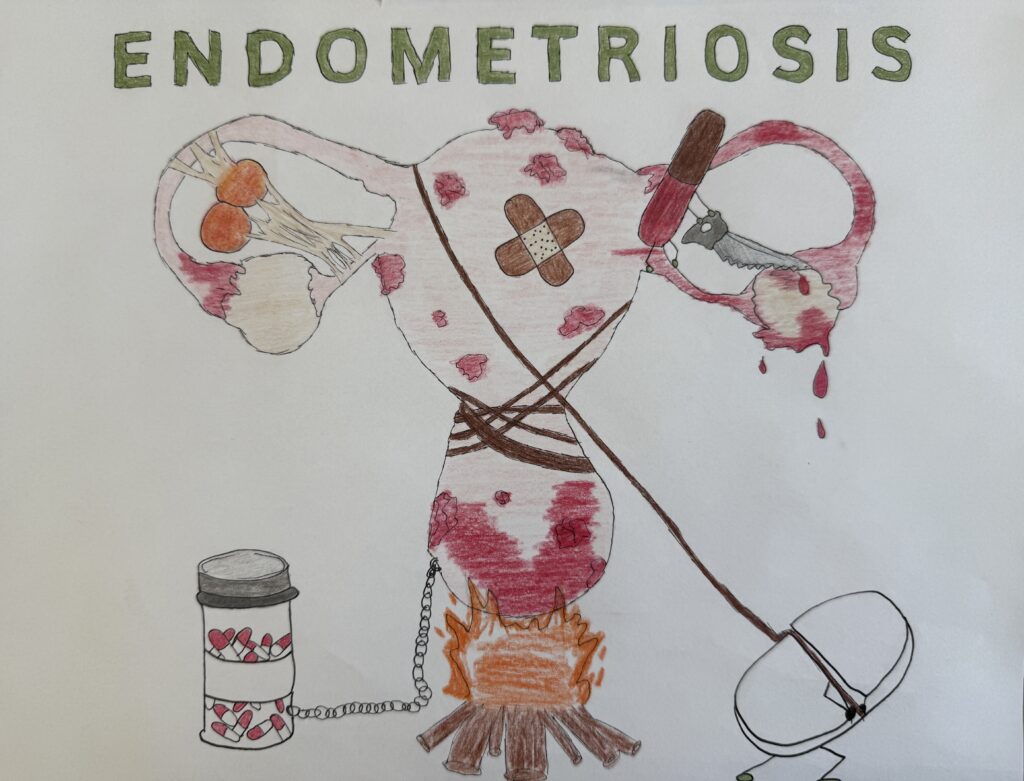
Endometriosis is a chronic reproductive disorder. The disorder is characterized by the presence of tissue similar to the endometrium outside the uterus, most commonly affecting the ovaries, fallopian tubes, and pelvic lining. This tissue is hormonally responsive, however it is unable to exit the body via menstruation. This leads to painful inflammation, adhesions and lesions. Because of these effects, normal reproductive functions can be disrupted and cause pelvic pain or issues with fertility. This paper looks at endometriosis by explaining how it relates to normal reproductive anatomy and how hormones control the menstrual cycle. The paper also discusses the relationship between endometriosis and pregnancy, and the effects pregnancy has on symptoms of the condition. This paper highlights how endometriosis can impact women’s reproductive and overall health. The essay explains the relationship between the hypothalamus, pituitary gland and ovaries. The menstrual cycle is controlled by hormones which operate via a feedback system that involves the hypothalamus, pituitary gland, and ovaries. The piece of art that compliments this paper demonstrates the pain caused by endometriosis. It highlights reliance on medication, the pain caused by this disorder and the lesions and tissue outside of the endometrium. Through the use of color, imagery and symbolism represents the internal suffering that often goes recognized by others. Sharp contrasts highlight the inflammation and chronic pain. Layered elements and visual metaphors ultimately showcase that despite the struggle of this disorder, the female body is incredibly strong and resilient. By combining academic research and writing with creative and artistic expression, this project promotes awareness and education on endometriosis, while simultaneously emphasizing the importance of empathy and recognition of chronic reproductive disorders in social and medical contexts.