Posted by
My objective is to explain how the nervous system and endocrine system interact with each other and apply this concept to concussions and brain injuries. A concussion is a mild traumatic brain injury that affects normal brain function and can lead to a wide range of symptoms. While concussions are often thought of as only affecting the brain, research shows that they can also disrupt the endocrine system. This is because the brain plays a key role in controlling hormone production through structures such as the hypothalamus and pituitary gland. When these structures are affected, communication between the nervous and endocrine systems can become impaired, leading to hormonal imbalances and long-term health effects (Pertab et al., 2018; Pertab et al., 2025a).
An essential element of the functioning of the nervous and endocrine systems is the hypothalamus and the pituitary gland. The hypothalamus is an important structure of the brain which acts as a neurohormone gland that integrates the two different systems. The brain sends signals to the hypothalamus, which then secretes hormones for the regulation of the pituitary gland. The pituitary gland, known as the “master gland,” secretes hormones responsible for the regulation of other glands such as the thyroid, the adrenal cortex, and gonads. When this happens, the system maintains homeostasis through the control of several bodily processes to adapt to any internal or external change. Generally, the system works with elaborate negative feedback loops in order to keep the hormonal levels at an optimal point. Trauma from concussions may cause damage to these structures causing disruption to the signal pathways (Pertab et al., 2018; Mullally, 2017).
A serious clinical complication that can arise due to concussions is post-traumatic hypopituitarism. It develops as a result of the inability of the pituitary gland to synthesize sufficient amounts of hormones due to the trauma inflicted upon it (Mullally, 2017; Pertab et al., 2018). Research indicates that individuals who have experienced concussions may exhibit deficiencies in critical hormones such as growth hormone, cortisol, and thyroid-stimulating hormone, all of which are essential for normal body function (Mullally, 2017; Pertab et al., 2018). Therefore, the hormonal imbalance caused by concussions leads to a wide range of symptoms, including fatigue, depressive disorders, cognitive disorders, and sleep disorders. Emerging scientific evidence provides new findings that show the persistence of endocrine disorders caused by concussions (Pertab et al., 2025a).
Additionally, the body’s stress response mechanism, which involves the nervous and endocrine systems, is heavily influenced by concussion injuries (Pertab et al., 2018). The function of the nervous system to respond quickly and effectively, such as the “fight or flight” reflex through the hypothalamic-pituitary-adrenal (HPA) axis and the release of cortisol, can be negatively impacted post injury (Mullally, 2017). This may cause either an excess or lack of production of certain hormones necessary for a healthy stress response, slowing down homeostasis in the body (Pertab et al., 2025a). Studies show that this disruption in the body’s physiological mechanisms leads to a delayed recovery process and causes symptoms to get worse due to what is known as post-concussion syndrome (Mullally, 2017; Pertab et al., 2025a). Additionally, the Autonomic Nervous System (ANS) is responsible for moderating the body’s stress response and usually experiences dysfunction due to brain injury.
The idea that structure determines function is very relevant to the analysis of the relationship between these systems. For instance, the effectiveness of regulation by the endocrine system depends on the proper functioning of the hypothalamic-pituitary axis. Damage to specific parts of the brain caused by a concussion also affects the functioning of the nervous system in regulating hormones (Pertab et al., 2018; Pertab et al., 2025a).
In conclusion, it is clear that concussions serve as a great example of how these two systems work together and rely on each other. Everything covered demonstrates the significance of communication between them, while scientific evidence also proves that any brain damage will affect these systems and create a variety of consequences for the whole body. By studying concussions, it becomes clear that they are not only neurological injuries but also endocrine disorders that require a broader approach to treatment and recovery.
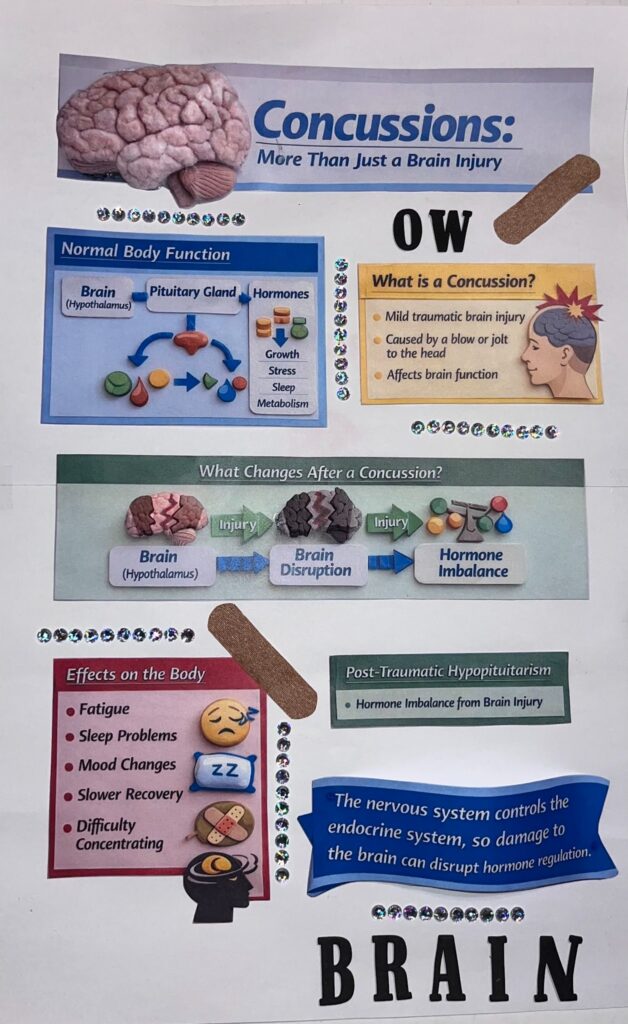
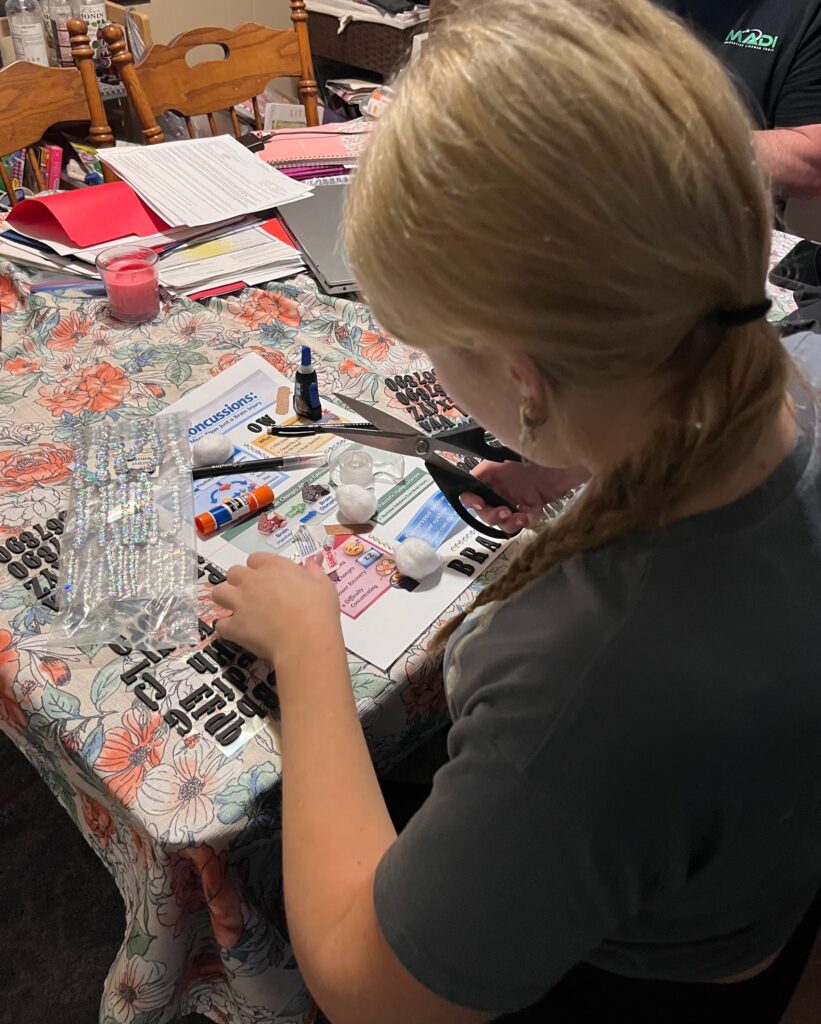
My artwork is a poster that illustrates how a concussion is more than just a simple head injury by showing its effects on both the brain and the body’s hormone system. It explains that a concussion is a mild traumatic brain injury caused by a blow or jolt to the head that disrupts normal brain function. It highlights how, under normal conditions, the brain, specifically the hypothalamus, communicates with the pituitary gland to regulate hormones that control growth, stress, sleep, and metabolism. After a concussion, this communication can be disrupted, leading to hormone imbalances. It also portrays the resulting symptoms people may experience, such as fatigue, sleep problems, mood changes, slower recovery, and difficulty concentrating. Overall, my poster emphasizes the connection between the nervous system and the endocrine system, showing how brain injuries can have widespread effects beyond just immediate physical symptoms.
References
Mullally, W. J. (2017). Concussion. The American Journal of Medicine, 130(8), 885–892. https://doi.org/10.1016/j.amjmed.2017.04.016
Pertab, J. L., Merkley, T. L., Cramond, A. J., Cramond, K., Paxton, H., & Wu, T. (2018). Concussion and the autonomic nervous system: An introduction to the field and the results of a systematic review. NeuroRehabilitation, 42(4), 397–427. https://doi.org/10.3233/nre-172298
Pertab, J. L., Merkley, T. L., Winiarski, H., Kelly, & Cramond, A. J. (2025a). Concussion and the Autonomic, Immune, and Endocrine Systems: An Introduction to the Field and a Treatment Framework for Persisting Symptoms. Journal of Personalized Medicine, 15(1), 33–33. https://doi.org/10.3390/jpm15010033