
 Posted by
My objective is to cover the respiratory system: Analyze the effects of disease on the function and structure of the respiratory system.
A collapsed lung, also called a pneumothorax, occurs when part of the lung is unable to expand properly because the normal balance of pressure and airflow is disrupted. The lungs depend on this balance to stay open and function correctly, and when something interferes with it, sections of the lung can collapse and stop participating in breathing. Lung mechanics and pressure changes directly affect lung function, showing how disruption can lead to collapse (Tandfonline). This demonstrates how disease or injury can significantly impact both the structure and function of the respiratory system.
When a lung is collapsed, it does not appear light and spongy like a healthy lung. Instead, it becomes more compressed and dense because it is not filled with air. Sound moves differently through lung tissue depending on how much air is present, demonstrating that collapsed areas contain less air and are physically different from normal lung tissue. This shows that a collapsed lung is not just smaller, but structurally changed, which directly affects how the respiratory system performs gas exchange (Modeling Sound Transmission Through the Pulmonary System).
When parts of the lung are not being ventilated, they can collapse, while other areas may become overexpanded. This creates an imbalance where some parts of the lung are doing too much work while others are doing none at all. This uneven function makes breathing less effective and more difficult and shows that collapse can occur in sections of the lung, not always the entire lung. As a result, oxygen intake is reduced, and the body may not receive enough oxygen to function efficiently (Lung Injury After One Lung Ventilation A Review).
The healing process of a collapsed lung focuses on restoring normal pressure and airflow so the lung can re-expand. Lung tissue can be damaged by stress and strain, but it also has the ability to recover when normal conditions return. Once airflow is restored, the collapsed areas can begin to open back up and function again, improving overall respiratory performance (Lung Injury After One Lung Ventilation A Review).
Lung tissue responds to pressure and mechanical forces, meaning that when normal breathing conditions are restored, the lung can gradually regain its shape and function (Tandfonline). This process may take time, but the lung is capable of adjusting and healing if the damage is not too severe. As air returns to the lung, the structure becomes less dense and more similar to normal lung tissue, allowing proper airflow and gas exchange to occur again (Modeling Sound Transmission Through the Pulmonary System).
After the lung returns to normal, it usually functions the same way it did before the collapse, especially if there was no permanent damage. However, repeated stress or severe injury can lead to long-term changes in lung tissue. This means that while recovery is often successful, there is still a risk if the lungs are exposed to similar stress again (Lung Injury After One Lung Ventilation A Review).
Overall, a collapsed lung involves significant changes in pressure, airflow, and lung structure. It appears more compact and less air-filled, and healing involves restoring normal conditions so the lung can expand and function properly again. This condition clearly shows how disease can alter both the structure and function of the respiratory system (Tandfonline).
My project demonstrates a set of healthy lungs alongside a separate model where one lung is collapsed. The healthy lungs show normal structure, with air-filled, spongy tissue that allows efficient gas exchange. In contrast, the collapsed lung appears compressed and dense due to the loss of air and disrupted pressure balance. This comparison highlights how a pneumothorax affects both the structure and function of the respiratory system.
Sources
Jacobœus, H. C., & N. Westermark. (1930). A Further Study of Massive Collapse of the Lung. Acta Radiologica, 11(6), 547–595. https://doi.org/10.3109/00016923009132948
Lohser, J., & Slinger, P. (2015). Lung Injury After One-Lung Ventilation. Anesthesia & Analgesia, 121(2), 302–318. https://doi.org/10.1213/ane.0000000000000808
Royston, T. J., Zhang, X., Mansy, H. A., & Sandler, R. H. (2002). Modeling sound transmission through the pulmonary system and chest with application to diagnosis of a collapsed lung. Journal of the Acoustical Society of America, 111(4), 1931–1946. https://doi.org/10.1121/1.1452742
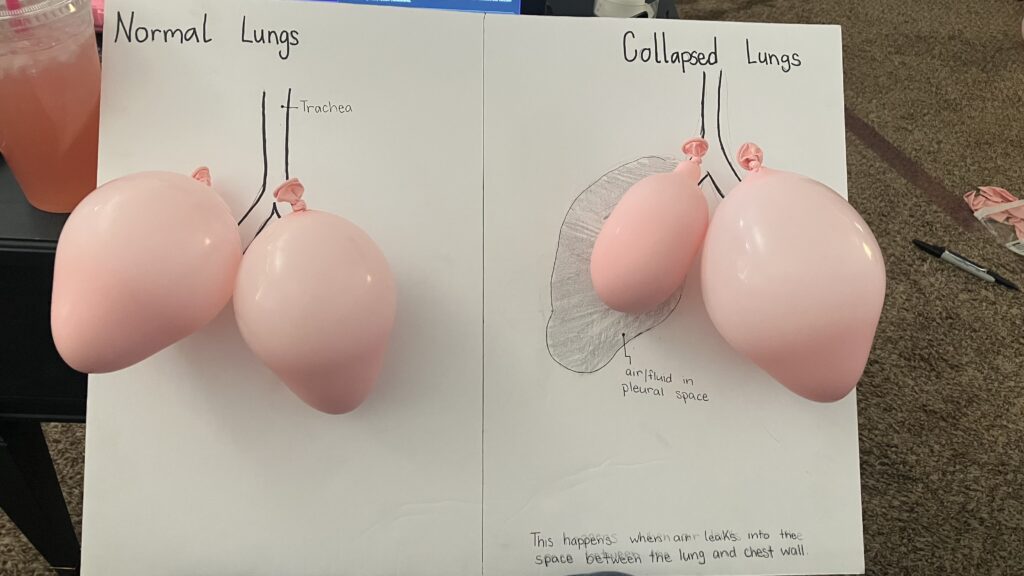
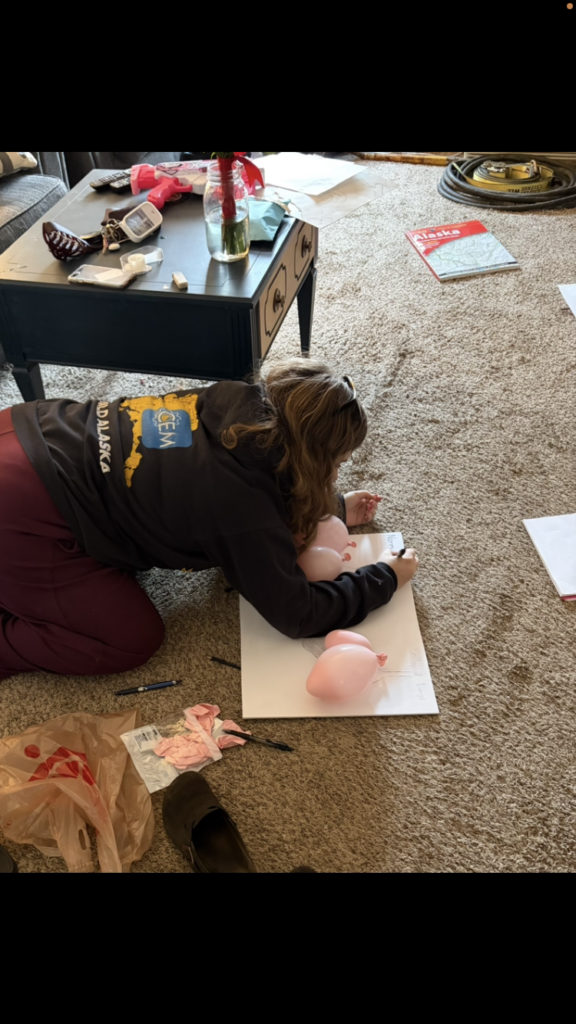
A collapsed lung affects both the structure and function of the respiratory system by disrupting the pressure balance required for proper lung expansion. Vivian’s project explains how a healthy lung relies on normal airflow and pressure to stay open for gas exchange, while a collapsed lung becomes basically compressed, more dense, and not fully able to help in breathing as much. She highlights that a collapse might affect part or even all of a lung, reducing the oxygen intake and forcing other areas of the lung to overcompensate, making breathing become far less efficient. She also talks about how the structural changes in air content change lung tissue and impact the overall respiratory performance. Recovery focuses on restoring normal pressure and airflow so the lung can re-expand and regain its function. She emphasizes that lung tissue can often heal and return to almost normal function if the damage is not severe, but repeated stress or injury may cause lasting changes. She created a model that compares healthy lungs to a collapsed lung. The project shows the difference between a normal air-filled, spongy lung tissue and the compressed, dense tissue of a collapsed lung. The comparison helps show how a collapsed lung changes normal breathing mechanics and affects how the lungs function. Overall, her project clearly explains how disease or injury can change lung structure, reduce respiratory function, and interfere with the body’s ability to carry out efficient gas exchange. It also effectively connects structural changes to respiratory disease and recovery.