 Posted by

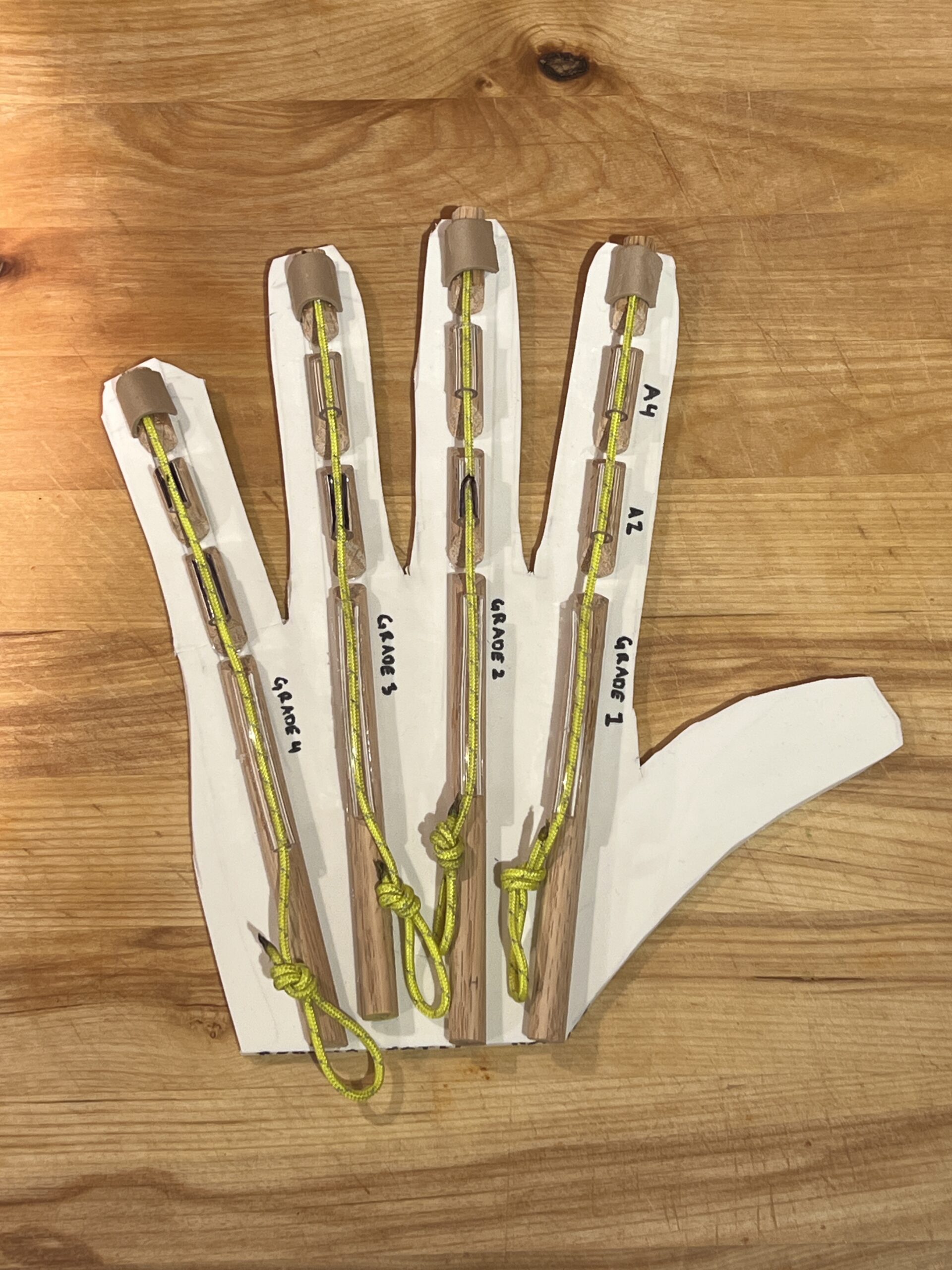
Grasping an object is a seemingly simple motion with a complicated coordination of muscles in the hand and forearm. Just like other bones in the body, a finger moves when a muscle contracts to pull on a tendon attached to the bone. Each phalanx of the finger has individual tendon attachments to both flex and extend the fingers. The flexor tendons of the fingers run through a system of connective tissue tunnels called pulleys to keep them in position with the bone. There are two types of pulleys arranged in an alternating pattern on each finger. Annular pulleys form ring-like sheaths with thick bands of tissue on each phalanx. Cruciate pulleys attach in a crosswise formation between the annular pulleys, providing more flexibility to the system (PHED 301, 2018). Similar to how fishing line runs through eyelets in a fishing rod as it flexes from the pull of a fish, the finger pulleys ensure flexor tendons stay in line with the bone when pulled. If too much force is exerted by a tendon on a pulley, it can result in a tear of the pulley tissue.
Injury to the system of finger pulleys or flexor tendons is uncommon in the general population but makes up approximately 33% of all rock-climbing injuries (Boscoe et al., 2022). Climbing exerts a great amount of force onto the fingertips, most notably when utilizing a grip known as a crimp. This finger positioning maximizes surface contact on an extremely narrow ledge by hyperextending the distal joints and flexing the interphalangeal joints. Loading this grip applies intense “bowstringing” forces to the pulleys which can result in stretching or tearing of the pulley tissue under enough force. Under normal load, a crimp grip performed by a 150 lb. climber will exert more than 200N of force on the thickest pulleys. However, injury most often occurs from sudden overloading due to unexpected force changes while already hanging, such as when a foot slips. Failure of the strongest pulley, the A2 at the proximal end of the finger near the palm, has been documented to occur around 400N (Schöffl et al., 2009). Climbers have described the injury as a sudden pop or tearing sensation followed by pain and swelling.
Healing a pulley is a slow process because they are made of dense regular connective tissue with poor blood supply. Treatment begins with classifying the grade of rupture. Grade 1 consists of stretching or light tearing of the pulley tissue. Grade 2 is a partial rupture of the A2 or A3 pulley at the proximal phalanx or full rupture of the A4 pulley across the middle phalanx. Grade 1 and 2 injuries are generally treated with immobilization and physical therapy after 10 days. Grade 3 injuries involve a complete rupture of the A2 or A3, requiring two weeks of immobilization and therapy for up to a month following. In a grade 4 injury the pulley system has multiple complete ruptures which will require surgical intervention (Boscoe et al., 2022). Current protocol suggests climbing can continue in low-grade injuries with taping techniques or the use of a plastic ring orthotic. Both methods aim to decrease bowstringing or further rupture by holding the tendon closer to the bone. Taping seems to be slightly less effective due to how it stretches over the course of a climb (Hartnett et al., 2024).
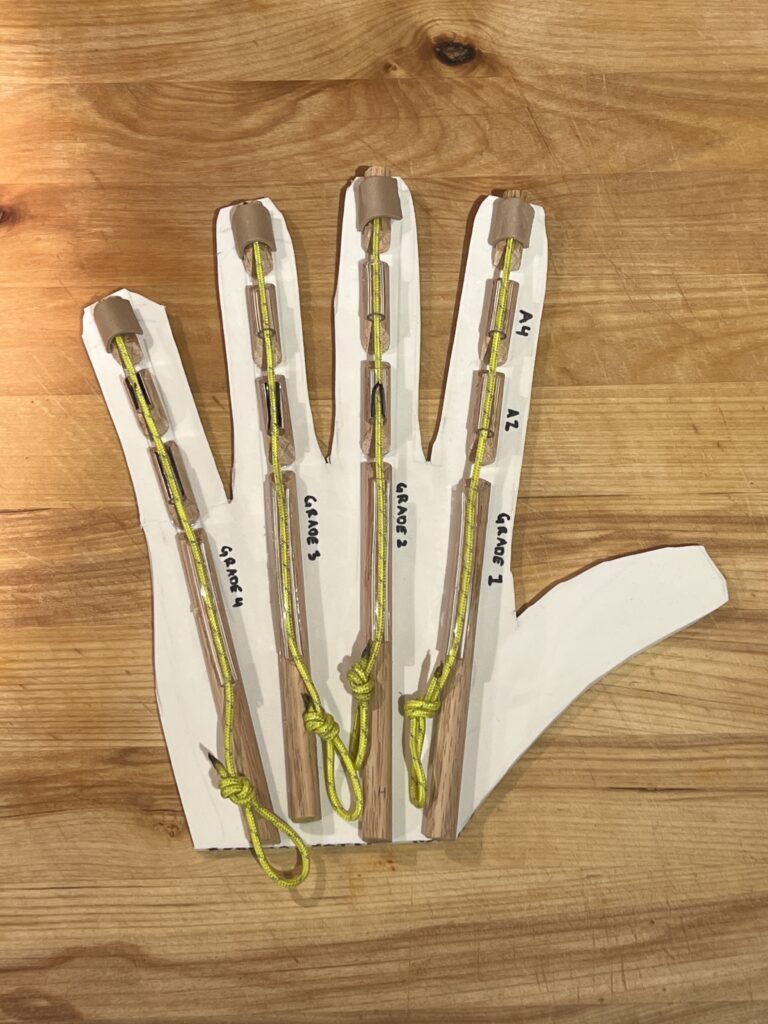
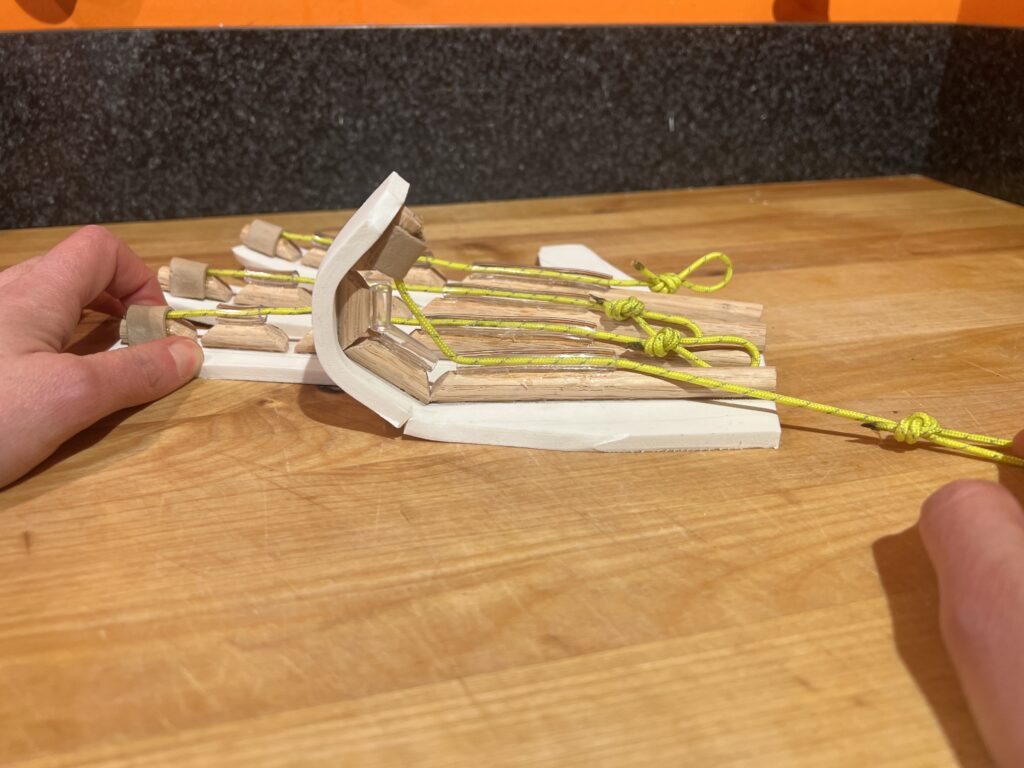
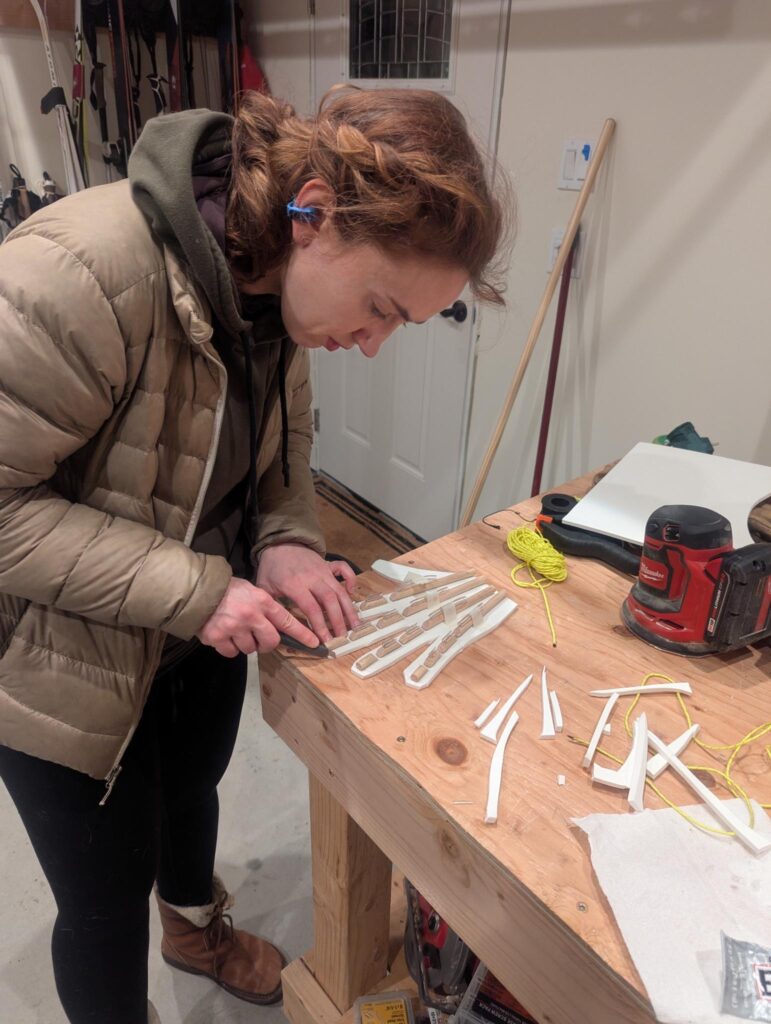
In this hand model, the A2 and A4 annular pulleys are shown as tubing attached to wooden dowels approximating bone. A piece of cording runs from the distal attachment of the tendon through the center of the hand. Pulling on a cord simulates how the finger bends when this tendon is pulled by the contracting flexor digitorum profundusmuscle in the forearm. The pointer finger shows a healthy pulley system, with remaining fingers indicating grades 2, 3, and 4 of injury working toward the pinkie.
References
Bosco, F., Giustra, F., Lusso, A., Faccenda, C., Artiaco, S., & Massè, A. (2022). Closed flexor pulley injuries: A literature review and current practice. Journal of Orthopaedics, 34, 246–249. https://doi.org/10.1016/j.jor.2022.09.002
Hartnett, E., Bondoc, S., & Feretti, A. M. (2024). Climbing while healing: An orthotic intervention for rock climbers with a low- grade A2 pulley injury, a case series. Journal of Hand Therapy, 37(3), 419-428. https://doi.org/10.1016/j.jht.2023.08.005
PHED 301 Students. (2018). The Hand. Advanced Anatomy 2nd Ed. https://pressbooks.bccampus.ca/advancedanatomy1sted/chapter/the-hand/
Schöffl, I., Oppelt, K., Jüngert, J., Schweizer, A., Neuhuber, W., & Schöffl, V. (2009). The influence of the crimp and slope grip position on the finger pulley system. Journal of Biomechanics, 42(13), 2183–2187. https://doi.org/10.1016/j.jbiomech.2009.04.049
Pulleys are a system of connective tissue tunnels in the fingers positioning flexor tendons to bones. Annular pulleys are ring-like sheaths with thick bands of tissue, and cruciate pulleys attach between annular pulleys in a crosswise formation. The A2 at the proximal end of the finger near the palm is the strongest pulley, but there are implications when too much force is exerted on it. Climbers are prone to pulley injuries because of the force exerted on the fingers when utilizing certain grips. Sudden, unexpected changes in force can cause pulley tissue to rupture. There are four different classifications of this injury. A grade 1 rupture involves a light tearing of pulley tissue. A grade 2 rupture involves a partial rupture of the A2 or A3 pulley. Grade 3 is a complete rupture of A2 or A3. In a Grade 4 rupture, there are multiple complete ruptures in the pulley system. Grade 4 ruptures require surgery, while the other injuries just require periods of immobilization and physical therapy.