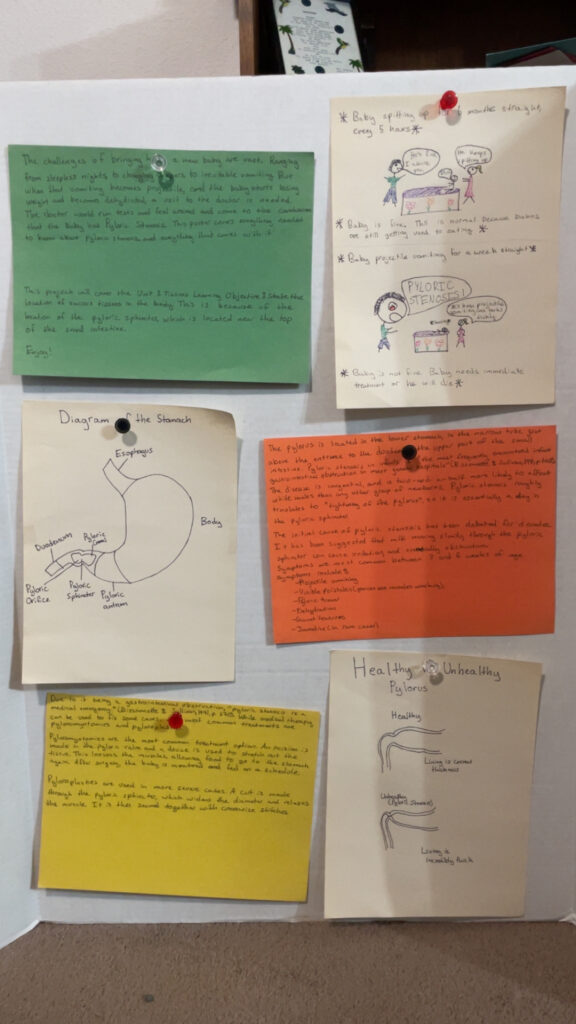
This is my STEAM presentation on Pyloric Stenosis in Infants. There are zoomed in photos further down as well as a photo of me working on the posters. Enjoy!
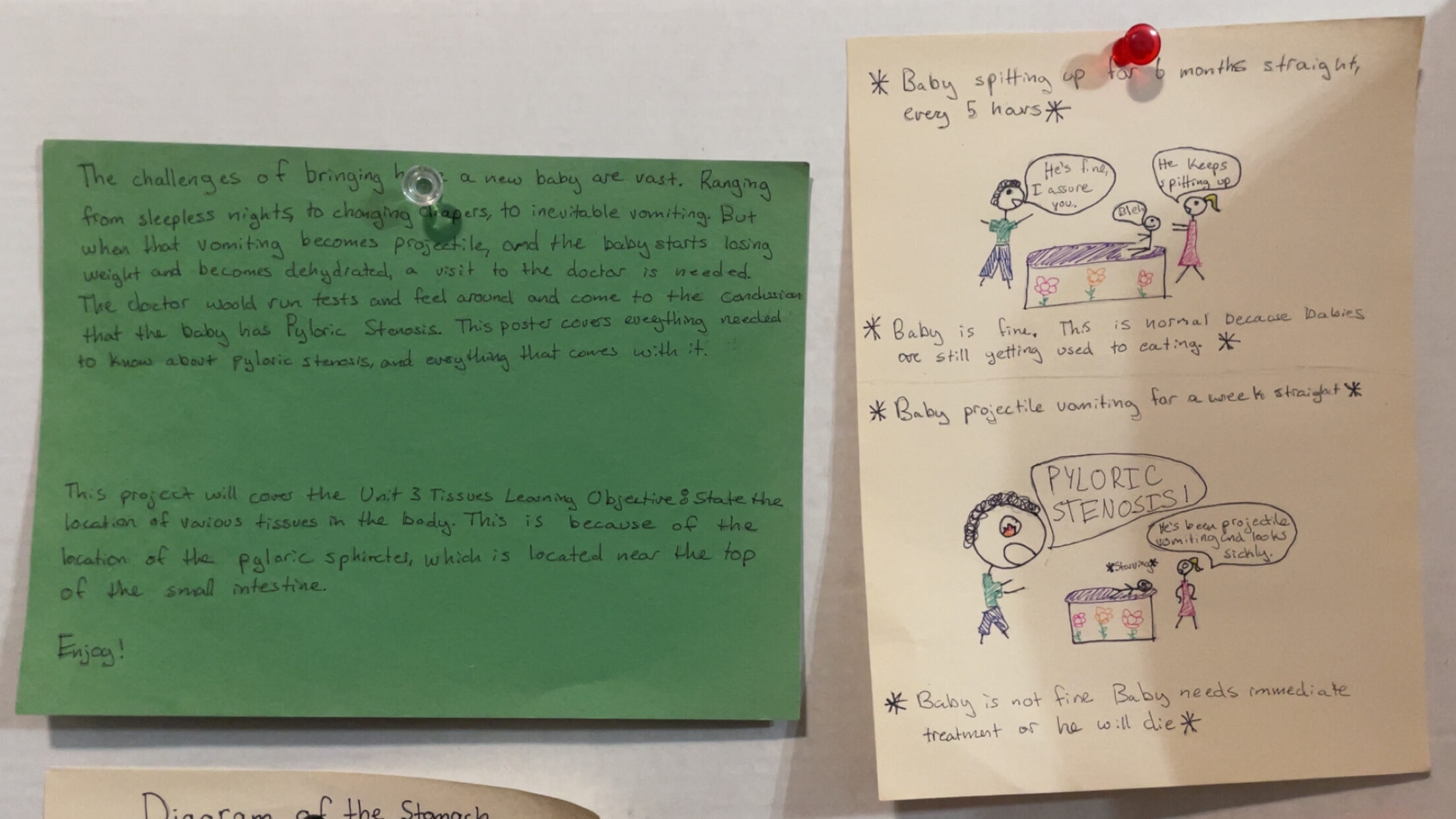
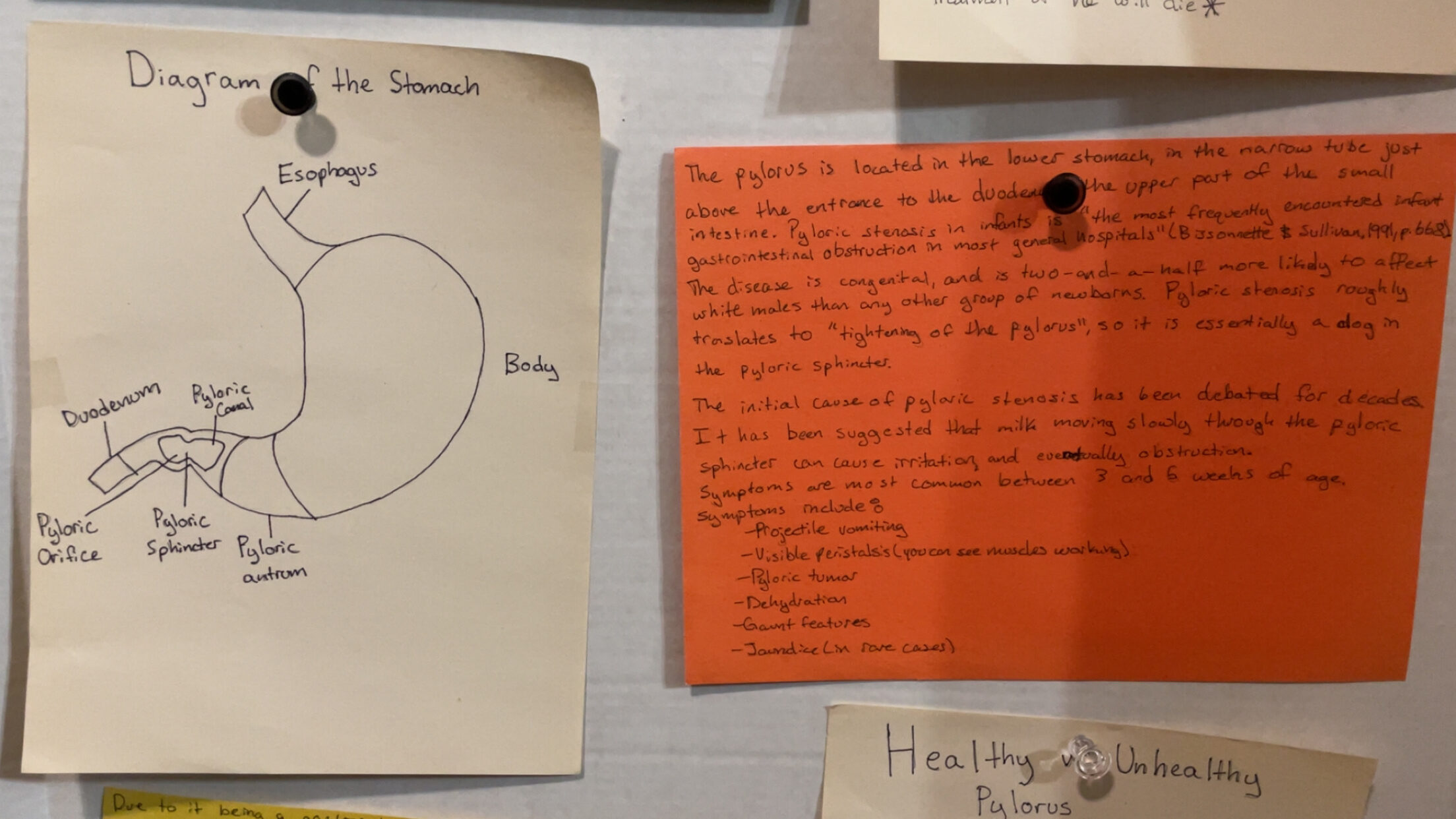
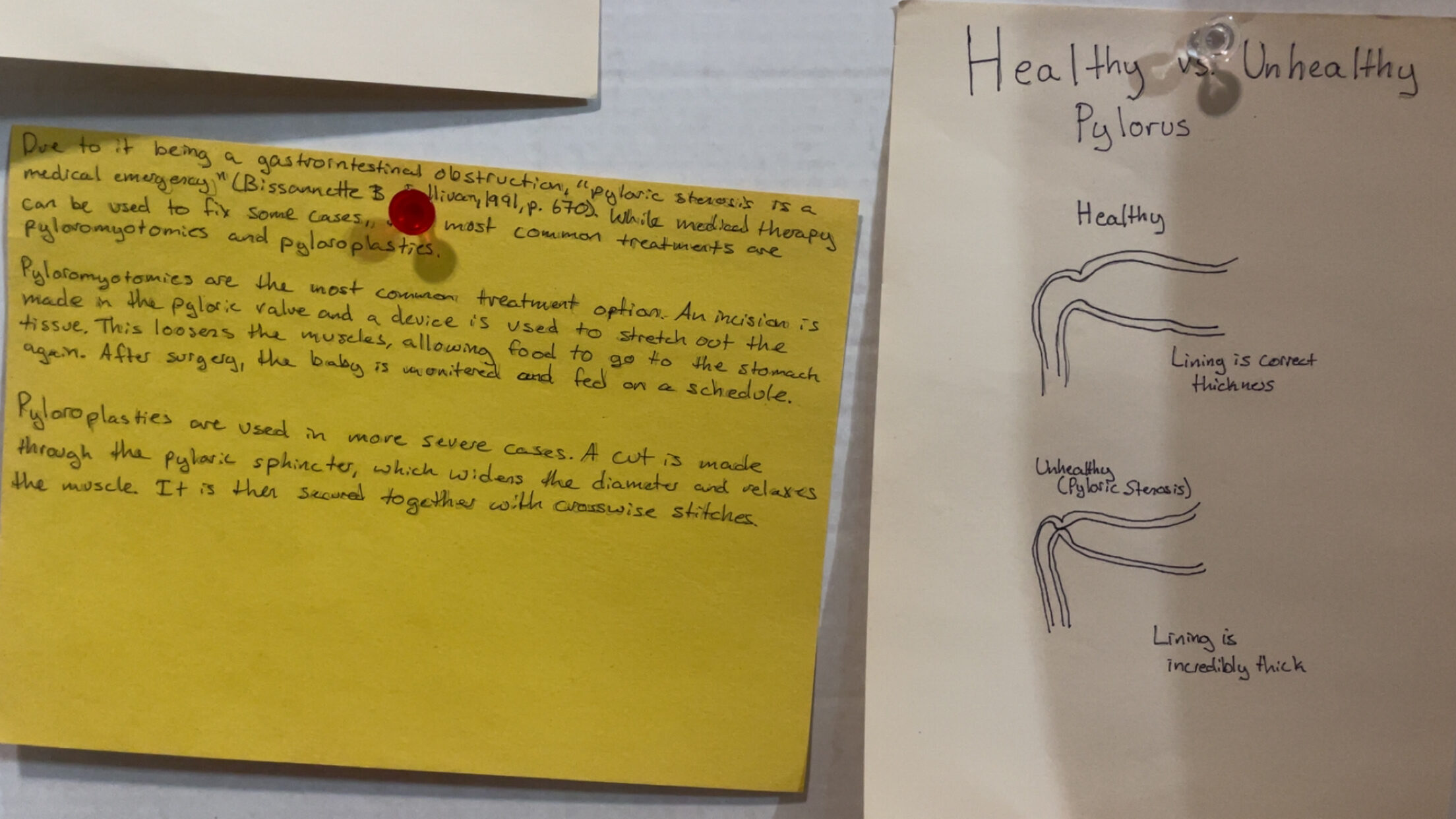
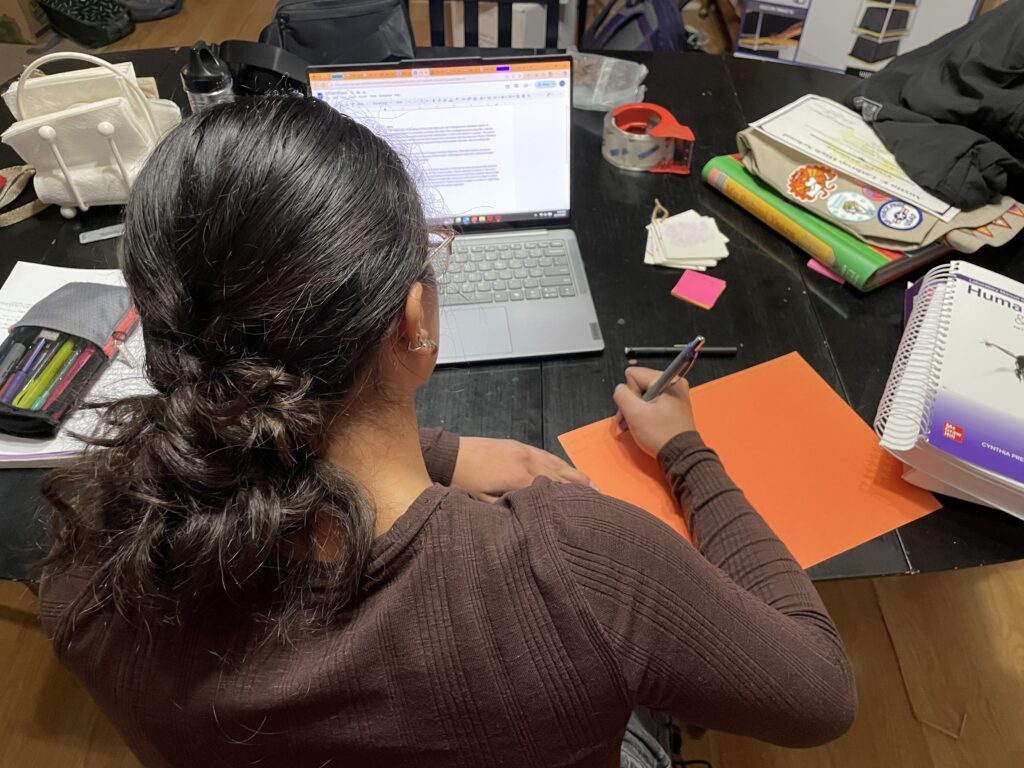
This is my introduction to my poster and the objective my project covers, as well as a meme I drew symbolizing the severity of pyloric stenosis.This is a diagram of the stomach including the pylorus region, as well as a description of what the pylorus is and symptoms of pyloric stenosis.This section lists the treatments of pyloric stenosis in infants, and the diagram shows the visible difference between a healthy pyloric sphincter and a pyloric sphincter when stenosis is present.This is me working in my presentation.
One Comment
Pyloric stenosis is a condition where the pyloric sphincter tightens too much, creating a blockage between the stomach and small intestine. This project explains where the pylorus is located, what this condition actually means, the symptoms that usually show up in infants, and how doctors diagnose and treat it. It also gives a quick overview of the two main procedures, pyloromyotomy and pyloroplasty, that help reopen the passage so babies can eat normally again. Overall, the goal of this poster is to break the condition down in a simple, understandable way and connect it to what we’ve learned about tissues and their locations in the body. The different colored pages help separate the information, and the handwriting and layout keep everything organized without feeling crowded. It’s simple, clear, and visually inviting, which makes the topic feel a lot less overwhelming, especially for something as serious as an infant’s medical condition.
 Posted by
Pyloric stenosis is a condition where the pyloric sphincter tightens too much, creating a blockage between the stomach and small intestine. This project explains where the pylorus is located, what this condition actually means, the symptoms that usually show up in infants, and how doctors diagnose and treat it. It also gives a quick overview of the two main procedures, pyloromyotomy and pyloroplasty, that help reopen the passage so babies can eat normally again. Overall, the goal of this poster is to break the condition down in a simple, understandable way and connect it to what we’ve learned about tissues and their locations in the body. The different colored pages help separate the information, and the handwriting and layout keep everything organized without feeling crowded. It’s simple, clear, and visually inviting, which makes the topic feel a lot less overwhelming, especially for something as serious as an infant’s medical condition.