
 Posted by
Topic: How the skull protects the brain from traumatic injury and edema.
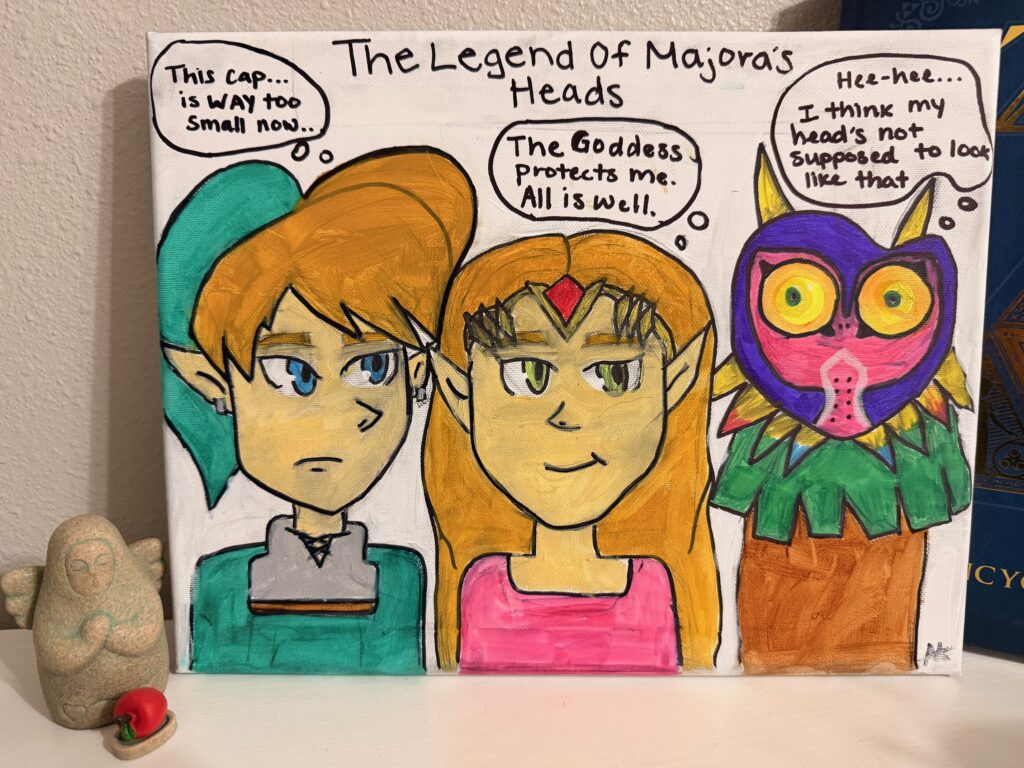
My artwork, Zelda inspired, shows three caricature heads to represent different outcomes of head injuries.
One head is swollen to show cerebral edema (left). The second (middle) head is normal to show how the skull looks when it’s healthy. The third (right) head has a dent to represent a skull fracture.
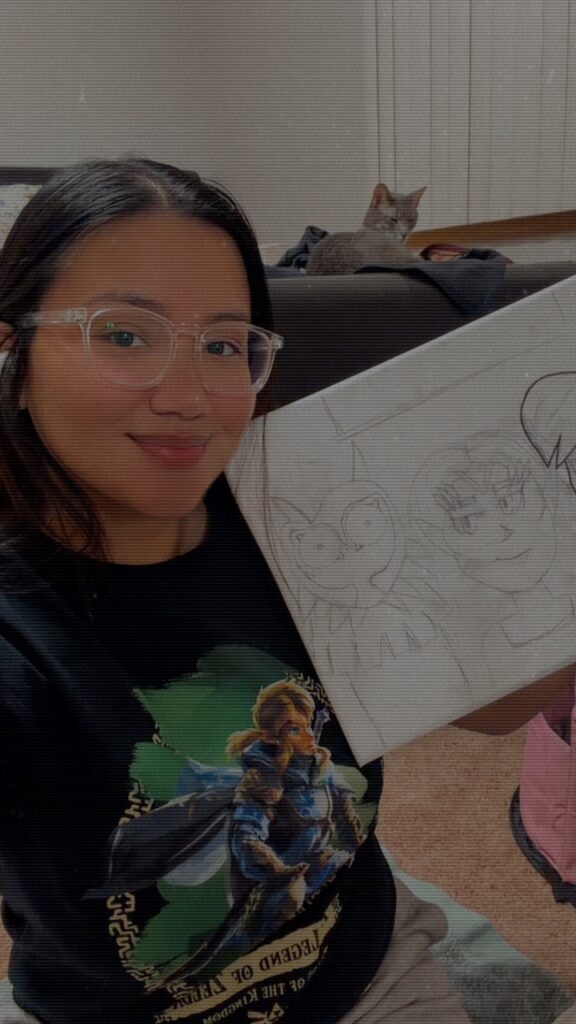
Steam project abstract: Written by Erin Haynes
STEAM project partner: Angelique Trefethen
“How the skull protects the brain from traumatic injury and edema”
Angelique’s Steam project was on the skull and how it protects the brain from injury and edema. She created a beautiful artwork titled The Legend of Majora’s Head, which featured three characters with varying head injuries. The first had cerebral edema, the middle had an uninjured head, and the third had a fractured and concave skull. In her written portion, she explained that, in infancy, the skull is soft and composed of separate bone pieces. As they mature, those bones suture together, forming a sturdy cap that distributes force over a larger surface to reduce damage. In her work, she describes how genetic and environmental factors, including sex, influence the thickness of the skull. She also discussed how the thick skull protects against damage and can reduce the impact on the brain. Despite this, the braid can still be injured and have adverse reactions after brain injury, such as dizziness, headache, and cerebral edema. This is when the brain swells, and the skull keeps the pressure in. Angelique’s essay and picture were both informative and fun to see.