 Posted by
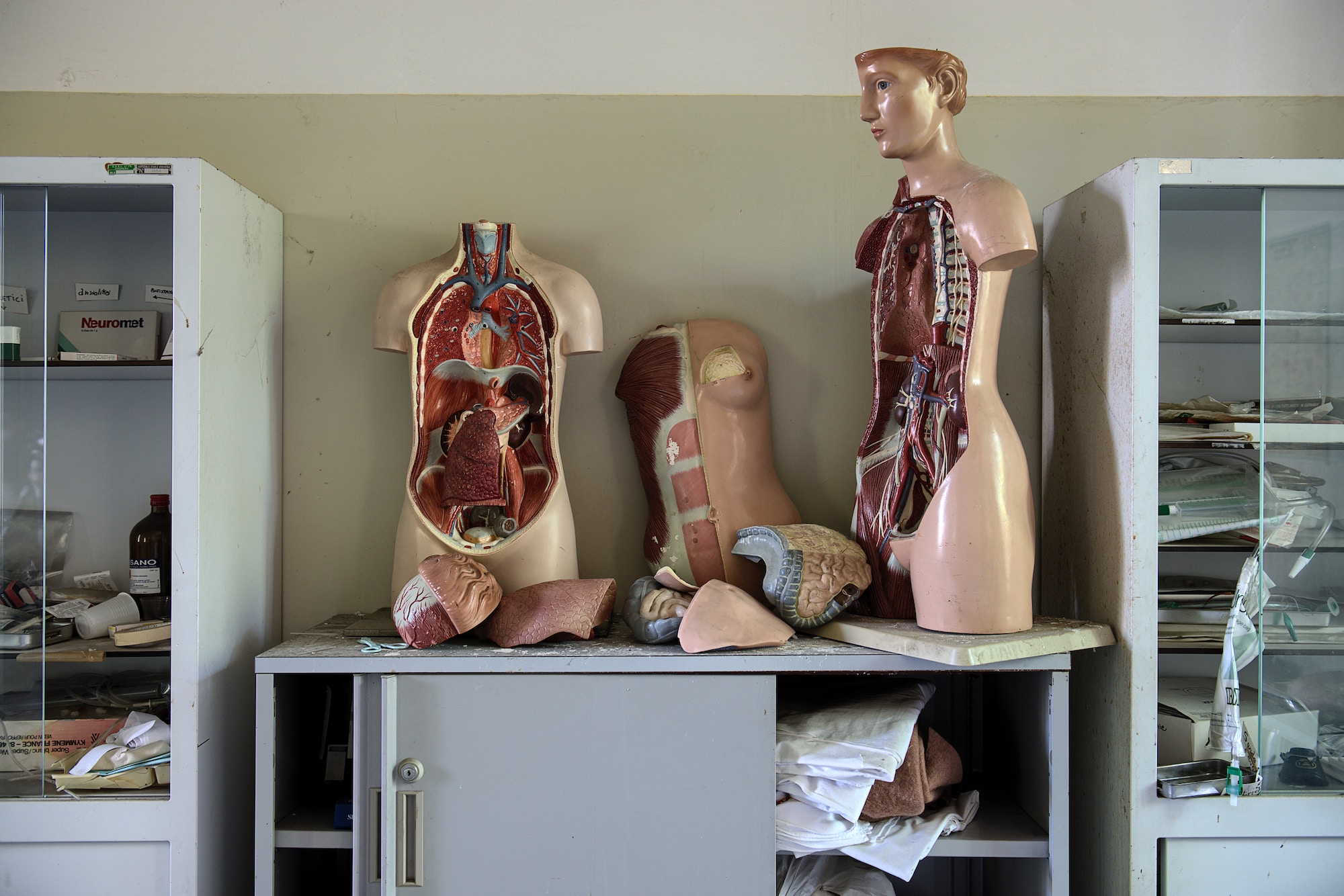
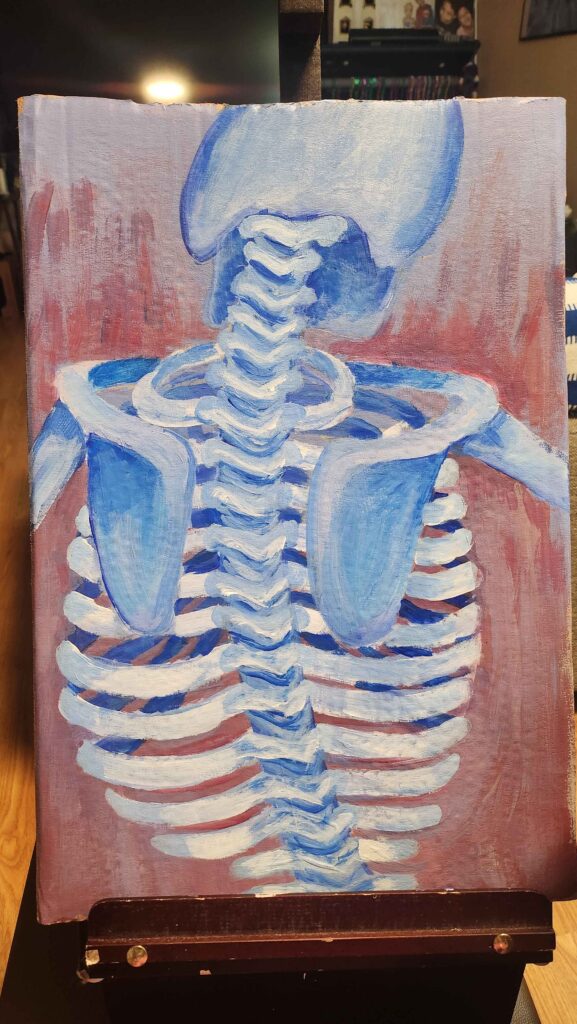
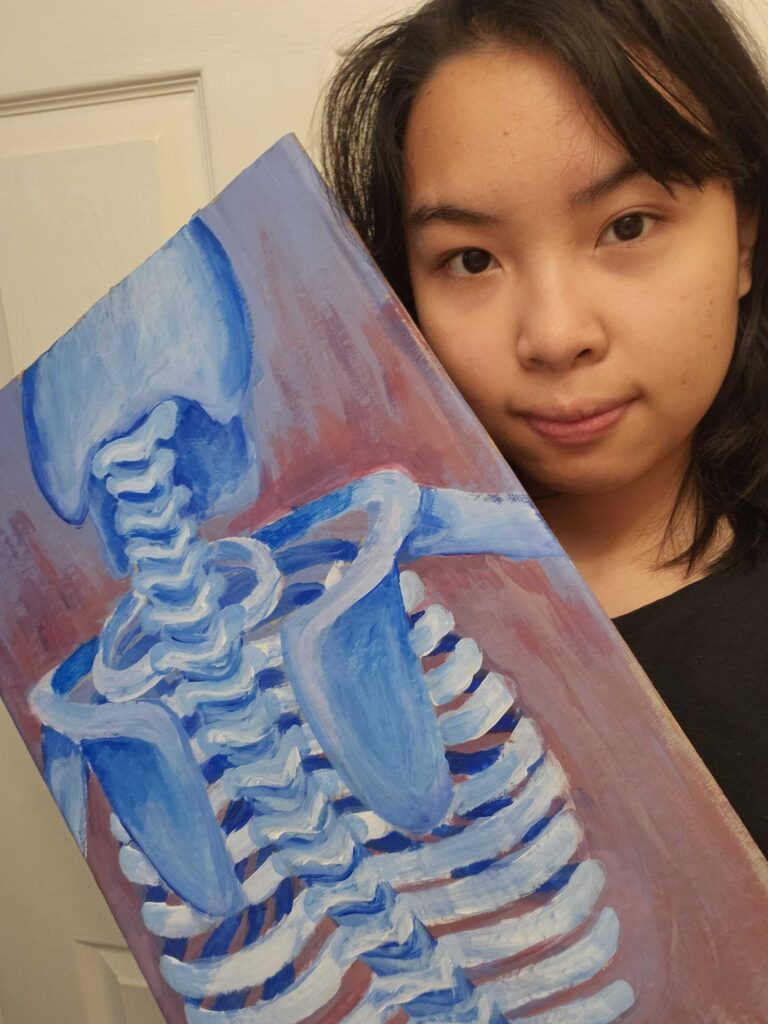
Fibrodysplasia Ossificans Progressiva is an incredibly rare bone disease that causes heterotopic ossification around soft tissues such as the muscles, ligaments, tendons, and other connective tissues (Alharthi et al., 2025; Haile et al., 2025; Harrack et al., 2025). I will be discussing how fibrodysplasia can develop, options for treatment, as well as prevention efforts. The painting I created is a visual demonstration of how the muscle and connective tissue begin to ossify around the original skeletal structure. I used the lab kit’s skeleton model as a reference and painted with acrylic to portray how a normal skeleton would look, and continued with a layering process when showcasing how fibrodysplasia appears on a skeleton of someone who is affected by the disease.
As humans grow, growth hormones such as estrogen and testosterone promote osteoclast activity and encourage adolescent bone growth which increases the length of bones, improving bone density, and mineralization (Betts et al., 2022). In fibrodysplasia, the main cause of the heterotopic bone growth is a mutation of the ACVR1 gene, a receptor protein involved in signaling growth factors and hormones. This mutation causes dysregulated signalling to the morphogenetic protein or BMP, which causes abnormal bone formation in soft tissues (Alharthi et al., 2025).
As of now, there is no known cure for fibrodysplasia. However, there are treatment options and prevention efforts to reduce the chances of the disease from escalating rapidly. While it should be noted that because fibrodysplasia is a genetic disease, the effects of it are not preventable or curable, treatment only reduces dangerous formations and painful flare-ups. Fibrodysplasia may not appear within the first one to two years prior to being born, but being able to detect early signs of the disease will be able to prevent growth and flare-ups from escalating any further (Alharthi et al., 2025; Haile et al., 2025). Flare-ups are described as lumpy swelling around the tissue that would later turn into bone. An early indicator of the disease is a bilateral malformation of the big toe which may be present at birth. Later, near the age of five, accidental or induced flare-ups may occur and turn into a specific pattern that progresses from the dorsal, axial, appendicular, ventral, and distal regions of the body (Haile et al., 2025).
Treatment options for the condition are very limited due to the possibility of increasing trauma around the affected areas. The overall goal of the treatment is not to cure the disease but to reduce and manage the painful flare-ups and slow down the growth of the bone formation (Haile et al., 2025). Treatment options include surgery or pharmaceutical treatment such as NSAIDS, corticosteroids, and palovarotene (Alharthi et al., 2025; Haile et al., 2025). A high dosage of the corticosteroid drug is considered to be one of the most effective methods of treatment if administered early, although it may not be suitable for long-term use as the drug is only used to manage flare-ups (Haile et al., 2025). Palovarotene is a drug that disrupts the signaling of the abnormal dysregulation of the growth and temporarily prevents further formations (Alharthi et al., 2025). Many people who have suffered with the disease are only expected to live around 56 years or less on average. The most reported cause of death being respiratory or cardiovascular issues, pneumonia, and accidental injuries or falls (Harrack, et al., 2025). Overall, fibrodysplasia can be described as a slow and painful disease, with a low mortality rate and limited treatment. Despite this, research and studies continue to be conducted in order to find more suitable treatments.
References
Alharthi, M. S. (2025). A Narrative Review of Phase II and III Clinical Trials for the Pharmacological Treatment of Fibrodysplasia Ossificans Progressiva (FOP): Efficacy, Safety, and Challenges in Treatment Strategies. Drug Design, Development and Therapy, 19, 8581–8588. https://doi.org/10.2147/DDDT.S537454
Betts, J., Young, K. A., Wise, J. A., Johnson, E., Poe, B., Kruse, D. H., Korol, O., Johnson, J. E., Womble, M., & DeSaix, P. (2022). Anatomy and Physiology 2e. OpenStax. 206-211. https://openstax.org/books/anatomy-and-physiology-2e/pages/1-introduction
Haile, A. M., Azale, A. W., Ayana, B., & Takahashi, H. (2025). Early Detection for Better Patient Outcome: A Case Report on Two Patients Presenting With Fibrodysplasia Ossificans Progressiva at Tikur Anbessa Specialized Hospital, Ethiopia. Case Reports in Orthopedics, 2025, 1–8. https://doi.org/10.1155/cro/2161762
Harrak, H., Rhee, S., Souttou, A., O’Meara, S. J., & Knox, C. (2025). Understanding the clinical morbidity and mortality of fibrodysplasia ossificans progressiva: a systematic literature review. Orphanet Journal of Rare Diseases, 20(1), 262. https://doi.org/10.1186/s13023-025-03763-8
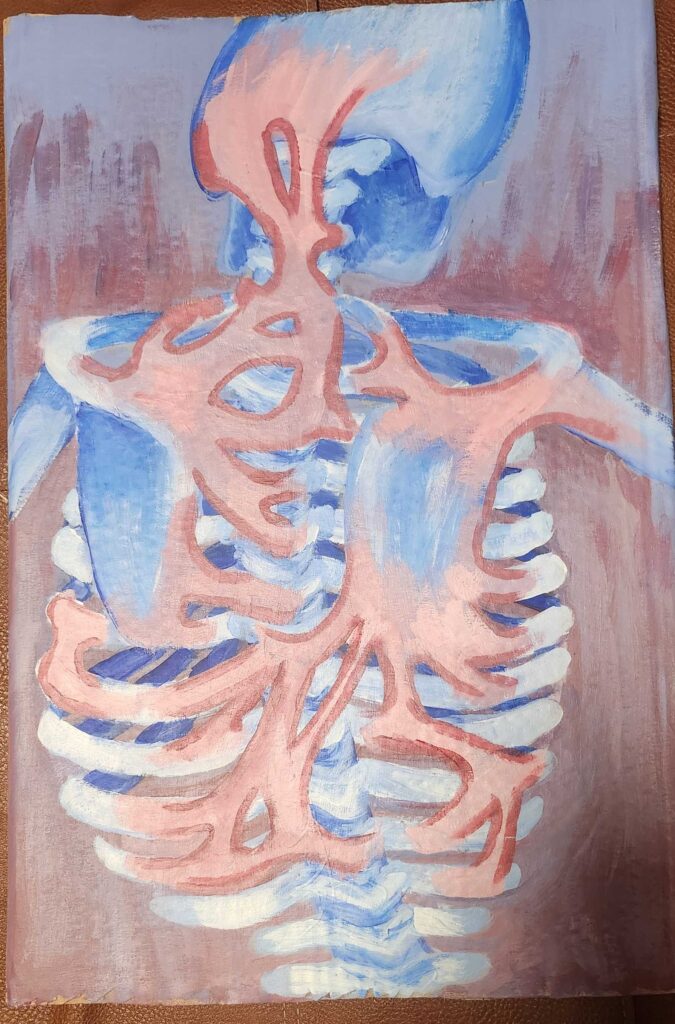
Fibrodysplasia Ossificans Progressiva is an extremely rare debilitating genetic disorder characterized by the progressive transformation of soft tissues such as muscles, tendons, ligaments, and fascia into bone through a process known as the heterotopic ossification. This disorder is caused by a mutation in the ACVR1 gene, which disrupts the regulation of bone morphogenic protein signaling, leading to abnormal bone development in areas where bone should not form. Symptoms may not be immediately noticeable in infancy, but one of the earliest indicators is a distinctive malformation of the big toe present at birth. As children grow, painful flare-ups often begin around age five. These flare ups, which can appear as swollen lumps, eventually solidify into bone and follow a predictable spreading pattern throughout the body, limiting movement and gradually creating a secondary skeleton around the original skeletal structure.
Because trauma can worsen the condition, treatment options are limited and focus primarily on managing symptoms, reducing inflammation, and slowing new bone formation. Common treatments include NSAIDSs, short-term high dose corticosteroids, and the medication palovarotene, which interferes with dysregulated BMP signaling. Surgical removal of excess bone is generally avoided, as it can trigger additional bone growth. FOP significantly restricts mobility and overall function, and many individuals with the disorder experience life threatening complications such as respiratory failure, cardiovascular strain, or pneumonia as bone growth progressively impacts vital systems. Although the average life expectancy is reduced, ongoing research continues to explore improved therapies and potential future treatments aimed at slowing disease progression and improving patient quality of life.