 Posted by
Hypermobility in the Hip Joint
Introduction
The human body is capable of a wide range of movements. The ability to do this
depends on the unique structures within our skeletal system, known as joints. There are
different types of joints, each having its own purpose, capabilities, and limitations. Deformities in
muscles and ligaments caused by injury or illness affect joint function and can lead to
self-inflicted damage if left untreated. In this essay, I will cover the types of joints, focusing on
the ball-and-socket joint in our hips. The objective I will be covering is the description of
movement using proper terminology, and I will be doing a deep dive into how excessive
movement within the joint can cause long-term damage.
Joint Classification and Movements
There are three main classifications of joints, determined by their structural properties.
Fibrous joints are joints that connect bones with a strong fibrous connective tissue. These joints
can be found in the “fusing“ of the cranial bones, the connection between teeth in the jaw, and
between long bones, such as the radius and ulna. Fibrous joints allow no movement and
provide a stable, unmoving structure. Cartilaginous joints are formed when the bones are
connected by fibrocartilage. You can find cartilaginous joints on the pubic symphysis, along the
first sternocostal joint, and between the anterior ends of the ribs. These joints allow slight flexion
to compensate for minor impacts or necessary expansion. An example of this is the pelvic floor,
which expands during childbirth. The most versatile joint is the synovial joint. Synovial joints are
responsible for the majority of movement in the human body. There are many types of synovial
joints. These include pivot joints, hinge joints, condyloid joints, saddle joints, plane joints, and
ball-and-socket joints. In this paper, I will focus on the ball-and-socket joint. Ball-and-socket
joints are formed by a rounded head that fits into a socket cushioned by a thin layer of tissue
called the labrum. The movement of these bones in the labrum is lubricated by synovial fluid,
allowing for smooth articulation. The human body has two locations for ball-and-socket joints:
the shoulder and the hip. These joints are the most capable joints found within the human body
and have the ability to move across multiple planes. The ball-and-socket joint is multiaxial; this
means it is capable of flexion and extension (forward and backward motion), abduction and
adduction (movement toward and away from the body), circumduction (movement in a circle),
and medial and lateral rotation (internal and external rotation).
Hypermobility within the Joint
Every joint has limitations on mobility. This is due to the ligaments that stabilize the joint.
Hypermobility is when those ligaments surpass the expected intentional range of motion for the
joint. A multitude of reasons, such as injury, force, or genetic connective tissue disorders, can
cause this. According to a study on generalized joint pain, “A patient was considered to have a
connective tissue disorder if he/she carried the diagnosis of Ehlers-Danlos syndrome, Marfan
syndrome, Raynaud disease, or systemic lupus erythematosus.” (Haskel, J. D. 2021, paragraph
6) Hypermobility of the hip joint is difficult to assess because the joint is already the most mobile
in the body. The ball-and-socket joint of the hip is constantly in use. When we walk, jump, turn,
or pivot, the hip joint is in motion. If a connective tissue disorder or prior injury is present, the
joint is misaligned every time it moves. This can result in the labrum grinding against itself,
leading to wear and possible tears. This also happens if the joint is surpassing the normal range
of motion, and this can cause the labrum (the capsule cushioning the femoral head) to pinch in
between the femoral head and the acetabulum. Once the labrum is damaged, joint stability will
continue to decompensate, further increasing movement dysfunction and damage to the area.
“Due to increased capsular and ligamentous laxity, labrum and/or iliofemoral ligament injuries
can arise from repetitive motion and microtrauma leading to increased subluxation of the
femoral head, which may further worsen capsular laxity and injury to the labrum.”(Gaudiani, M.
A., 2023, page 5139)
Solutions to the Damage
There are multiple solutions for hyperlaxity caused by labrum injuries. The non-invasive
route focuses solely on strengthening surrounding muscles and ligaments to prevent agitation or
further injury. “The goals of rehabilitation are to improve hip stability, neuromuscular control,
strength, range of motion, and movement patterns of the lumbo-pelvic region.” (Savic, M., &
D’Angelo, K., 2019, page 193) Another solution is surgical intervention. During this procedure,
depending on the extent of joint damage, the surgeon will remove any damaged tissue or, in
severe cases, damaged bone. This will prevent further misalignment and tissue catching during
movement. The labrum will then be realigned, sewn back together, and then fastened back to
the bone with an anchoring mechanism. Postoperative care focuses on the previously
mentioned rehabilitation of hip stability and movement.
Art Media Explanation
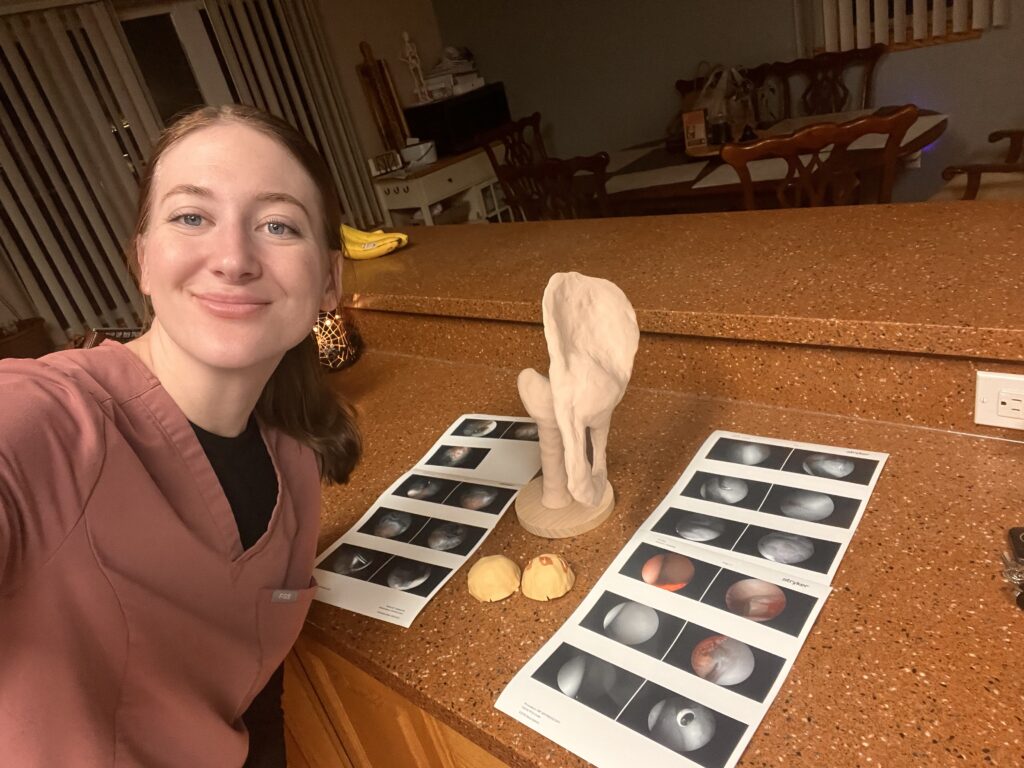
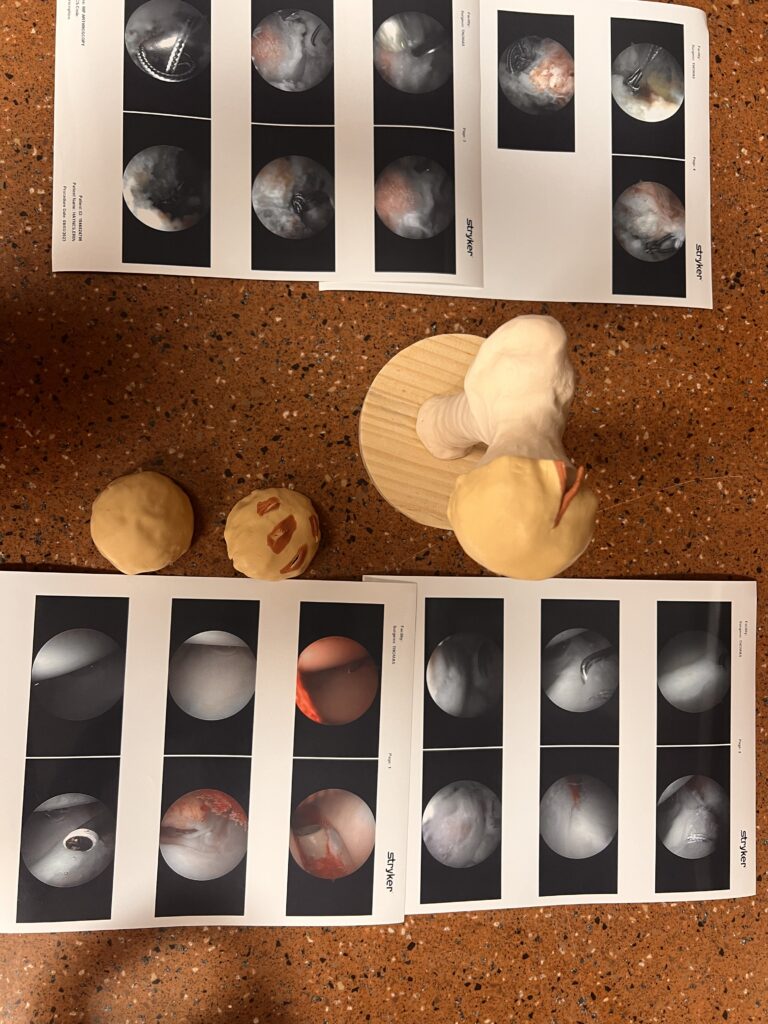
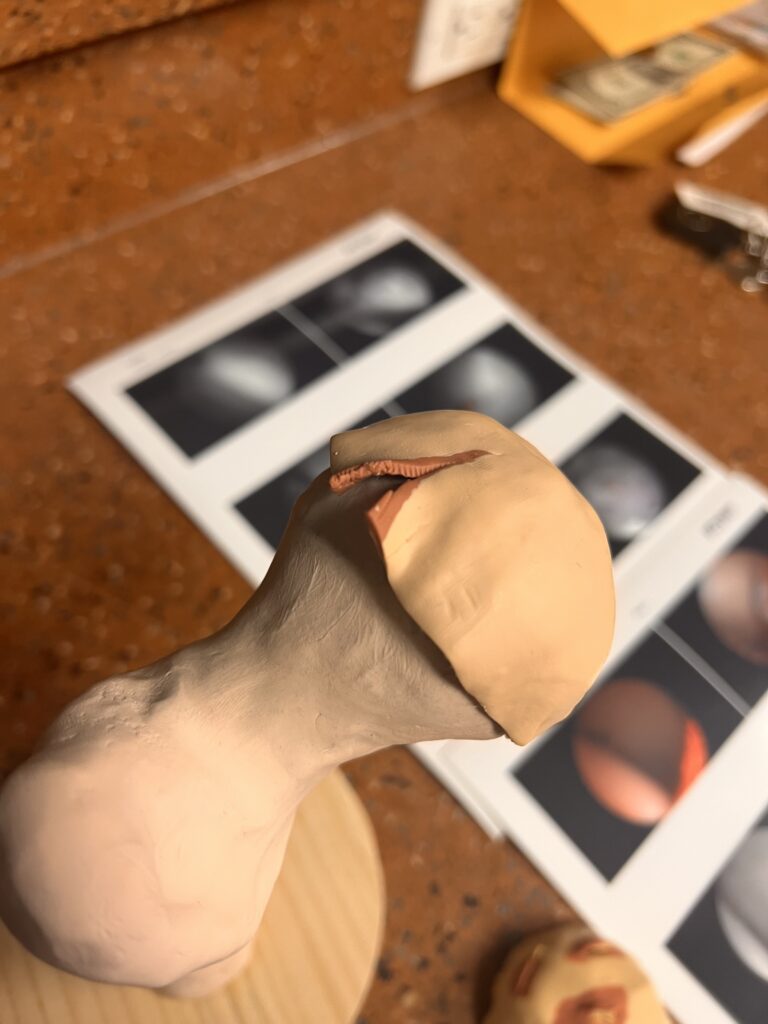
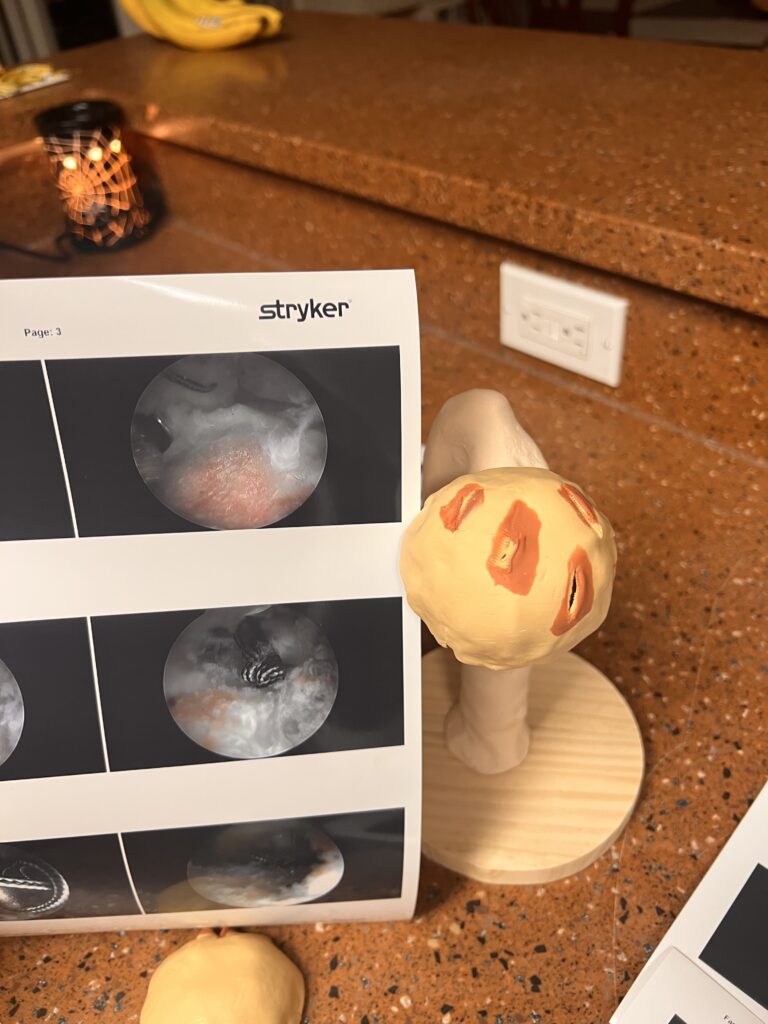
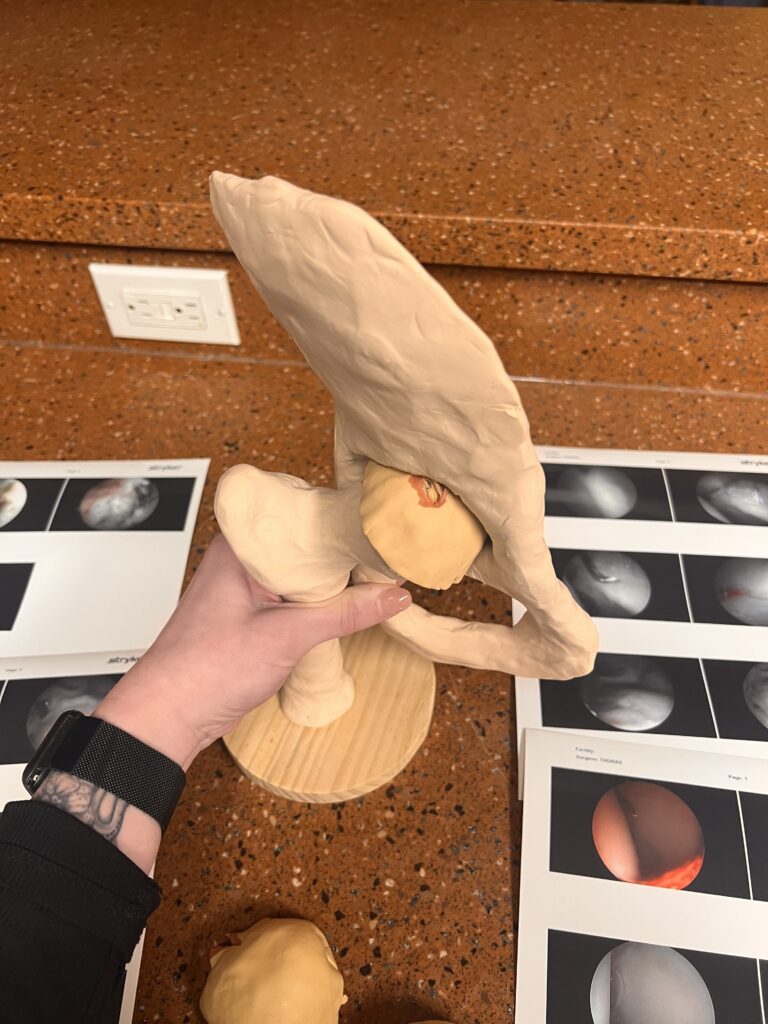
The focus of my STEAM project is the movement of the ball-and-socket joint and the
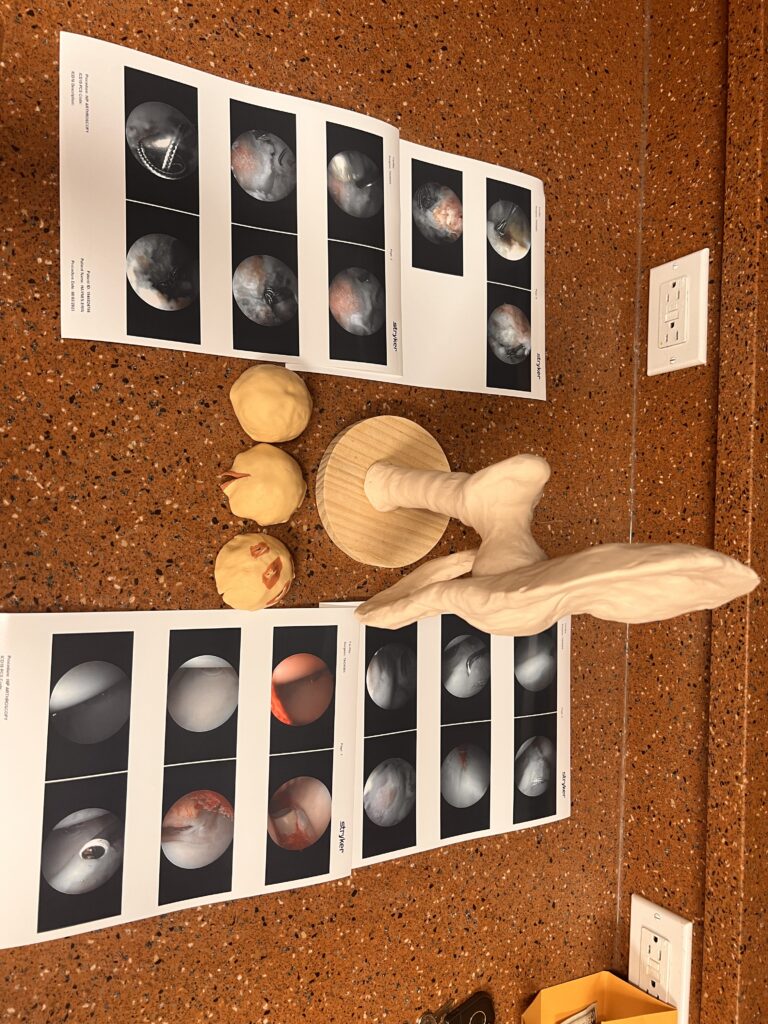
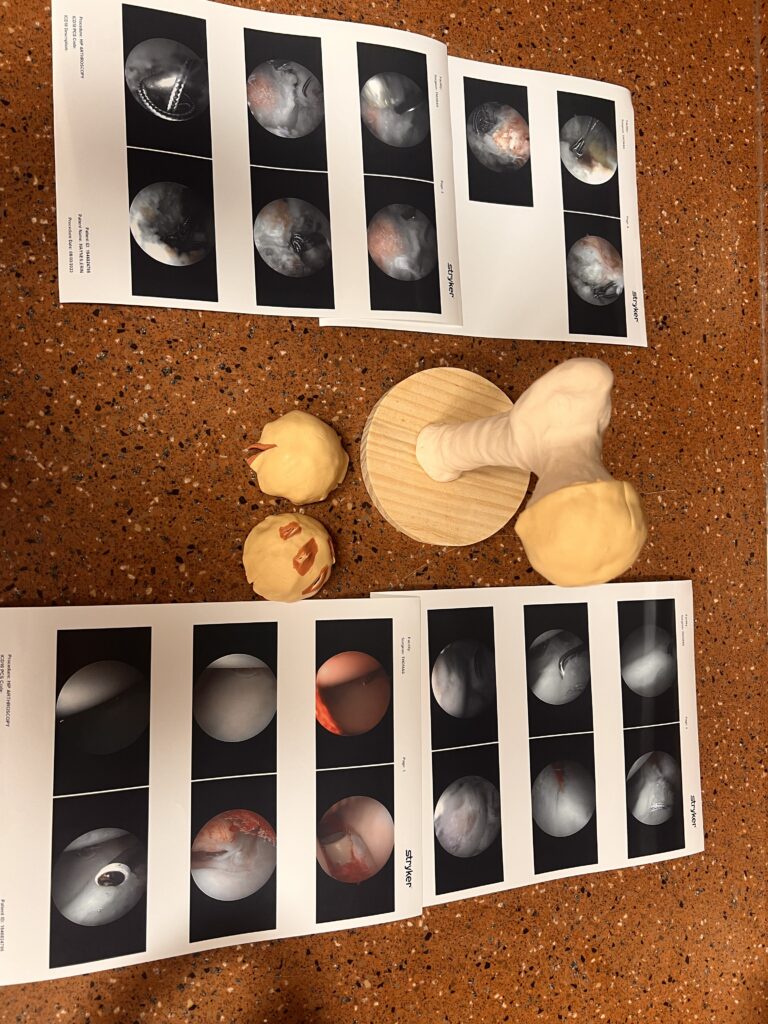
hypermobility it produces. The art media I chose to demonstrate this is a sculpture of the hip
joint that includes a healthy, undamaged labrum. The sculpture also shows two types of labral
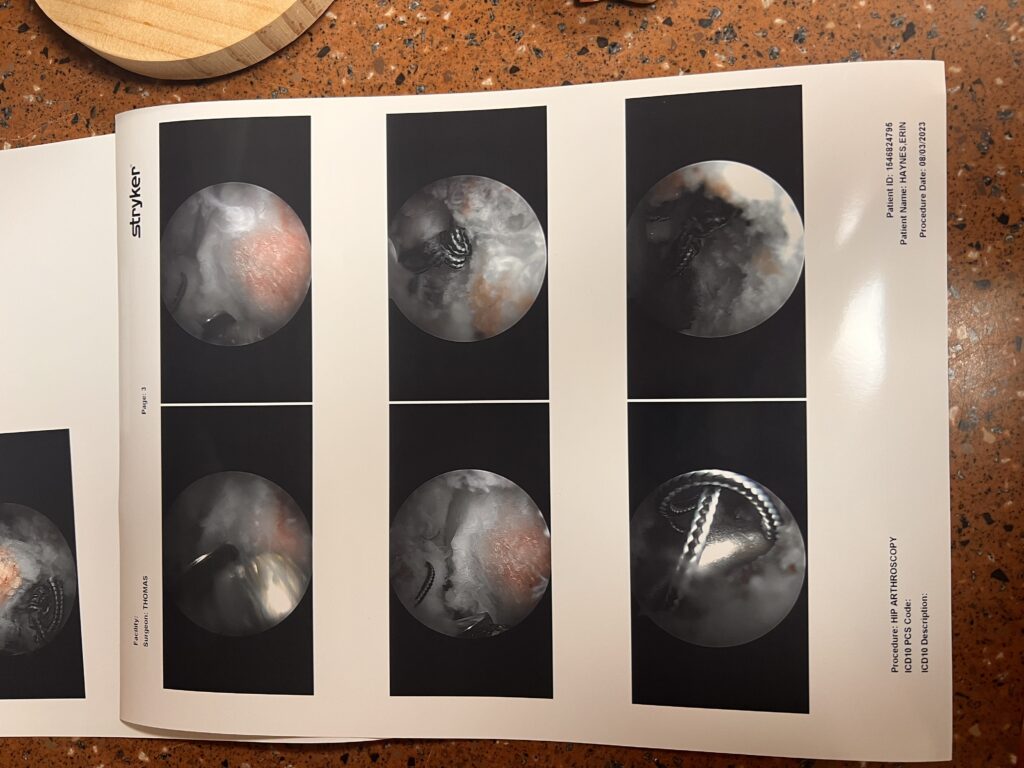
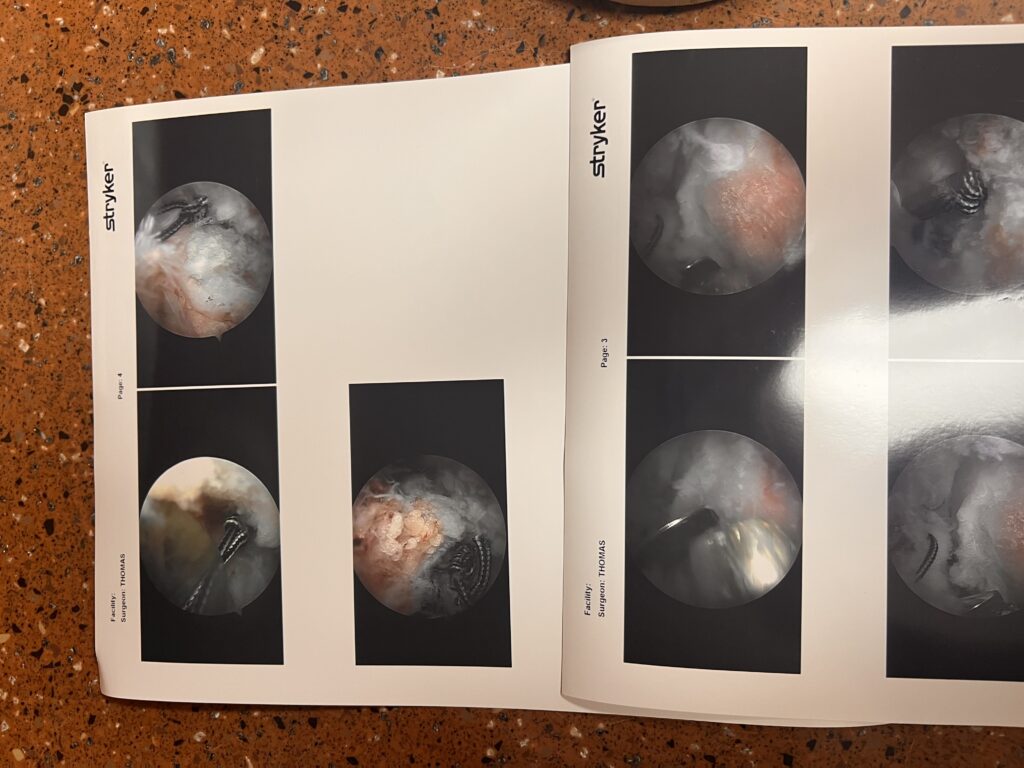
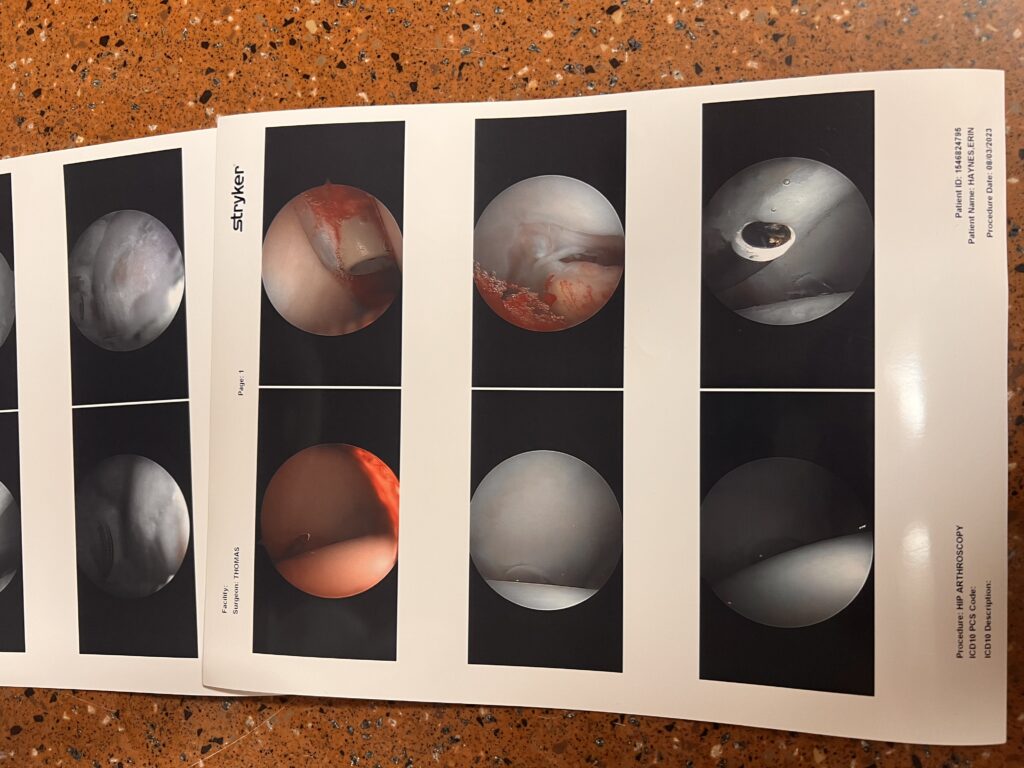
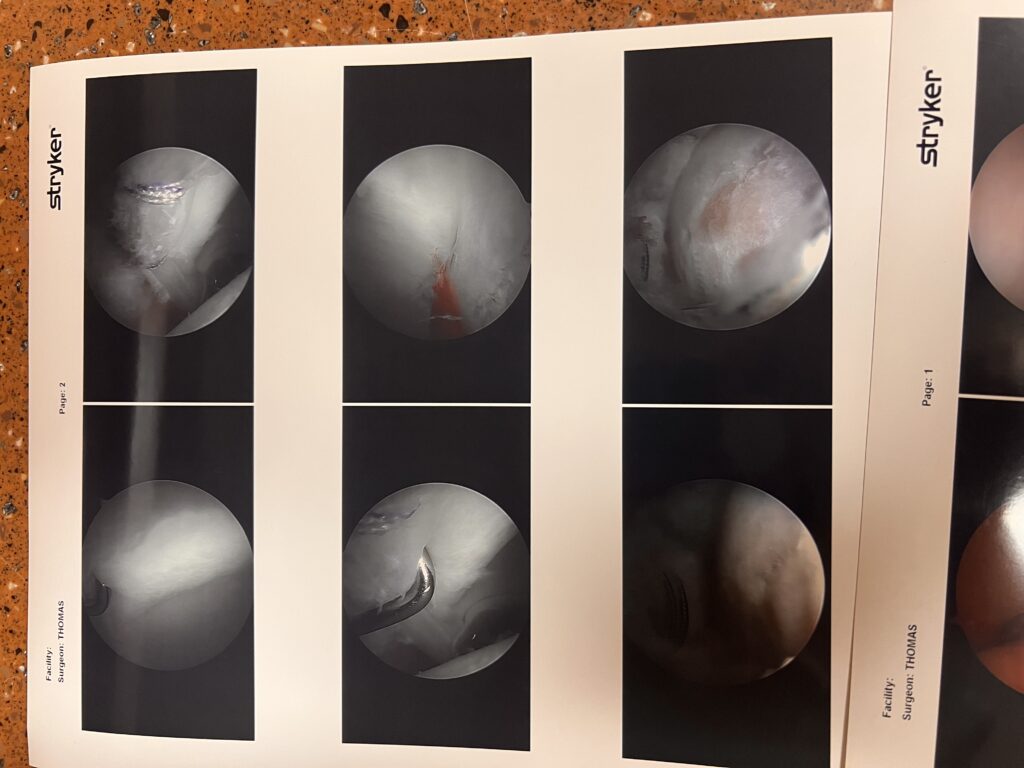
tears, which can be caused by joint hypermobility. Included with the sculpture are pictures taken
during an arthroscopic labor and repair surgery I had a few years ago. I had the surgery due to
a connective tissue disorder, which caused hypermobility of the joint. This, paired with
high-impact activities, caused severe damage within the joint. In these photos, you can see
where constant hyperflexion and downward force resulted in the shredding of the labrum and
damage to my femoral head. You can also see the repair, in which the surgeon removed the
shredded bone and tissue, along with the anchors that were placed. This surgery returned the
joint to its standard shape.
References
Gaudiani, M. A., Samuel, L. T., Burkhart, R. J., Acuña, A. J., Rosneck, J. T., & Kamath, A.
F. (2023). What is the utility of hip arthroscopy in patients with joint laxity? A
contemporary systematic review of patient-reported and surgical outcomes.
Archives of Orthopaedic & Trauma Surgery, 143(8), 5133–5142.
https://doi.org/10.1007/s00402-022-04737-2
Haskel, J. D., Kaplan, D. J., Kirschner, N., Fried, J. W., Samim, M., Burke, C., & Youm, T.
(2021). Generalized Joint Hypermobility Is Associated With Decreased Hip Labrum
Width: A Magnetic Resonance Imaging–Based Study. Arthroscopy, Sports
Medicine, and Rehabilitation, 3(3), e765–e771.
https://doi.org/10.1016/j.asmr.2021.01.017
Savic, M., & D’Angelo, K. (2019). Exploring the role of microinstability of the hip: an
atypical presentation of femoroacetabular impingement (FAI) and labral tear in a
collegiate endurance athlete: a case report. Journal of the Canadian Chiropractic
Association, 63(3), 187–196.
Abstract: Hypermobility in the Hip Joint by Erin Haynes
My partner’s project is about hypermobility in the hip joint and how the hip can move too much when the ligaments are loose. She explains how the hip joint normally works and how the labrum helps keep everything stable. When someone has hypermobility the hip can move past its normal range, which can cause the labrum to get pinched or torn over time. Her project also talks about what causes this, like injuries or connective tissue disorders and how it can lead to long term pain and joint problems. She also mentioned treatments like strengthening the muscles around the hip or getting surgery if the damage is really bad. My partner made a sculpture showing the two labral tears. She also included photos from her own hip surgery to show what the damage and repairs look like. Overall, the project shows how too much movement in the hip joint can lead to real damage and how it can be fixed and I enjoyed the sculpture and personal touch as well!