This project is a strong overview of hypertension during pregnancy. It explains that high blood pressure affects around 5–10% of pregnancies and can lead to serious health risks for both mother and baby if not managed properly. The project includes reliable sources, such as studies showing that chronic hypertension increases the risk of complications like preeclampsia, cesarean delivery, and even fetal death.
The project then explains how the body normally adapts during pregnancy, with the cardiovascular system increasing blood volume and cardiac output while reducing resistance in the blood vessels. These changes help provide enough blood flow to the placenta. However, when these systems don’t adapt properly, hypertension can develop.
The project focuses especially on preeclampsia, a dangerous form of pregnancy-related hypertension. It explains that poor development of the placenta and damage to the blood vessel lining (endothelium) can lead to increased blood pressure. The project also covers how the kidneys are affected, leading to problems like protein in the urine and fluid retention, which make the hypertension worse.
Finally, the project points out that problems with hormone regulation (RAAS system) add to the issue. The project emphasizes that high blood pressure in pregnancy results from a mix of problems in the heart, kidneys, and placenta.
The visual part that demonstrates these processes really helps as it makes the topic easier to understand. Overall, this project shows a solid understanding of the key systems involved in hypertensive disorders of pregnancy.
 Posted by
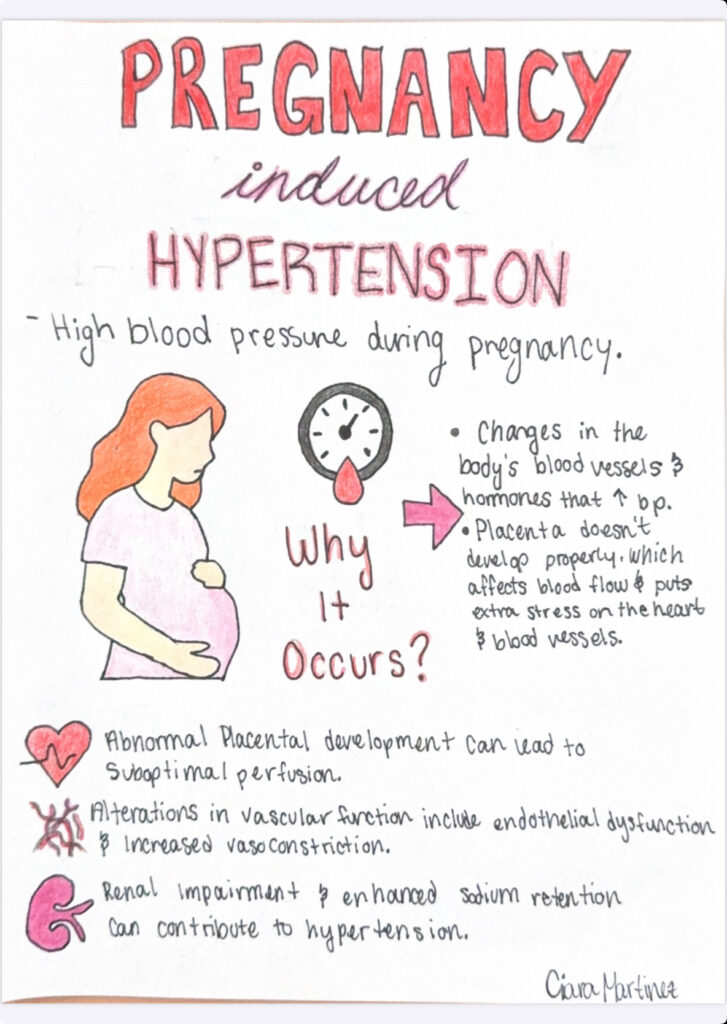

This project is a strong overview of hypertension during pregnancy. It explains that high blood pressure affects around 5–10% of pregnancies and can lead to serious health risks for both mother and baby if not managed properly. The project includes reliable sources, such as studies showing that chronic hypertension increases the risk of complications like preeclampsia, cesarean delivery, and even fetal death.
The project then explains how the body normally adapts during pregnancy, with the cardiovascular system increasing blood volume and cardiac output while reducing resistance in the blood vessels. These changes help provide enough blood flow to the placenta. However, when these systems don’t adapt properly, hypertension can develop.
The project focuses especially on preeclampsia, a dangerous form of pregnancy-related hypertension. It explains that poor development of the placenta and damage to the blood vessel lining (endothelium) can lead to increased blood pressure. The project also covers how the kidneys are affected, leading to problems like protein in the urine and fluid retention, which make the hypertension worse.
Finally, the project points out that problems with hormone regulation (RAAS system) add to the issue. The project emphasizes that high blood pressure in pregnancy results from a mix of problems in the heart, kidneys, and placenta.
The visual part that demonstrates these processes really helps as it makes the topic easier to understand. Overall, this project shows a solid understanding of the key systems involved in hypertensive disorders of pregnancy.