STEAM Project Abstract: Cody Foulk’s project “How TBIs Affect The Brain and How Nutrition Can Help.”
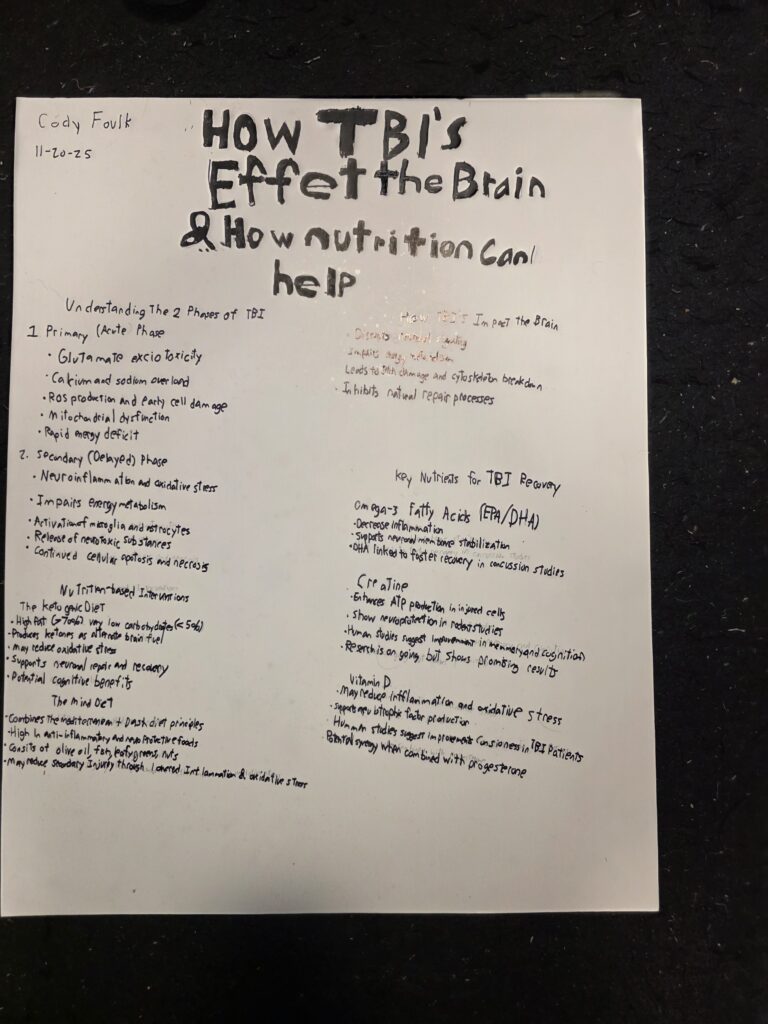
Cody’s STEAM project examined the impact of traumatic brain injuries (TBIs) on how they affect the brain and how nutrition can aid in recovery. TBIs are complex conditions that disrupt brain function, and nutrition plays a serious role in supporting recovery. He wrote about how your glutamate levels increase due to the increased sodium and calcium, and overflow your plasma membrane, leading to cell degradation that involves several enzymes, which ultimately leads to damaged cell structures, often causing cell death. The imbalance between the cellular and molecular levels shows how TBIs cause a complex process that severely disrupts brain function. He covers the second phase of TBIs during the delayed secondary phase, talking about what occurs at the cellular and molecular level. Then, Cody dives into two different diets that may help tame the effects of TBis as they include benefits such as reducing oxidative stress, inflammation, and other factors that add to the long-term neuronal damage. The ketogenic diet and the MIND (Mediterranean-Intervention for Neurodegenerative Delay) diet. They are both diets that are rich in anti-inflammatory nutrients and neuroprotective nutrients. Cody looked into how those two diets can play a role in assisting in the recovery of TBIs, and how the benefits from the diets include reduced inflammation, support functional recovery, and enhance neuroprotection. Lastly, Cody discusses Vitamin D’s role in TBI treatment and how new studies have been coming up with the newfound benefits of that vitamin. The essay ends with a conclusion discussing how and which vitamins/supplements can benefit your brain health in the long run.
 Posted by

STEAM Project Abstract: Cody Foulk’s project “How TBIs Affect The Brain and How Nutrition Can Help.”
Cody’s STEAM project examined the impact of traumatic brain injuries (TBIs) on how they affect the brain and how nutrition can aid in recovery. TBIs are complex conditions that disrupt brain function, and nutrition plays a serious role in supporting recovery. He wrote about how your glutamate levels increase due to the increased sodium and calcium, and overflow your plasma membrane, leading to cell degradation that involves several enzymes, which ultimately leads to damaged cell structures, often causing cell death. The imbalance between the cellular and molecular levels shows how TBIs cause a complex process that severely disrupts brain function. He covers the second phase of TBIs during the delayed secondary phase, talking about what occurs at the cellular and molecular level. Then, Cody dives into two different diets that may help tame the effects of TBis as they include benefits such as reducing oxidative stress, inflammation, and other factors that add to the long-term neuronal damage. The ketogenic diet and the MIND (Mediterranean-Intervention for Neurodegenerative Delay) diet. They are both diets that are rich in anti-inflammatory nutrients and neuroprotective nutrients. Cody looked into how those two diets can play a role in assisting in the recovery of TBIs, and how the benefits from the diets include reduced inflammation, support functional recovery, and enhance neuroprotection. Lastly, Cody discusses Vitamin D’s role in TBI treatment and how new studies have been coming up with the newfound benefits of that vitamin. The essay ends with a conclusion discussing how and which vitamins/supplements can benefit your brain health in the long run.