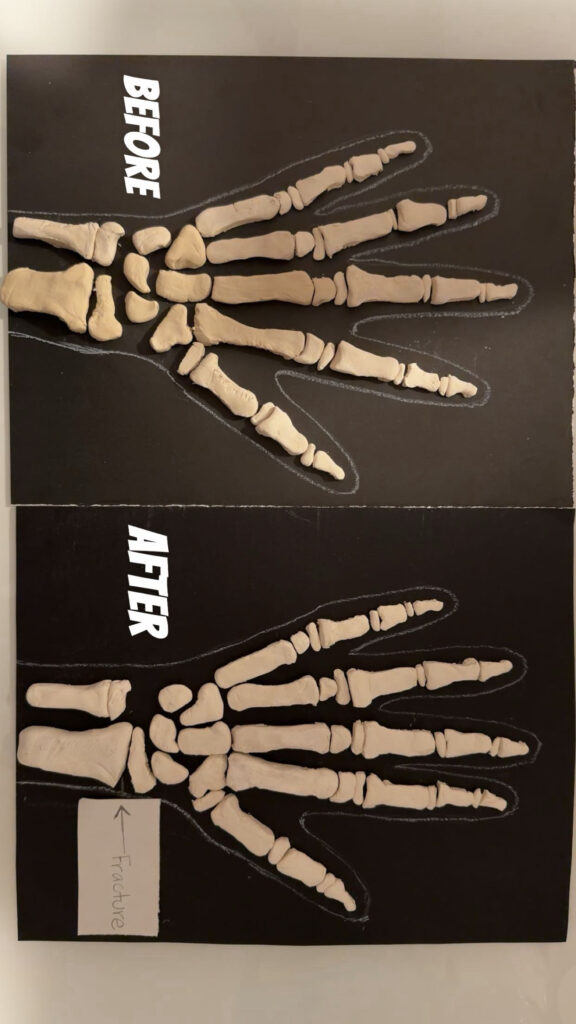
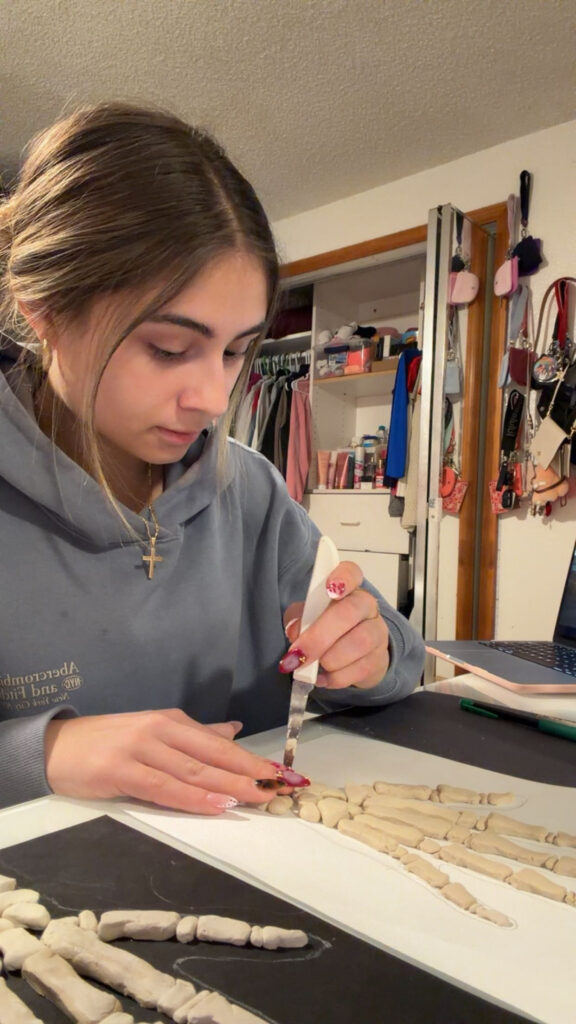
Your project does a really good job connecting your clay artwork to the science behind “gymnast wrist.” I like how you showed two different pictures of the clay wrist bones, because it clearly shows the difference between a healthy bone and a stressed one. The comparison makes it easier to understand the injury. It also helps the viewer see how small changes in the bone can lead to a big problem over time. I like how you removed the clay to show exactly where the damage would happen. Your explanation about why you chose clay made a lot of sense. Clay and bone actually behave in similar ways when they are still developing. Soft clay cracks easily when pressure is applied. Young bones do the same when the growth plate is still weak. This made your artwork a good visual example of how stress fractures form in gymnasts. You also explained bone development in a nice clear way. Talking about the different parts of the bone and how the growth plate works helped show why the wrist is so vulnerable in athletes. By connecting that to the clay model, it showed how the softer areas of the bone would change with repeated stress. Just like clay bends or breaks when it hasn’t fully hardened. Overall, your project works great because the visual and the information support each other. The clay wrists help show the physical difference between normal bone and a fractured one. Also your essay explains why that difference happens. You made a great connection between your sculpture and the real life injury. The comparison sculpture pictures is a very helpful way to show it.
 Posted by

Your project does a really good job connecting your clay artwork to the science behind “gymnast wrist.” I like how you showed two different pictures of the clay wrist bones, because it clearly shows the difference between a healthy bone and a stressed one. The comparison makes it easier to understand the injury. It also helps the viewer see how small changes in the bone can lead to a big problem over time. I like how you removed the clay to show exactly where the damage would happen. Your explanation about why you chose clay made a lot of sense. Clay and bone actually behave in similar ways when they are still developing. Soft clay cracks easily when pressure is applied. Young bones do the same when the growth plate is still weak. This made your artwork a good visual example of how stress fractures form in gymnasts. You also explained bone development in a nice clear way. Talking about the different parts of the bone and how the growth plate works helped show why the wrist is so vulnerable in athletes. By connecting that to the clay model, it showed how the softer areas of the bone would change with repeated stress. Just like clay bends or breaks when it hasn’t fully hardened. Overall, your project works great because the visual and the information support each other. The clay wrists help show the physical difference between normal bone and a fractured one. Also your essay explains why that difference happens. You made a great connection between your sculpture and the real life injury. The comparison sculpture pictures is a very helpful way to show it.