 Posted by

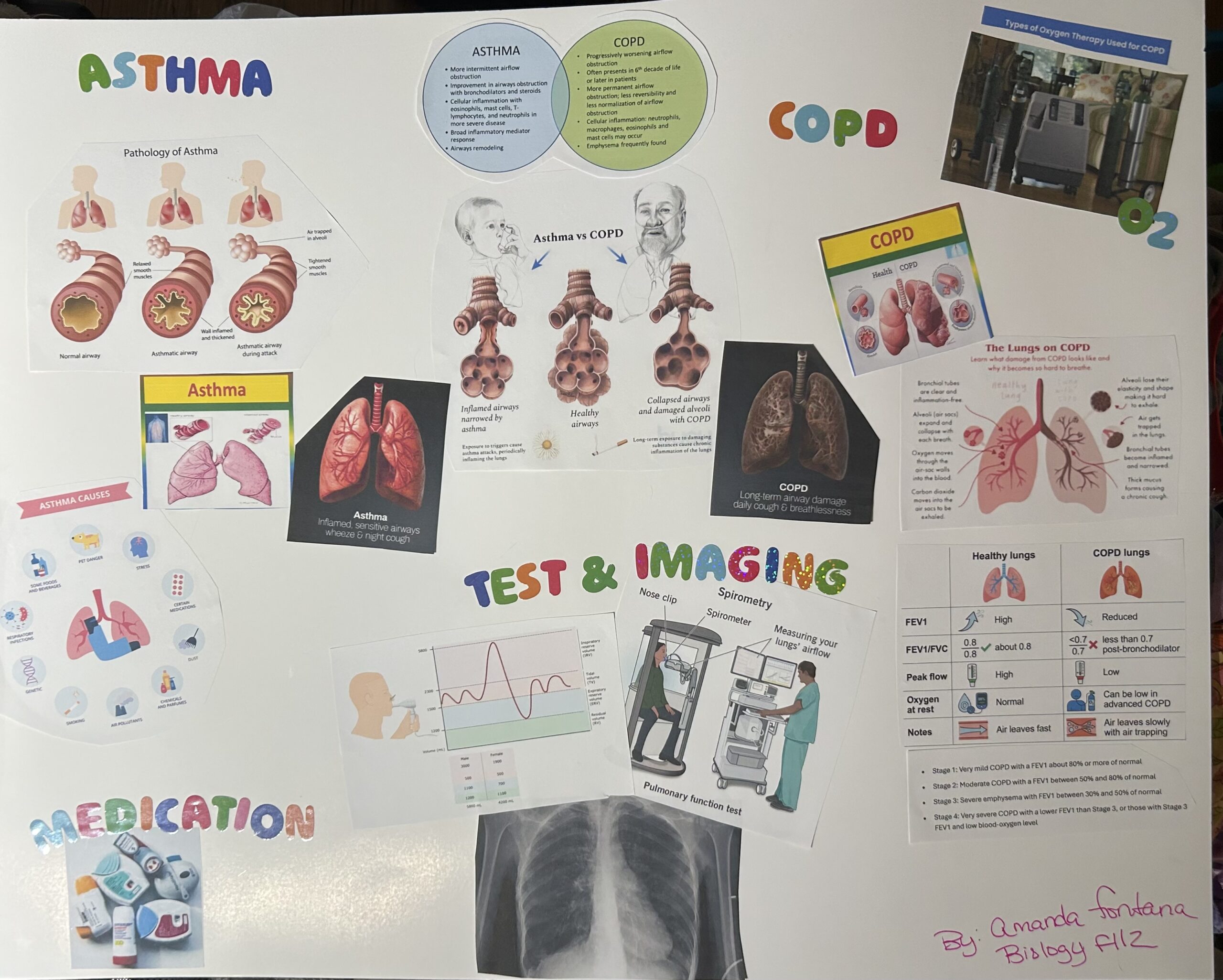
For my STEAM project, I chose to explore the respiratory system and the diseases that affect it. I will focus on conditions such as Chronic Obstructive Pulmonary Disease and Asthma. The respiratory system plays a major role in our lives by supplying the body with oxygen and removing carbon dioxide. When lung function is impaired, the effects can be severe and long-lasting, impacting energy levels, physical ability, and overall health. Chronic lung diseases such as Chronic Obstructive Pulmonary Disease (COPD) and asthma affect people all around the world. According to (Kochanek et al., 2011), COPD is the third leading cause of death in the United States. In addition to COPD and asthma, several other lung diseases contribute to global respiratory health challenges, including pneumonia, pulmonary fibrosis, and lung cancer. Understanding these conditions is essential for prevention, early diagnosis, and effective management.
COPD is a progressive lung disease characterized by airflow limitation and chronic respiratory symptoms. COPD is responsible for about 700,000 hospitalizations annually in the United States. In recent years, the hospitalization rate among women has increased and is now similar to the rate among men. In 2009, more than 137,000 adults in the United States died from COPD (Kochanek et al., 2011). It primarily includes two conditions: chronic bronchitis and emphysema. The leading cause of COPD is exposure to irritants, especially cigarette smoke. Other risk factors include air pollution, exposure to dust and chemicals, and genetic conditions. Symptoms of COPD include chronic cough, shortness of breath, and wheezing. Although COPD cannot be cured, treatments such as bronchodilator medications, inhaled steroids, and oxygen therapy can help manage symptoms and improve the quality of life.
Asthma is a chronic, long-term respiratory disease that causes inflammation and narrowing of the airways, leading to wheezing, coughing, chest tightness, and shortness of breath. Asthma symptoms often come and go, depending on exposure to triggers. During an asthma attack, the airway muscles tighten, inflammation increases, and mucus production rises, making it difficult to breathe. A 2019 study points to around 262 million cases of asthma arising, a notable decrease from four years prior, when there were 358 million reported cases (Song P, Adeloye D, Salim H, Dos Santos JP, Campbell H, Sheik A, Rudan I. J Glob Health. 2022). Asthma is generally considered a manageable condition.
COPD and severe asthma can lead to hypoxia, which is when the body does not get enough oxygen to work properly. When oxygen levels drop too low, important organs like the brain and heart can be affected, leading to symptoms such as confusion, fatigue, and, in severe cases, organ failure. Long-term hypoxia is common in advanced COPD because damage to the alveoli makes it harder for the lungs to move oxygen into the blood.
Testing for asthma and COPD is about checking how well air moves in and out of the lungs. The main test for both is Spirometry. This test shows how much air a person can blow out in one second (FEV₁), the total amount of air blown out (FVC), and the ratio between the two. The test is done again after using a bronchodilator like Albuterol to see if breathing improves with the medicine. In asthma, breathing usually improves after the medicine because the airways can reopen. In COPD, there is usually little change because the damage is more permanent. Other tests can include using a Peak flow meter at home to track breathing and imaging tests, such as a Chest X-ray or a Chest CT scan, to evaluate the lungs.
Lung diseases such as COPD and asthma significantly affect the respiratory system and quality of life. Preventative measures such as avoiding smoking, vaping, and reducing exposure to pollutants play an important role in reducing the risk of respiratory disease. Early diagnosis and appropriate treatment are very important for improving outcomes, lung health, and quality of life.
References
- Institute of Medicine (US) Committee on a National Surveillance System for Cardiovascular and Select Chronic Diseases. A Nationwide Framework for Surveillance of Cardiovascular and Chronic Lung Diseases. Washington (DC): National Academies Press (US); 2011. 3, Chronic Lung Disease. Available from: https://www.ncbi.nlm.nih.gov/books/NBK83163/
- Kochanek K, Xu J, Murphy S, Minnino A, Kung H. Deaths: Preliminary data for 2009. National Vital Statistics Reports. 2011;59
- Global, regional, and national prevalence of asthma in 2019: a systematic analysis and modelling study. Song P, Adeloye D, Salim H, Dos Santos JP, Campbell H, Sheikh A, Rudan I. J Glob Health. 2022;12:4052. doi: 10.7189/jogh.12.04052.
The respiratory system is essential for our lives by supplying our bodies with oxygen and removing carbon dioxide. When long-lasting diseases impair such a critical system, it can affect overall health and well-being. Such conditions are chronic obstructive pulmonary disease (COPD) and asthma. COPD is the third leading cause of death in the United States, with 700,000 hospitalizations every year. COPD is a progressive lung disease known for restricted airflow and chronic respiratory symptoms. Conditions show chronic bronchitis and emphysema. Risk factors for COPD are family history and irritants such as secondhand smoke, air pollution, dust, and chemicals. There is no cure currently for COPD, but symptoms can be managed through medications, inhaled steroids, and oxygen therapy. Asthma, on the other hand, causes inflammation and narrows airways. People with COPD or asthma experience similar symptoms of wheezing, coughing, and shortness of breath. However, asthma can come and go depending on exposure to triggers, and is seen as more manageable. Both COPD and severe asthma can lead to hypoxia, where the body does not get enough oxygen to be able to function properly. If hypoxia progresses, it can lead to the brain and heart being affected, causing confusion, fatigue, and even organ failure. This is why it is crucial to check for respiratory diseases, tests like spirometry, peak flow meter, chest x-ray, or chest CT scan to evaluate the lungs. With early diagnosis and the right treatment, outcomes are high for improved lung health and quality of life.