 Posted by
The heart is a vital organ that is responsible for maintaining circulation throughout the body and ensuring the organs receive proper oxygen and nutrients. The heart is regulated by intrinsic conduction, hormonal, and autonomic mechanisms to meet the body’s constant physical changes. These mechanisms work together to adjust the heart’s rhythm, rate, and contraction that allows the body to maintain homeostasis and react effectively to internal and external changes. When these systems are disrupted it can result in impairments on cardiac activity. Studies have shown connections between a non-cardiac condition, such as hiatal hernia, may alter cardiac function and result in arrhythmias. The course objective I chose is ‘Explain how the heart is regulated” and I will address the connection between gastrointestinal and cardiac systems, and how it is important to understand the regulation of the heart.
One of the main ways the heart regulates itself is through its intrinsic electrical activity where it is established by the sinoatrial (SA) node. The SA node is also known as the pacemaker of the heart that generates the heartbeats, located in the right atrium with close contact to the superior vena cava. The impulses are spread across the atria and through specialized intermodal pathways and then to the atrioventricular (AV) node. The AV node halts transits of impulses to the cells of the ventricle, allowing the atrial cardiomyocytes to pump blood into the ventricles during this time period. After going through the AV node it continues to the Atrioventricular bundle (Bundle of His) and Purkinje fibers that are in addition to stimulation of contractions in the ventricles. This conduction system gives the purpose of the heart’s consistent beat and flow of the blood throughout the body. Interference within the SA node and the conduction system can lead to conditions of arrhythmias.
The occurrence of atrial fibrillation has been progressively connected to hiatal hernia with research findings that individuals with hiatal hernia are more likely to develop arrhythmias. This may be explained by chronic mechanical pressure pressing against the left atrium, which can result in changes in its structure and electrophysiological function. Hiatal hernia complications such as esophagitis and gastroesophageal reflux disease (GERD), may affect the autonomic nervous system and contribute to the changes (Yeo et al., 2026). Hiatal hernia is frequently associated with GERD, an inflammation of the esophagus causing backflow from the contents in the stomach. In more severe cases, such as a giant hiatal hernias, chronic compression from the hernia into the chest cavity may impede proper function of the cardiac structures (Kurisu & Fujiwara, 2023). The combination of pressure on the heart due to gastrointestinal conditions that impair cardiac activity highlights the relationship between a non-cardiac condition and its impact on cardiac activity.
Overall , the heart is regulated by a multitude of systems working together to ensure the heart functions properly and provides the body its essential functions. Disturbance in these systems damages normal performance and rhythm of the heart. Furthermore, recent research indicates that hiatal hernia contributes to the affection of the heart through multiple mechanisms. I chose my project about hiatal hernia due to having hiatal hernia myself. I was recently diagnosed and I wanted to have a deeper understanding about the causes of my symptoms and why it happens.
Works Cited:
Betts, J. G. (2022, April 20). Anatomy and Physiology 2e. Openstax.org. https://openstax.org/details/books/anatomy-and-physiology-2e
Yeo, Y. H., Wong, H. K. K., Vignarajah, A., Vigneswaramoorthy, N., & Mehta, N. K. (2026). Impact of hiatal hernia on clinical outcomes of rhythm control of atrial fibrillation. Journal of Interventional Cardiac Electrophysiology. https://doi.org/10.1007/s10840-025-02235-0
Kurisu, S., & Fujiwara, H. (2023). Heart Failure in a Patient With Preexisting Giant Hiatal Hernia. Cureus. https://doi.org/10.7759/cureus.49531
The heart is a vital part of the human circulatory system. This organ is regulated by conduction, hormones, and autonomic mechanisms to maintain homeostasis. Issues outside of the heart can have effects on the heart itself. Some studies have shown that non-cardiac events can have effects on cardiac function. Hiatal hernia is located in the stomach region, but it can lead to arrhythmia of the heart due to chronic mechanical pressure. Hiatal hernia is also associated with GERD.
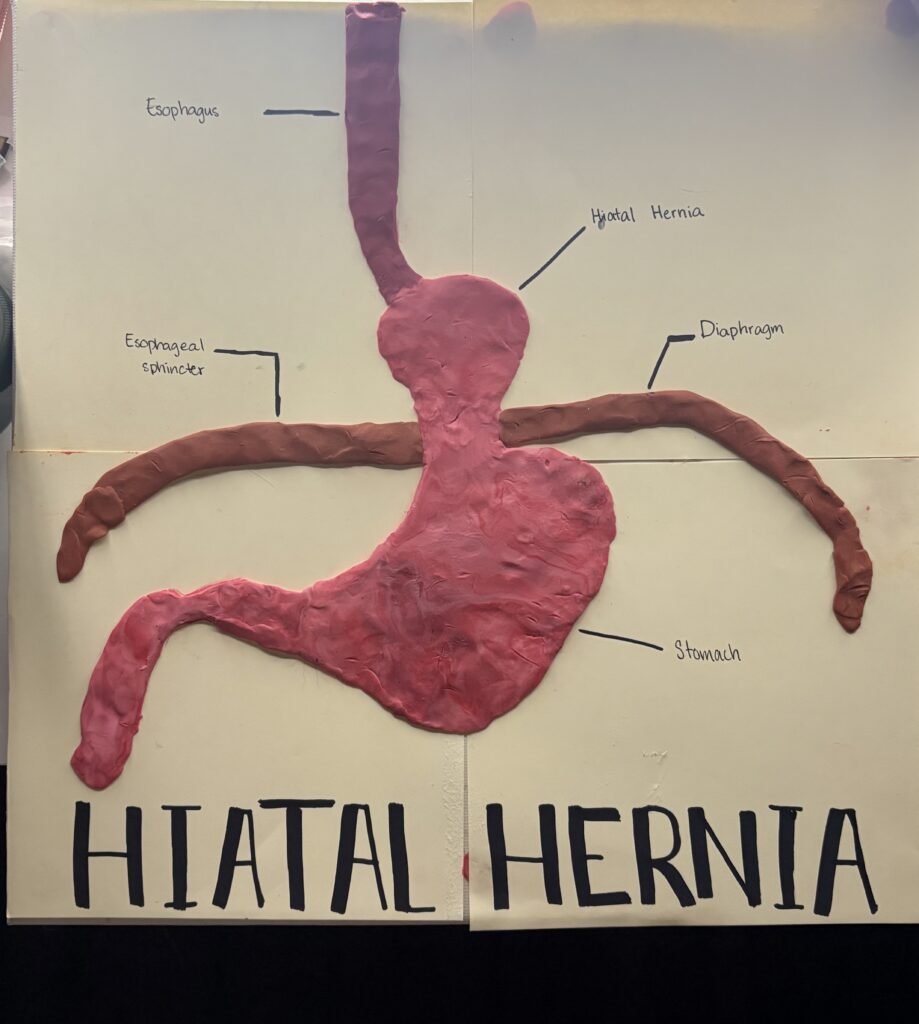
Overall, the clay sculpture represented the visual of a hiatal hernia which is seen to be in the upper portion of the stomach. This type of hernia seems to have a link to atrial fibrillation of the heart.This project exhibits how important not only cardiac health is, but gastrointestinal health as well. Different regions of the body are all parts of the same machine, the human body, and disruption of one region can cause ripple effects on the rest.