 Posted by
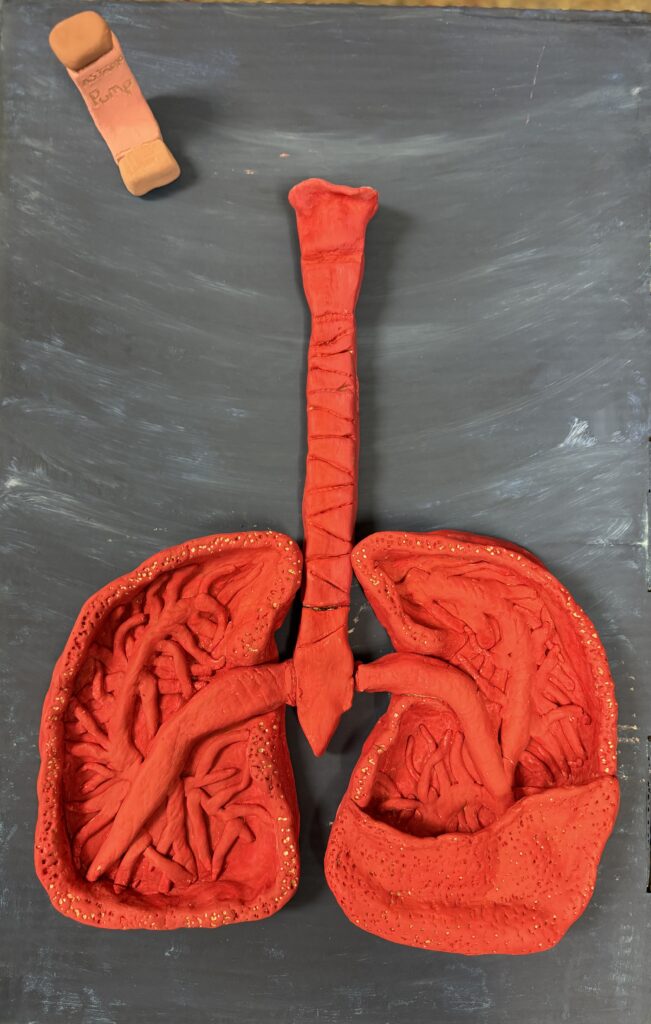
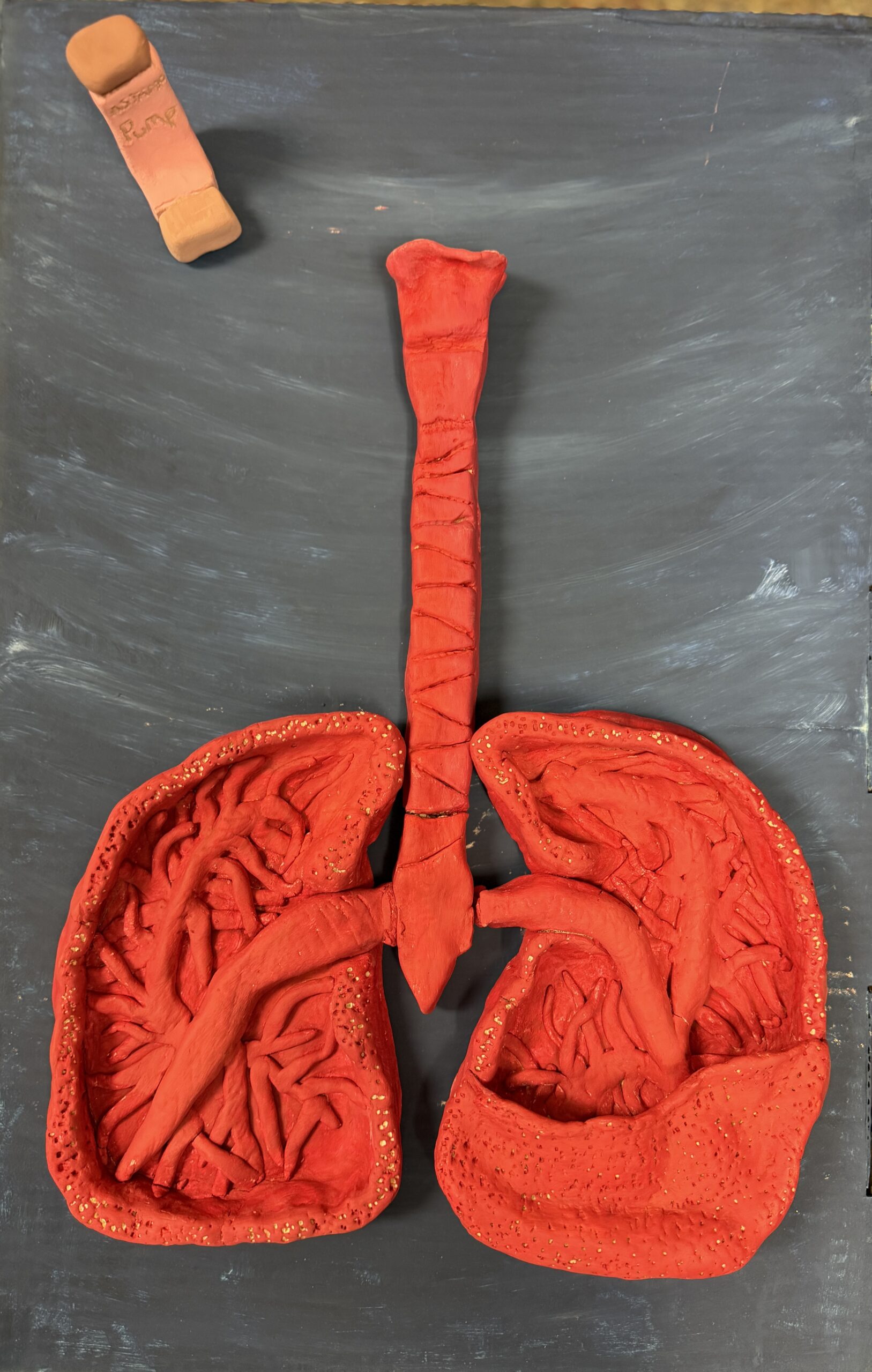
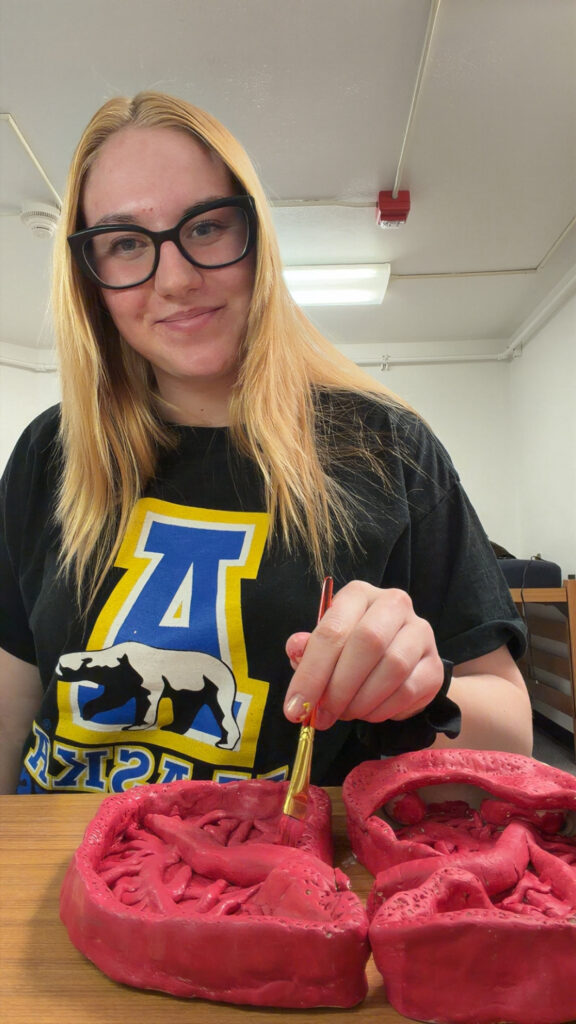
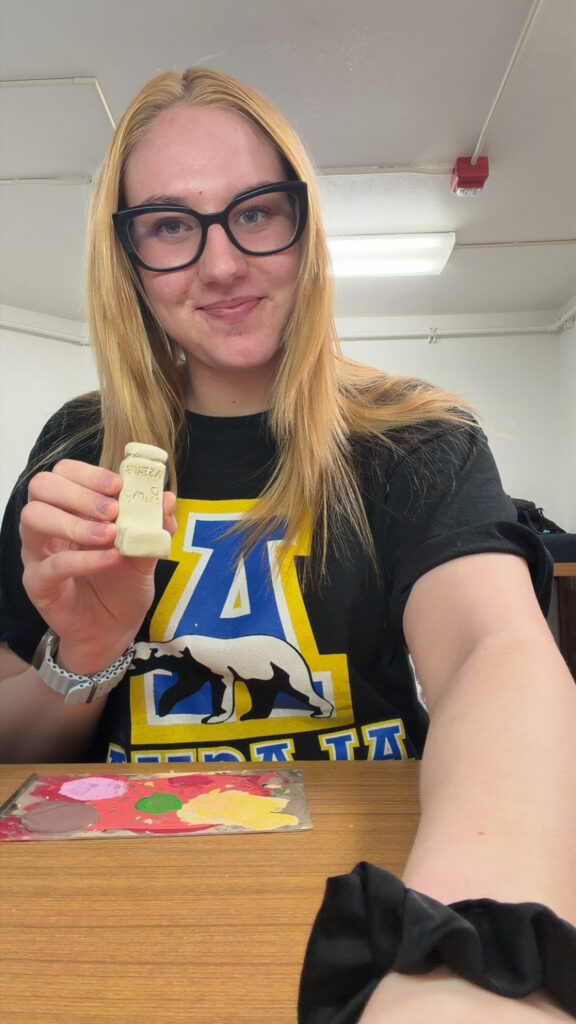
For my STEAM project I created a clay model of the respiratory system and also made a 3 D asthma pump. I wanted to show how structure relates to function and also connected to a real condition like asthma. In my lung model I included the trachea, bronchi and lungs to show how air moves through the respiratory system. Inside the lungs are added texture and branching to represent the internal structures. The alveoli are where gas exchange happens and their structure helps O2 and CO2 move efficiently. The respiratory epithelium lines the airways and helps protect the body by trapping particles and moving them out. I also showed airway smooth muscle around the bronchi to represent how it controls airflow. I added the asthma pump to connect the project to disease. And asthma the airways become inflamed and the smooth muscle tightens. This makes it harder to breathe. The asthma pump represents her medication helps open the airways and makes breathing easier. This project connects to what we learned about how tissue structure supports function. Which makes the models help me understand the system better and made it easier to visualise how everything works together.
References:
Koizumi, J., Kojima, T., Kamekura, R., Kurose, M., Harimaya, A., Murata, M., Osanai, M., Chiba, H., Himi, T., & Sawada, N (2007). Changes of gap and tight junctions during differentiation of human nasal epithelial cells using primary human nasal epithelial cells and primary human nasal fibroblast cells in a noncontact coculture system. Journal of Membrane Biology.
Knudsen, L., & Ochs, M. (2018). The micromechanics of lung alveoli: Structure and function of surfactant and tissue components. Histochemistry and Cell Biology.
Amrani, Y., & Panettieri, R. A. (2003). Airway smooth muscle: Contraction and beyond. The International Journal of Biochemistry & Cell Biology.