 Posted by

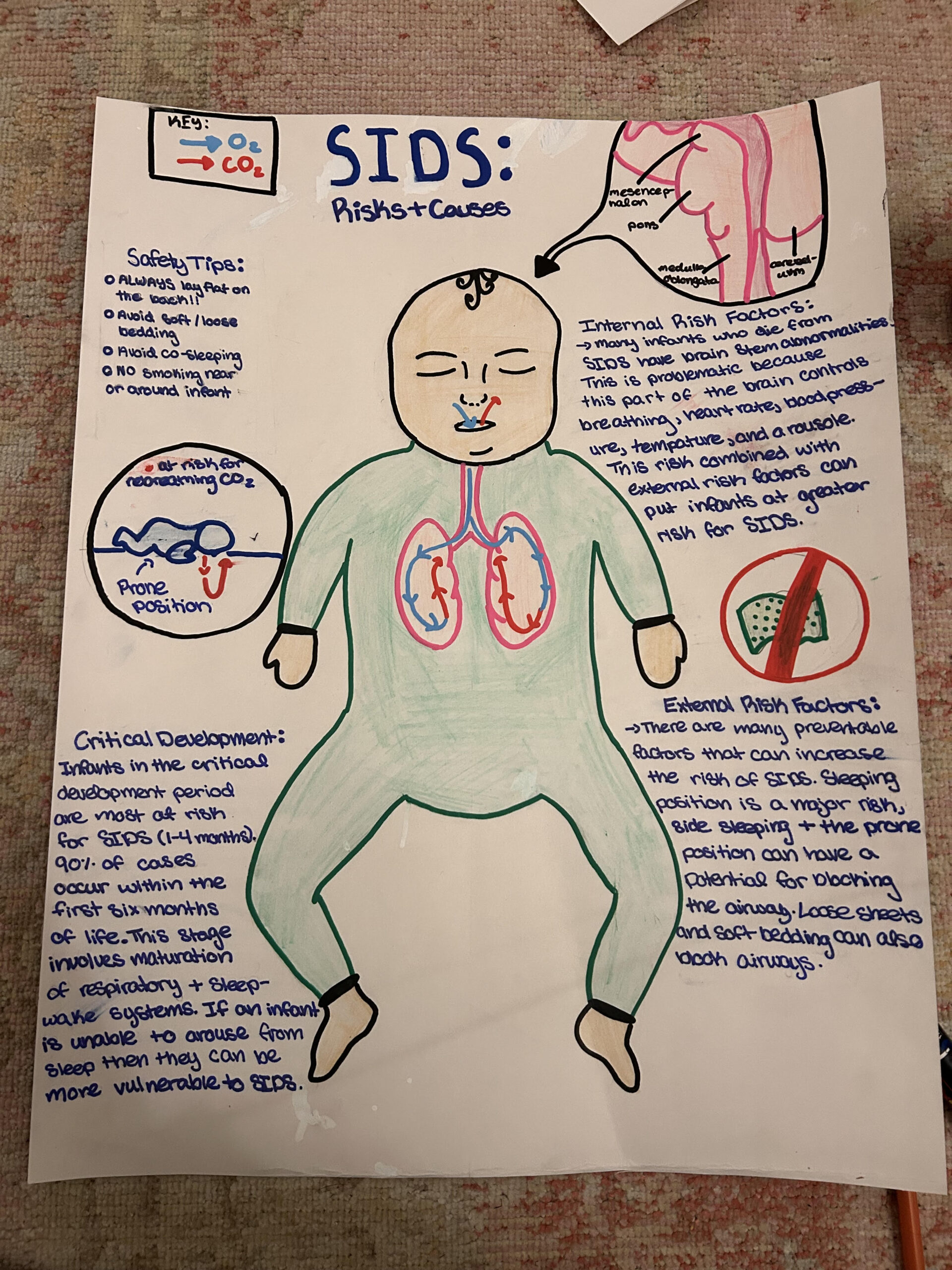
Sudden infant death syndrome (SIDS) is the death of an infant less than 1 year old that remains unexplained after investigation. My poster and essay discuss sudden infant death syndrome (SIDS) by describing how it is caused by respiratory regulation issues, as well as the interaction of risk factors. The homeostasis of respiratory gases, such as oxygen and carbon dioxide, is maintained by the respiratory centers in the brainstem. Infants susceptible to SIDS have been shown to have abnormalities in brainstem structure and function, leading to decreased respiratory responses to hypoxia and hypercapnia. External risk factors like a prone sleeping position and accidental suffocation also increase the risk of abnormal homeostasis. Face-down sleeping positions and soft bedding can cause airway obstruction or re-breathing of CO2. These external risk factors, although preventable, can contribute to SIDS when paired with underlying problems. The combination of these factors leads to SIDS due to the inability to maintain respiratory homeostasis during sleep.
This essay talks about sudden infant death syndrome (SIDS) and it goes over both internal and external risk factors affect a baby’s breathing during sleep. It goes over how disruptions of respiratory regulations of oxygen and carbon dioxide homeostasis balance can impair the infants breathing and lead to rebreathing CO2. The essay also explains risks like sleeping position and airway blockage, along with brain abnormalities that can result to SIDS . Overall, it shows the importance of understanding these factors and also practicing safe sleeping for infants to prevent SIDS and keeping infants safe.
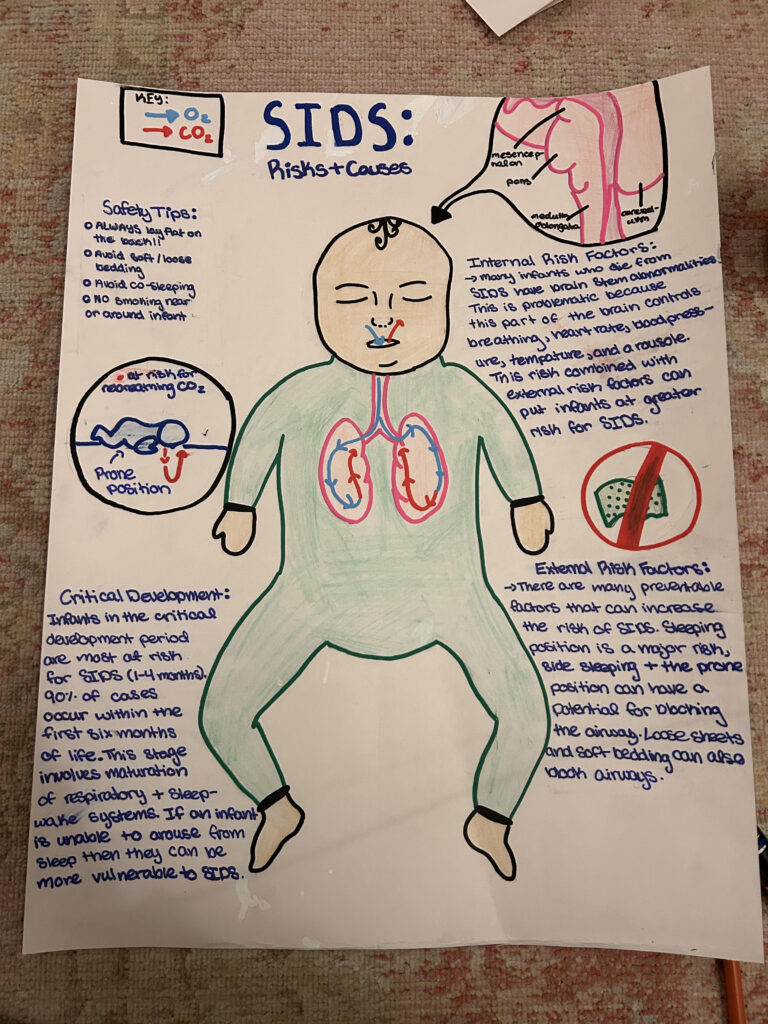
The poster displays an image of an infant with a very well-detailed information about SIDS and its risks factors. It also includes safety tips that includes sleep positions, no co-sleeping, no smoking around infants, and no loose materials around the infants that could easily block their airways. It also shows an example of a sleeping position for an infant that is prone to SIDS. The poster is creative, easy to understand, and also informative.