
 Posted by
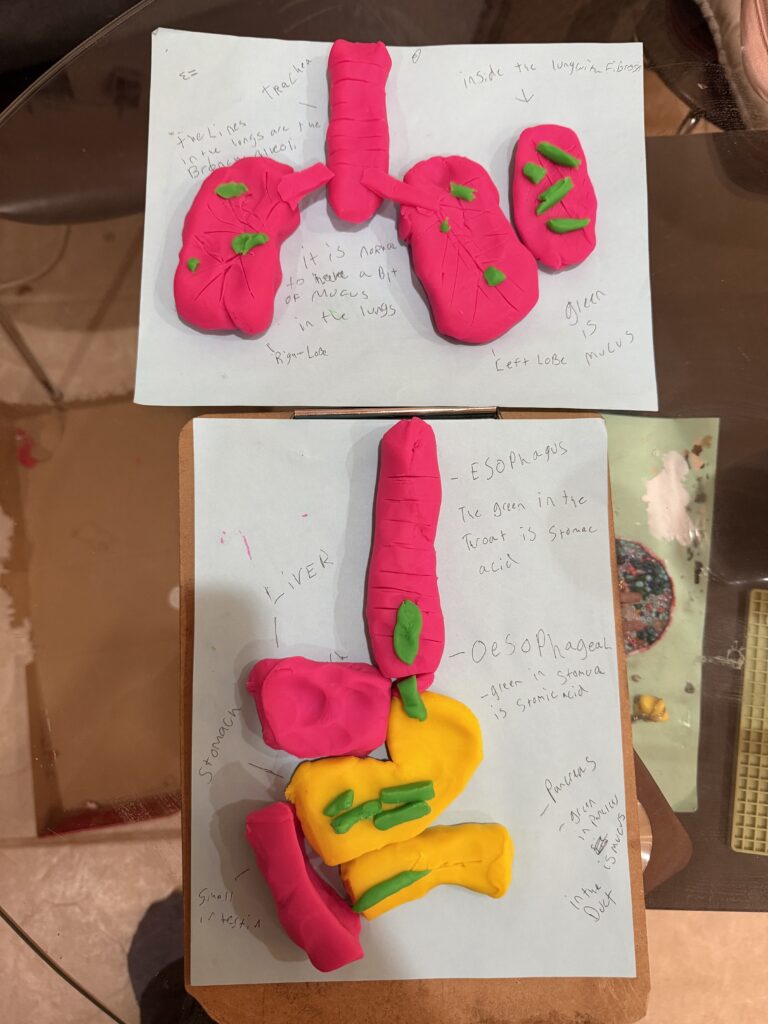
The reason I chose cystic fibrosis is because a long time ago I watched a movie called five feet apart and at first I thought it was fake or exaggerated until I thought about it recently when going through the respiratory system and we talked about the mucus in the lungs and so as doing my research and I thought it was cooler and cooler So I decided to do my steam project on this.
The top part is the lungs and how the healthy lungs have a little bit of mucus in it which is the green Play-Doh and then the unhealthy lung which is next to the left lobe has a bunch of mucus in it and then going down is how the digestive tract is affected by cystic fibrosis the only difference is the Green in the stomach the osageal and the esophagus is stomach acid while in the pancreas that is mucus covering the duct that goes into the small intestine.
My partner made his project about Cystic Fibrosis and how it affects the lungs. Cystic fibrosis is a genetic disease that causes thick mucus to build up in the lungs and other organs, making it difficult to breathe and affecting digestion. It is commonly diagnosed through blood tests or a sweat test, which measures the amount of salt in a person’s sweat. In the respiratory system, the excess mucus clogs the airways, especially the bronchioles, limiting airflow and increasing the risk of infections, sinus issues, and chronic congestion. One common treatment is a vibrating vest which helps loosen mucus from the lung walls so it can be coughed out more easily. This treatment is typically used for 20–30 minutes, about twice a day. In severe cases, lung transplants may be performed to replace damaged lungs, improving breathing, although they do not cure the disease. Cystic fibrosis also affects the pancreas by blocking enzymes needed for digestion, leading to inflammation and a condition called pancreatic insufficiency. Patients often take enzyme supplements to help process food. Additionally, many individuals experience gastroesophageal reflux disease (GERD), which can worsen lung damage. While there is no cure, advances in treatment have significantly improved both life expectancy and quality of life. My partner made a clay model of lungs for his project and I found that it represented the disease he researched very well.