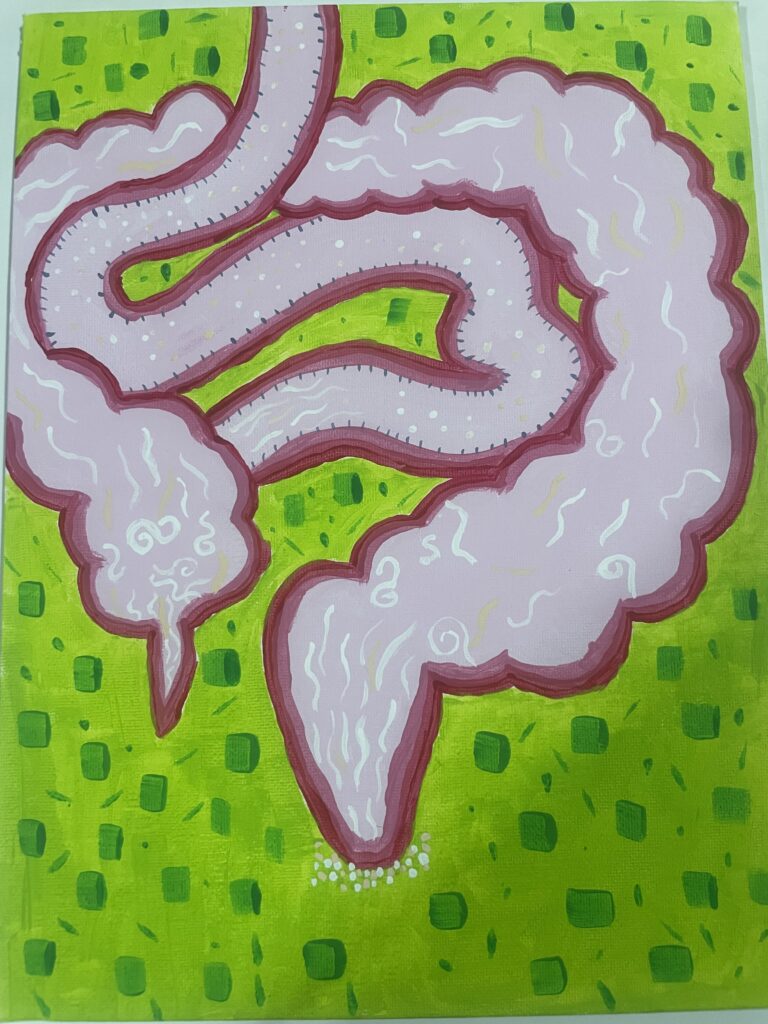
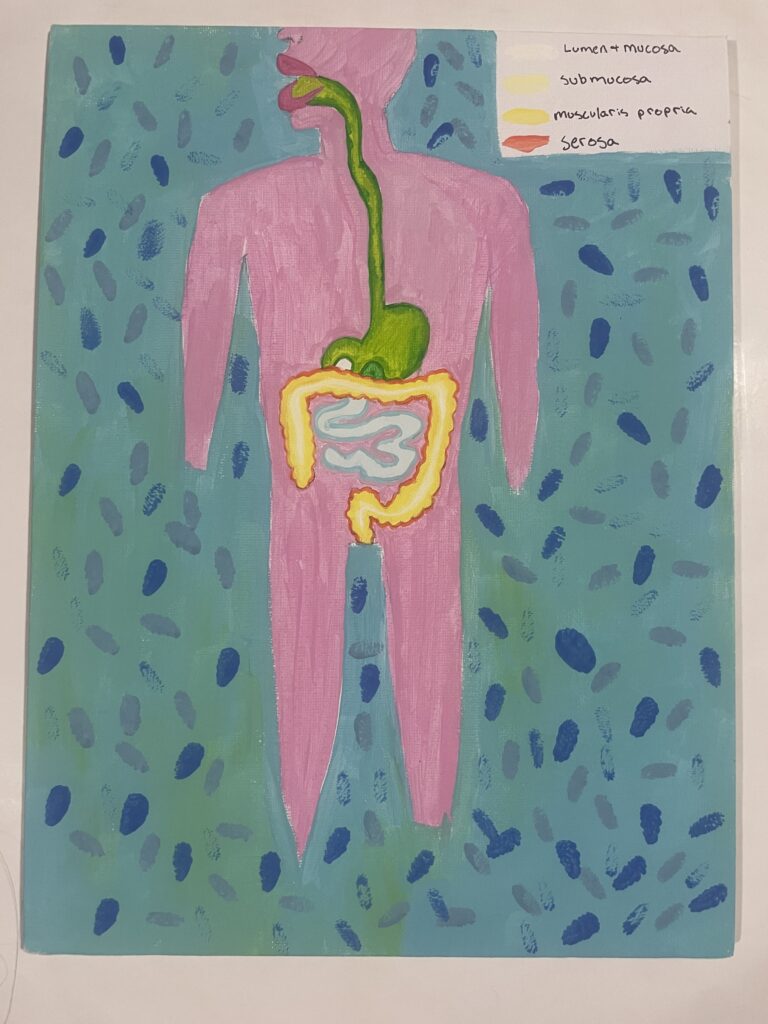
Pinworms, or, Enterobius vermicularis, are a type of parasite that reside in the digestive organs of human hosts; most commonly children from the age of 4 to 11 years old. Mature pinworms, also known as threadworms, are white or yellow and quite thin and small (about 10 mm long and half a mm wide). Pinworms reside in the digestive tract and eggs move from the original host’s anal region to new hosts through physical contact, or reenter the original host after hatching. The eggs have the ability to cling strongly to various surfaces (such as on hands and under fingernails), and can eventually be accidentally ingested by a new host if exposed hands are brought to a person’s mouth. Once the eggs have been ingested, they move throughout the digestive system, and soften after reaching the pylorum, eventually hatching upon reaching the duodenum of the small intestine. After molting twice, the pinworms reproduce, and the females travel to lay their eggs around the perianal region before returning to reside in the lumen of the large intestine. Besides the lumen, pinworms may also penetrate and attach to the mucosa of the large intestine, or potentially even deeper to the submucosa layer. Penetrating these deep and sensitive layers of the body can result in symptoms such as severe itching, causing restlessness; inflammation, irritation, tissue damage, as well as potential infection and appendicitis.
 Posted by

Pinworms, or, Enterobius vermicularis, are a type of parasite that reside in the digestive organs of human hosts; most commonly children from the age of 4 to 11 years old. Mature pinworms, also known as threadworms, are white or yellow and quite thin and small (about 10 mm long and half a mm wide). Pinworms reside in the digestive tract and eggs move from the original host’s anal region to new hosts through physical contact, or reenter the original host after hatching. The eggs have the ability to cling strongly to various surfaces (such as on hands and under fingernails), and can eventually be accidentally ingested by a new host if exposed hands are brought to a person’s mouth. Once the eggs have been ingested, they move throughout the digestive system, and soften after reaching the pylorum, eventually hatching upon reaching the duodenum of the small intestine. After molting twice, the pinworms reproduce, and the females travel to lay their eggs around the perianal region before returning to reside in the lumen of the large intestine. Besides the lumen, pinworms may also penetrate and attach to the mucosa of the large intestine, or potentially even deeper to the submucosa layer. Penetrating these deep and sensitive layers of the body can result in symptoms such as severe itching, causing restlessness; inflammation, irritation, tissue damage, as well as potential infection and appendicitis.