Steam abstract, partner: Matteo Yoon
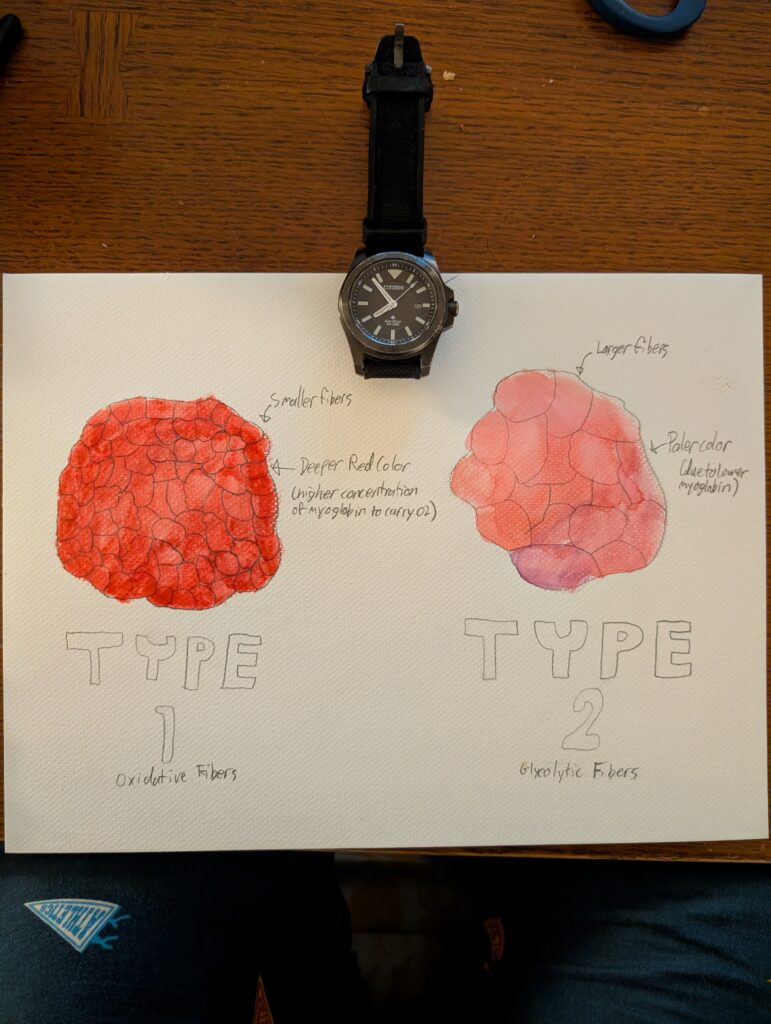
Movement for humans relies on two primary types of skeletal muscle fibers, Type I which is slow oxidative and Type II which is fast oxidative, with both having different physical demands. Type I muscle fibers are fueled by oxygen and are supported by plenty of mitochondria, myoglobin, and capillaries which is suited for prolonged aerobic activities. Type II muscle fibers rely on glycogen and anaerobic glycolysis for quick powerful movements, and produce less ATP while also producing lactate as a byproduct. Ultimately fiber structure influences the type of activity muscles can perform and the endurance of the type of muscle.
 Posted by


Steam abstract, partner: Matteo Yoon
Movement for humans relies on two primary types of skeletal muscle fibers, Type I which is slow oxidative and Type II which is fast oxidative, with both having different physical demands. Type I muscle fibers are fueled by oxygen and are supported by plenty of mitochondria, myoglobin, and capillaries which is suited for prolonged aerobic activities. Type II muscle fibers rely on glycogen and anaerobic glycolysis for quick powerful movements, and produce less ATP while also producing lactate as a byproduct. Ultimately fiber structure influences the type of activity muscles can perform and the endurance of the type of muscle.