Jeremiah’s STEAM project is about Anosmia, the complete loss of smell. Anosmia covers the course objective of chemical signals turning into action potentials. He describes how an odor molecule is converted to an electrical signal, starting by binding to the receptor proteins found in the olfactory receptors, activating the G protein pathways causing CAMP levels to rise, Na and Ca are released, CI is triggered by Ca and depolarizes the cell. Jeremiah compares the different causes of anosmia, including genetics, smoking, structural abnormalities, and potentially Covid-19. Chemicals from smoking, excessive mucus, and swelling are some examples of things that block odor molecules from binding with the receptor proteins and prevent an electrical signal from reaching the brain. Anosmia can be a congenital condition and be present from birth, but can also appear later on and be temporary or permanent. To diagnose anosmia, doctors perform physical exams using familiar odors. They can also use imaging and do an MRI, which is more accurate for younger children who may not be familiar with the scents. The young children could have congenital anosmia, but there have also been more cases of anosmia because of Covid-19. More patients having this condition that affects everyday senses is allowing scientists to expand their research and improve the diagnosis process, and maybe eventually find a cure. Because anosmia occurs when any step of the olfactory transduction pathway fails, Jeremiah’s project clearly shows that losing the ability to generate an action potential prevents the brain from receiving sensory information.
 Posted by
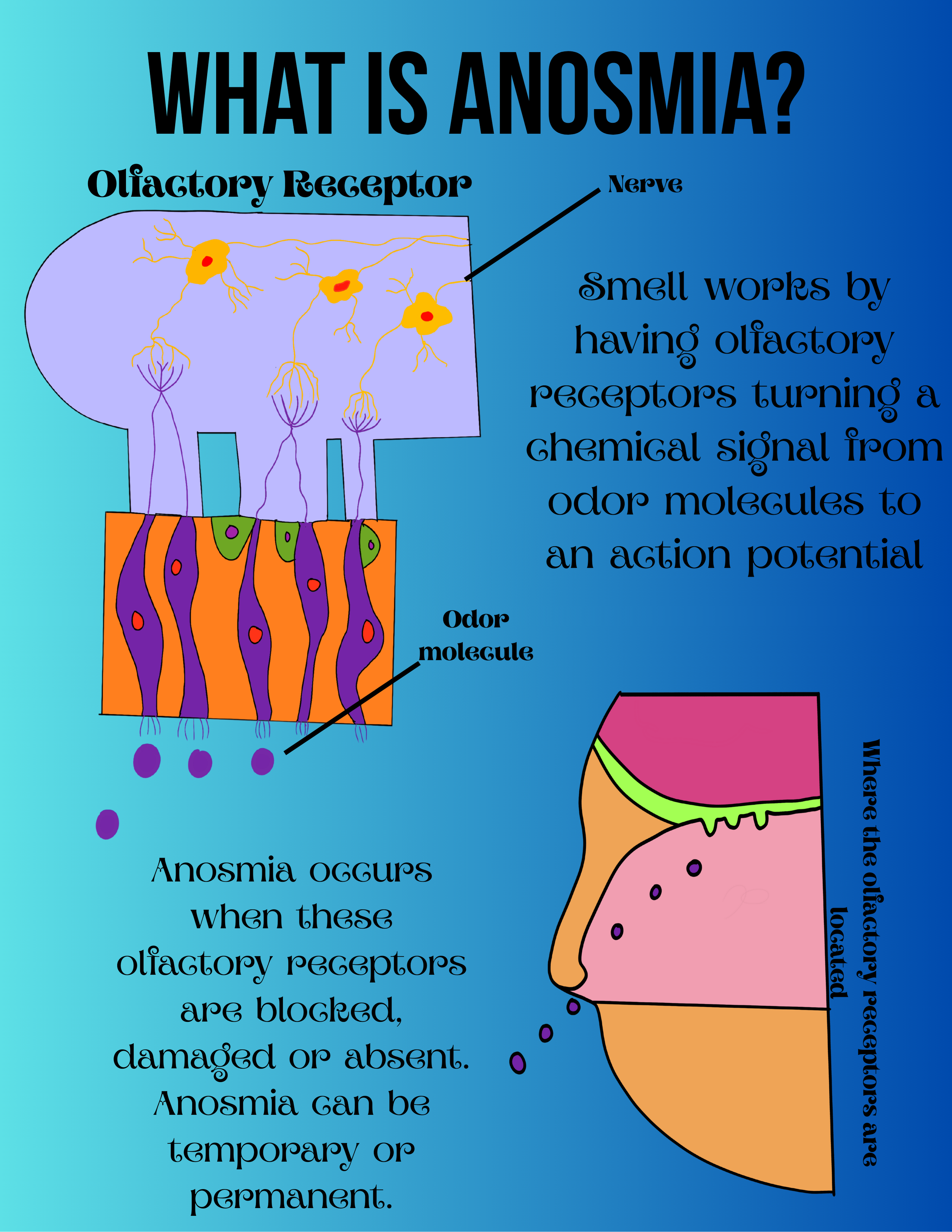

Jeremiah’s STEAM project is about Anosmia, the complete loss of smell. Anosmia covers the course objective of chemical signals turning into action potentials. He describes how an odor molecule is converted to an electrical signal, starting by binding to the receptor proteins found in the olfactory receptors, activating the G protein pathways causing CAMP levels to rise, Na and Ca are released, CI is triggered by Ca and depolarizes the cell. Jeremiah compares the different causes of anosmia, including genetics, smoking, structural abnormalities, and potentially Covid-19. Chemicals from smoking, excessive mucus, and swelling are some examples of things that block odor molecules from binding with the receptor proteins and prevent an electrical signal from reaching the brain. Anosmia can be a congenital condition and be present from birth, but can also appear later on and be temporary or permanent. To diagnose anosmia, doctors perform physical exams using familiar odors. They can also use imaging and do an MRI, which is more accurate for younger children who may not be familiar with the scents. The young children could have congenital anosmia, but there have also been more cases of anosmia because of Covid-19. More patients having this condition that affects everyday senses is allowing scientists to expand their research and improve the diagnosis process, and maybe eventually find a cure. Because anosmia occurs when any step of the olfactory transduction pathway fails, Jeremiah’s project clearly shows that losing the ability to generate an action potential prevents the brain from receiving sensory information.