In Kat’s STEM essay I learned a lot about dysautonomia and the conditions that are often connected to it. I think it fits the units we covered in lecture, because dysautonomia affects the autonomic nervous system, which is part of the peripheral nervous system. I now know that some conditions that commonly happen with it are POTS, neurocardiogenic syncope, and orthostatic hypotension. These can cause fainting, dizziness, brain fog, nausea, feeling tired, trouble with heat, and shortness of breath. In her paper I learned that even though about 70 million people have dysautonomia, it is still rare.
What I have learned in Kat’s paper is that doctors typically diagnose these conditions with tests like the tilt table test or a ten minute stand test. Many health problems can lead to dysautonomia, such as Ehlers Danlos syndrome, lupus, multiple sclerosis, Parkinson’s disease, Lyme disease, brain injuries, diabetes, and vitamin B12 deficiency. Symptoms can also get worse from dehydration, stress, heat, alcohol, or tight clothing. Most people have felt lightheaded from standing up too fast, but if it happens often, it can be a sign of something like POTS or orthostatic hypotension.
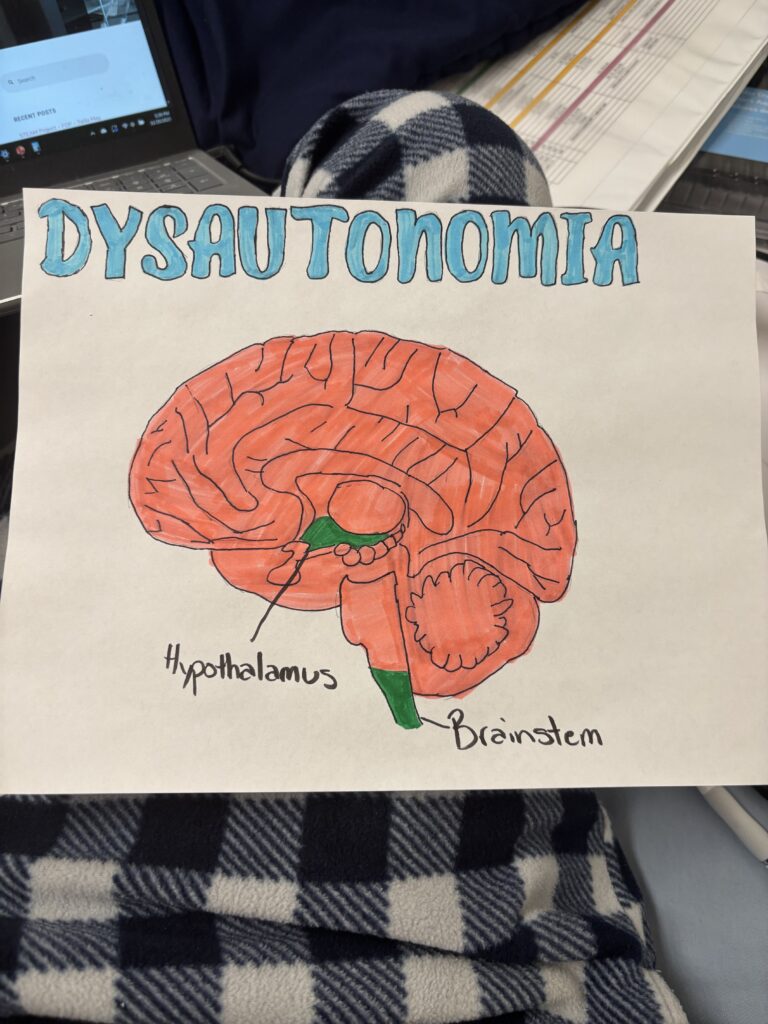
The project also has a simple brain drawing that shows the parts affected by dysautonomia. The hypothalamus and brainstem are highlighted because they help control the autonomic nervous system. Chiari malformation is also shown as another condition that can cause dysautonomia. Overall, the project explains the basics of these conditions and how they can affect everyday life. I learned a lot about dysautonomia, I think that this is something that everyone should know about. My grandmother’s mother had Parkinson’s and my grandfather has diabetes. This is something that I will know now and will for the future for my grandfather. Thank you Kat for sharing this.
 Posted by

In Kat’s STEM essay I learned a lot about dysautonomia and the conditions that are often connected to it. I think it fits the units we covered in lecture, because dysautonomia affects the autonomic nervous system, which is part of the peripheral nervous system. I now know that some conditions that commonly happen with it are POTS, neurocardiogenic syncope, and orthostatic hypotension. These can cause fainting, dizziness, brain fog, nausea, feeling tired, trouble with heat, and shortness of breath. In her paper I learned that even though about 70 million people have dysautonomia, it is still rare.
What I have learned in Kat’s paper is that doctors typically diagnose these conditions with tests like the tilt table test or a ten minute stand test. Many health problems can lead to dysautonomia, such as Ehlers Danlos syndrome, lupus, multiple sclerosis, Parkinson’s disease, Lyme disease, brain injuries, diabetes, and vitamin B12 deficiency. Symptoms can also get worse from dehydration, stress, heat, alcohol, or tight clothing. Most people have felt lightheaded from standing up too fast, but if it happens often, it can be a sign of something like POTS or orthostatic hypotension.
The project also has a simple brain drawing that shows the parts affected by dysautonomia. The hypothalamus and brainstem are highlighted because they help control the autonomic nervous system. Chiari malformation is also shown as another condition that can cause dysautonomia. Overall, the project explains the basics of these conditions and how they can affect everyday life. I learned a lot about dysautonomia, I think that this is something that everyone should know about. My grandmother’s mother had Parkinson’s and my grandfather has diabetes. This is something that I will know now and will for the future for my grandfather. Thank you Kat for sharing this.