 Posted by
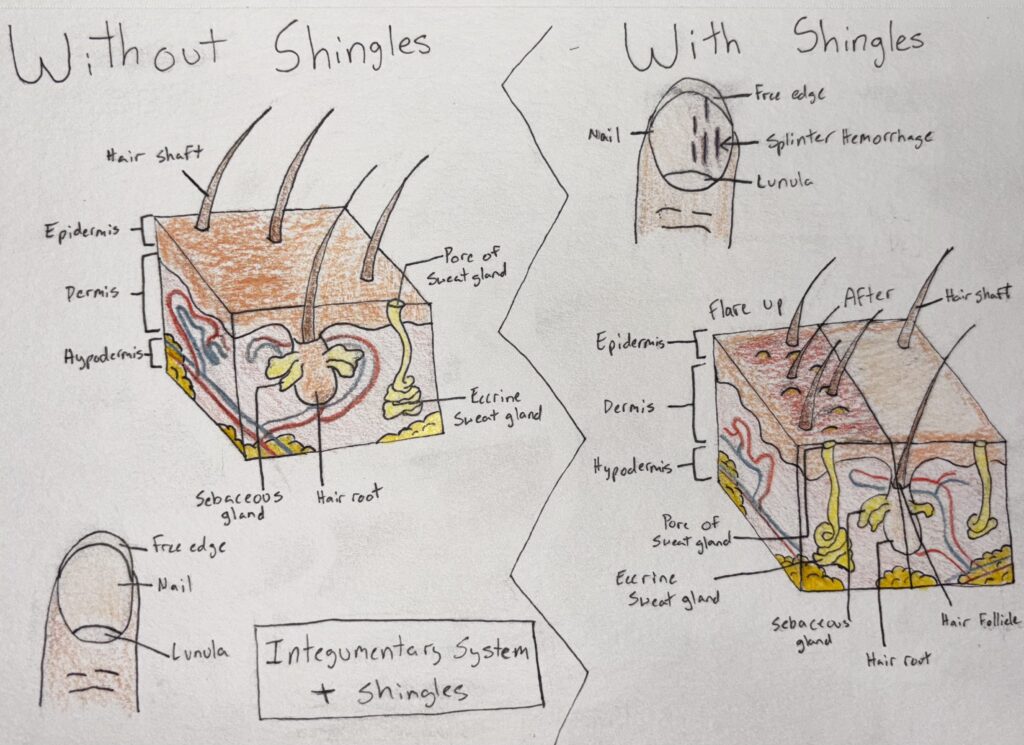
Shingles and the Integumentary System
Shingles, or herpes zoster, is the reactivation of the varicella-zoster virus (VZV), which initially causes chickenpox. After recovery VZV remains dormant in nerve ganglia and can reactivate later This affects areas of skin associated with specific nerves (dermatomes). Shingles primarily impacts the integumentary system which includes the skin, hair, nails, and sweat and sebaceous glands.
- Skin: Reactivated VZV travels along sensory nerves to the skin, causing painful, itchy, blistering rashes, usually on one side of the body. Blisters may lead to scabs, infections, and scarring.
- Hair: Shingles on the scalp can damage hair follicles, potentially causing permanent hair loss (scarring alopecia).
- Nails: Rarely affected; splinter hemorrhages can occur due to nerve-related damage to nail bed capillaries.
- Glands: Nerve damage can reduce sweat gland function, causing dryness and scaling in affected areas.
Overall, shingles demonstrates how a viral infection can impact multiple components of the integumentary system through nerve involvement.
Shingles results from the reactivation of the varicella-zoster virus (VZV) after a primary infection of chicken pox. This virus affects the integumentary system in many ways. The virus affects the skin, hair, nails, and glands. Following the initial infection, VZV remains dormant in sensory nerve ganglia, and may later reactivate and travel along the peripheral nerves to the skin, even after the person has recovered from chicken pox. When the virus reactivates it is known as shingles. The reactivation produces painful and blistering rashes and most directly affects the integumentary system. The main components of the integumentary system include the skin, hair, nails, and glands, all of which are affected by shingles. The skin is the primary component of the integumentary system and acts as serves as outside protection to the body. Rashes and blisters can band across the skin but usually only affects one side of the body. The rashes may last 2 to 4 weeks. Shingles can affect the hair when hair is over the affected areas. Shingles can cause hair loss due to scratching or combing too hard on affected areas. This could also lead to cicatricial alopecia, or scarring alopecia due to destroyed hair follicles. Nails aren’t typically affected as much as skin and hair, but can also see negative affects. Splinter hemorrhages can occur due to damaged capillaries in the nail bed. Lastly, shingles can affect the glands of the skin through nerve damage. This damage can cause the sweat glands to not work properly and could lead to dry and scaly skin.
I also think you did a great job with your drawing. After reading your paper I was able to look at your drawing and understand it pretty well. It looks very professional and neat.