Objective: State the location of various tissues in the body
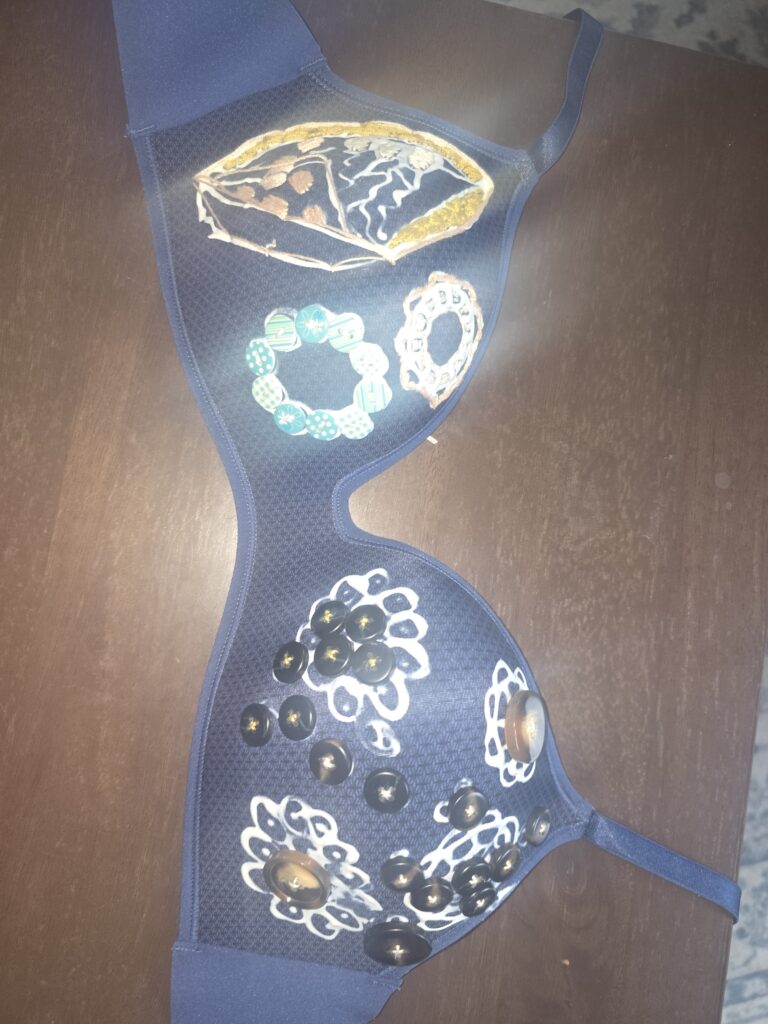
The human body is made up of various tissues, each body part strategically layered to serve primary functions that are essential for everyday life. Mutated cells can become cancerous and disrupt tissue function, when found in vital organs this can be life threatening. For my steam project I will describe the epithelial and connective tissue that make up a woman’s breast and an explanation of tissue function. I will list the multiple types of breast cancer and the tissues involved, the dangers of these cells spreading to other parts of the body, as well as possible treatments. My project is a model meant to show the difference between adult healthy breast tissue on one side, and tissues that contain cancer on the other.
The adult human breast is a highly vascularized apocrine organ, composed of an intricate network of epithelial ducts and lobules that are embedded in connective tissue. The highly branched lobular units function to produce milk, which is transported through a network of glandular ducts. This epithelial system is embedded into a layer of adipose connective tissue, which represents a large proportion of the human breast. Throughout the breast is also a network of veins, arteries and lymphatic vessels. (Kumar T. Et Al. 2023). Adipose tissue in the breast functions as excess energy storage and also plays an important role in hormone production and mammary gland development. The mammary glands consist of stratified cuboidal epithelium that functions for secretion and absorption, transitioning to stratified squamous epithelium near the nipple opening, which has an important role for protection at the surface. The most common type of cancer found in the human body is derived from epithelial cells, and is known as carcinoma.
Cancerous tumors occur when cells escape regulatory signals, affecting key proteins that have an impact on the cell’s ability to proliferate in an orderly fashion, and causing the cell to divide abnormally and lose their ability to form regular tissues. Breast cancer is typically found in the epithelial tissue of the lobules and ducts. Both lobular and ductal carcinomas can be categorized as either in Situ or invasive. When the cancer is referred to as in Situ, neoplastic epithelial cells are confined within the basement membrane and considered non-invasive. (Wilson G. Et Al. 2022). Since the cells are contained and have not breached the tissue surrounding the duct/lobe, main treatment for in Situ cancer is surgical removal of the confined tumor. Although non-invasive at this point, early detection is extremely important. In Situ is a non-obligate precursor of invasive carcinoma, which happens when the neoplastic epithelial cells breach the basement membrane and invade surrounding tissue. Over time the cancerous cells can travel from the surrounding tissue, into the lymphatic system and other parts of the body, including vital organs. Another type of cancer is derived from cells in connective tissue, known as sarcoma. Breast sarcomas consist of several histopathological subtypes and are very rare, only accounting for about 1% of all breast malignancies. (Karlsson F. Et Al. 2020). In the cases of invasive carcinoma or sarcoma, surgery is less likely to remove all the cancer cells and stop the invasion to other parts of the body. Chemotherapy, radiation, and hormonal therapy are common approaches to kill the invasive cells, but many of these treatments can be harsh and often destroy healthy tissue as well. Researchers are working to address this by targeting specific molecular pathways associated with cancer.
In conclusion, a woman’s breast is an organ composed of epithelial ducts and lobules embedded into adipose connective tissue and a network of veins, arteries and lymphatic vessels, each type of tissue playing a vital role in the entire breast function. When cells mutate and become cancerous, they lose the ability to form regular tissue and this interrupts bodily functions. While the breast is not a vital organ, cancer can start in breast tissue and spread to other parts of the body, possibly becoming life threatening. Breast carcinomas are most common and derived from epithelial cells in the lobules and ducts. Carcinomas can be confined as in Situ, or invasive and spread to surrounding tissue and other parts of the body. Sarcomas are derived from connective tissue but are extremely rare. Treatment is to completely remove and/or destroy cancerous cells, even at the expense of healthy tissue. My model of the breast shows an example of healthy breast tissue on one side, and cancerous tissue on the other.
SOURCES:
Kothari C. Diorio C. Durocher F. (2020). The Importance of Breast Adipose Tissue in Breast Cancer. Int J Mol Sci. The Importance of Breast Adipose Tissue in Breast Cancer – PMC
Karlsson F. Granath F. Smedby K. Zedenius J. Bränström R. Nilsson I. (2020) Sarcoma of the breast: breast cancer history as etiologic and prognostic factor-A population-based case-control study. Breast Cancer Res Treat. Sarcoma of the breast: breast cancer history as etiologic and prognostic factor—A population-based case–control study – PMC
Kuba M. Brogi E. (2023). Update on lobular lesions of the breast. Histopathology. Update on Lobular Lesions of the Breast – PMC
Wilson G. Dinh P. Pathmanathan N. Graham J. (2022). Ductal Carcinoma in Situ: Molecular Changes Accompanying Disease Progression. J Mammary Gland Biol Neoplasia. Ductal Carcinoma in Situ: Molecular Changes Accompanying Disease Progression – PMC
Kumar T. Nee K. Wei R. He S. Nguyen QH. Bai S. Blake K. Pein M. Gong Y. Sei E. Hu M. Casasent A. Thennavan A. Li J. Tran T. Chen K. Nilges B. Kashikar N. Braubach O. Cheikh B. Nikulina N. Chen H. Teshome M. Menegaz B. Javaid H. Nagi C. Montalvan J. Lev T. Mallya S. Tifrea D. Edwards R. Lin E. Parajuli R. Hanson S. Winocour S. Thompson A. Lim B. Lawson D. Kessenbrock K. Navin N. (2023) A spatially resolved single-cell genomic atlas of the adult human breast. Nature. A spatially resolved single-cell genomic atlas of the adult human breast – PMC
Aimee Henderson
Aimee’s project explores the composition of the human breast, which is comprised of adipose tissue and connective tissue, and the functions each of these tissues performs within the breast. It explores the anatomical structure and pathological transformation of breast tissue, focusing on the contrast between healthy and cancerous states. The adult female breast is a complex apocrine organ composed primarily of epithelial ducts and lobules embedded in adipose connective tissue, supported by a vascular and lymphatic network. These tissues work in concert to facilitate milk production, hormone regulation, and structural integrity. This project highlights how mutations in epithelial or connective tissue cells can lead to breast cancer spreading to vital organs. The most common breast cancers- ductal and lobular carcinomas- originate in epithelial tissue and are classified as either in situ (non-evasive) or invasive. Rarely, breast sarcomas arise from connective tissue. Treatment strategies vary depending on the cancer type and stage, ranging from surgical removal to chemotherapy, radiation, and targeted molecular therapies. The centerpiece of this project is a physical model that visually contrasts healthy breast tissue with tissue affected by cancer, illustrating the structural and functional changes that occur during disease progression. This model helped serve as an educational tool to promote understanding of breast anatomy, cancer pathology, and the importance of early detection and treatment. I love the creativity of the photo and found I understood the objective of the writing a bit better when I had the photo side by side to it.
 Posted by
Objective: State the location of various tissues in the body
The human body is made up of various tissues, each body part strategically layered to serve primary functions that are essential for everyday life. Mutated cells can become cancerous and disrupt tissue function, when found in vital organs this can be life threatening. For my steam project I will describe the epithelial and connective tissue that make up a woman’s breast and an explanation of tissue function. I will list the multiple types of breast cancer and the tissues involved, the dangers of these cells spreading to other parts of the body, as well as possible treatments. My project is a model meant to show the difference between adult healthy breast tissue on one side, and tissues that contain cancer on the other.
The adult human breast is a highly vascularized apocrine organ, composed of an intricate network of epithelial ducts and lobules that are embedded in connective tissue. The highly branched lobular units function to produce milk, which is transported through a network of glandular ducts. This epithelial system is embedded into a layer of adipose connective tissue, which represents a large proportion of the human breast. Throughout the breast is also a network of veins, arteries and lymphatic vessels. (Kumar T. Et Al. 2023). Adipose tissue in the breast functions as excess energy storage and also plays an important role in hormone production and mammary gland development. The mammary glands consist of stratified cuboidal epithelium that functions for secretion and absorption, transitioning to stratified squamous epithelium near the nipple opening, which has an important role for protection at the surface. The most common type of cancer found in the human body is derived from epithelial cells, and is known as carcinoma.
Cancerous tumors occur when cells escape regulatory signals, affecting key proteins that have an impact on the cell’s ability to proliferate in an orderly fashion, and causing the cell to divide abnormally and lose their ability to form regular tissues. Breast cancer is typically found in the epithelial tissue of the lobules and ducts. Both lobular and ductal carcinomas can be categorized as either in Situ or invasive. When the cancer is referred to as in Situ, neoplastic epithelial cells are confined within the basement membrane and considered non-invasive. (Wilson G. Et Al. 2022). Since the cells are contained and have not breached the tissue surrounding the duct/lobe, main treatment for in Situ cancer is surgical removal of the confined tumor. Although non-invasive at this point, early detection is extremely important. In Situ is a non-obligate precursor of invasive carcinoma, which happens when the neoplastic epithelial cells breach the basement membrane and invade surrounding tissue. Over time the cancerous cells can travel from the surrounding tissue, into the lymphatic system and other parts of the body, including vital organs. Another type of cancer is derived from cells in connective tissue, known as sarcoma. Breast sarcomas consist of several histopathological subtypes and are very rare, only accounting for about 1% of all breast malignancies. (Karlsson F. Et Al. 2020). In the cases of invasive carcinoma or sarcoma, surgery is less likely to remove all the cancer cells and stop the invasion to other parts of the body. Chemotherapy, radiation, and hormonal therapy are common approaches to kill the invasive cells, but many of these treatments can be harsh and often destroy healthy tissue as well. Researchers are working to address this by targeting specific molecular pathways associated with cancer.
In conclusion, a woman’s breast is an organ composed of epithelial ducts and lobules embedded into adipose connective tissue and a network of veins, arteries and lymphatic vessels, each type of tissue playing a vital role in the entire breast function. When cells mutate and become cancerous, they lose the ability to form regular tissue and this interrupts bodily functions. While the breast is not a vital organ, cancer can start in breast tissue and spread to other parts of the body, possibly becoming life threatening. Breast carcinomas are most common and derived from epithelial cells in the lobules and ducts. Carcinomas can be confined as in Situ, or invasive and spread to surrounding tissue and other parts of the body. Sarcomas are derived from connective tissue but are extremely rare. Treatment is to completely remove and/or destroy cancerous cells, even at the expense of healthy tissue. My model of the breast shows an example of healthy breast tissue on one side, and cancerous tissue on the other.
SOURCES:
Kothari C. Diorio C. Durocher F. (2020). The Importance of Breast Adipose Tissue in Breast Cancer. Int J Mol Sci. The Importance of Breast Adipose Tissue in Breast Cancer – PMC
Karlsson F. Granath F. Smedby K. Zedenius J. Bränström R. Nilsson I. (2020) Sarcoma of the breast: breast cancer history as etiologic and prognostic factor-A population-based case-control study. Breast Cancer Res Treat. Sarcoma of the breast: breast cancer history as etiologic and prognostic factor—A population-based case–control study – PMC
Kuba M. Brogi E. (2023). Update on lobular lesions of the breast. Histopathology. Update on Lobular Lesions of the Breast – PMC
Wilson G. Dinh P. Pathmanathan N. Graham J. (2022). Ductal Carcinoma in Situ: Molecular Changes Accompanying Disease Progression. J Mammary Gland Biol Neoplasia. Ductal Carcinoma in Situ: Molecular Changes Accompanying Disease Progression – PMC
Kumar T. Nee K. Wei R. He S. Nguyen QH. Bai S. Blake K. Pein M. Gong Y. Sei E. Hu M. Casasent A. Thennavan A. Li J. Tran T. Chen K. Nilges B. Kashikar N. Braubach O. Cheikh B. Nikulina N. Chen H. Teshome M. Menegaz B. Javaid H. Nagi C. Montalvan J. Lev T. Mallya S. Tifrea D. Edwards R. Lin E. Parajuli R. Hanson S. Winocour S. Thompson A. Lim B. Lawson D. Kessenbrock K. Navin N. (2023) A spatially resolved single-cell genomic atlas of the adult human breast. Nature. A spatially resolved single-cell genomic atlas of the adult human breast – PMC
Aimee’s project explores the composition of the human breast, which is comprised of adipose tissue and connective tissue, and the functions each of these tissues performs within the breast. It explores the anatomical structure and pathological transformation of breast tissue, focusing on the contrast between healthy and cancerous states. The adult female breast is a complex apocrine organ composed primarily of epithelial ducts and lobules embedded in adipose connective tissue, supported by a vascular and lymphatic network. These tissues work in concert to facilitate milk production, hormone regulation, and structural integrity. This project highlights how mutations in epithelial or connective tissue cells can lead to breast cancer spreading to vital organs. The most common breast cancers- ductal and lobular carcinomas- originate in epithelial tissue and are classified as either in situ (non-evasive) or invasive. Rarely, breast sarcomas arise from connective tissue. Treatment strategies vary depending on the cancer type and stage, ranging from surgical removal to chemotherapy, radiation, and targeted molecular therapies. The centerpiece of this project is a physical model that visually contrasts healthy breast tissue with tissue affected by cancer, illustrating the structural and functional changes that occur during disease progression. This model helped serve as an educational tool to promote understanding of breast anatomy, cancer pathology, and the importance of early detection and treatment. I love the creativity of the photo and found I understood the objective of the writing a bit better when I had the photo side by side to it.